TL;DR

Get your wardrobe favorites delivered free — and shop member deals
- Fast, free delivery on millions of items
- Access to Prime Big Deal Days deals on October 6–7
- Prime Video, Amazon Music and more included
Ferragamo’s Spring 2027 ready-to-wear collection, reviewed by Harper’s Bazaar, reworked 1940s skirt suits with relaxed tailoring and shape created through fabric and seams. Creative director Maximilian Davis also drew on Lee Miller’s time in Egypt, combining desert colors and utility details with sheer fabrics, leather and latex.
Ferragamo’s Spring 2027 ready-to-wear collection reworks the 1940s skirt suit with softer tailoring, while drawing on photographer Lee Miller’s time in Egypt for its colors and utilitarian details, according to Harper’s Bazaar’s review. Creative director Maximilian Davis said he wanted to loosen the period silhouette, replacing its manufactured structure with shape created by fabric and seams.
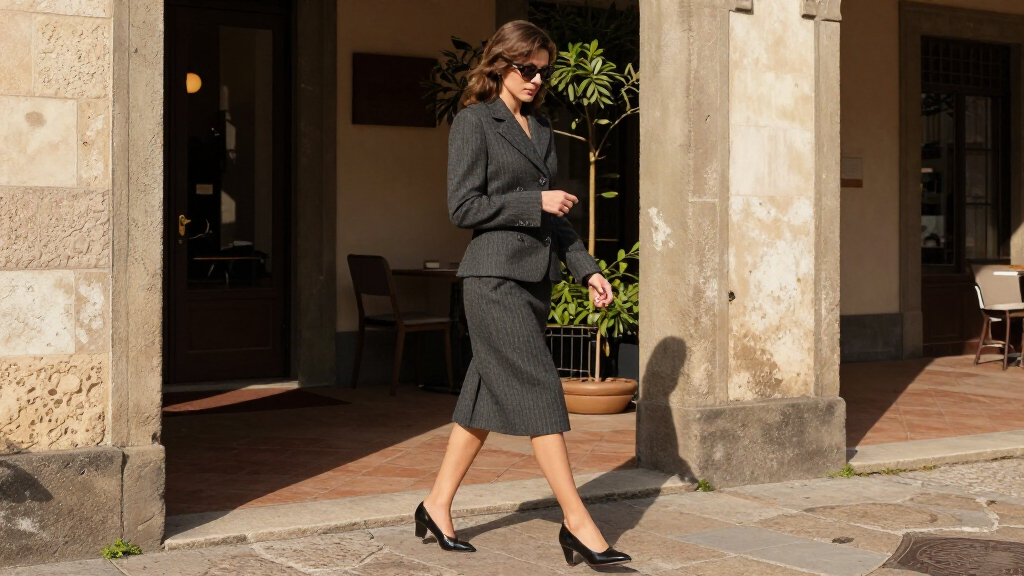
The collection opened with a grey mélange skirt suit with sandy undertones. Its double-breasted jacket had sleeves that curved from shoulder to forearm, while the matching skirt kept a knee-length pencil shape. Both pieces were belted at the waist. Harper’s Bazaar described the look as sophisticated and light despite its tailored construction.
Davis told the magazine backstage that the shoulder pads and tightly defined waists associated with women’s 1940s workwear did not feel modern to him. He said he wanted a more relaxed silhouette and used the garments’ cut and seams to create shape.
The review also identified references to Lee Miller’s years in Egypt in the late 1930s. Utility-style pockets appeared on skirts, dresses and outerwear, alongside ochres, sandy beiges, chocolate browns and greens. A watery blue provided a break from the neutral palette. The collection paired these references with softly draped blouses, chiffon details, leather and latex.
A Softer Take on Workwear
The collection’s central design move is to revisit a familiar historical suit while changing how it shapes the body. Davis described removing the stiff, constructed effect of the 1940s silhouette; the review points to the curved sleeves, fabric-led shaping and belted waist as visible parts of that approach. The result keeps the skirt suit’s recognizable outline but presents it with a lighter feel.
The range of materials also broadens the collection beyond its tailoring reference. According to Harper’s Bazaar, silk chiffon created movement and transparency, while leather, suede and latex brought a closer-fitting, more assertive quality to some looks. Those choices show how the collection places utility, softness and sensuality alongside one another. The review characterizes the result as streamlined, with the clothes’ impact coming from silhouette and material rather than added ornament.
For readers following Ferragamo, the report offers a view of Davis’s current ready-to-wear direction: historical references filtered through relaxed construction and varied fabrication. The review links that approach to his earlier collections for the house, which it describes as decadent yet streamlined. Whether this collection signals a longer-term shift is not established by the source.
Miller’s Egypt-Era Influence
Davis’s references span two related but distinct histories. The first is 1940s women’s workwear, particularly the skirt suits women wore as they entered the workforce. The second is Lee Miller’s time in Egypt in the late 1930s, which the review says informed the collection’s desert colors and safari-inspired forms. Miller was a model who became a surrealist photographer and later a World War II correspondent.
The review also connects Miller’s personal and creative relationship with artist Man Ray to the collection’s intimate details. Davis told Harper’s Bazaar that photographs of their time together informed his interest in intimacy and sensuality. He said he sought to carry those qualities into fabrication, embroidery and transparency; the magazine cited draped blouses with attached scarves and chiffon looping at the hems as examples.
Harper’s Bazaar placed the show within the setting Davis has used in recent seasons: the speakeasy-style environment at Milan’s Triennale art and design museum. The source does not give a show date, a full look count or commercial details.
““I just felt it wasn’t modern for today.””
— Maximilian Davis, speaking backstage to Harper’s Bazaar
Details Beyond the Review
The source is a review, and it does not provide a full inventory of the collection or confirm which looks, fabrics or details will reach stores. It also does not include pricing, availability or production information. The review describes design references and materials but does not report Ferragamo’s stated commercial aims or customer response.
Some descriptions, including the collection’s sensuality and the effect of its silhouettes, are the reviewer’s interpretation. The reported backstage remarks are attributed to Davis. The source does not establish whether the collection represents a lasting change in the house’s design direction.
Retail Details Still Pending
The next practical information for shoppers would be Ferragamo’s retail details for Spring 2027, including when the collection will be available and which runway designs will be produced. Those details are not included in the Harper’s Bazaar report. The collection’s reported presentation provides a design account; further company information would be needed to establish delivery dates, prices or any changes between runway looks and merchandise.
Key Questions
What is the main news about Ferragamo’s Spring 2027 collection?
Harper’s Bazaar reviewed a Ferragamo ready-to-wear collection in which Maximilian Davis reworked 1940s skirt suits with relaxed tailoring. The review also described references to Lee Miller’s time in Egypt.
How did Davis change the 1940s skirt suit?
Davis said he removed the period silhouette’s manufactured structure and used the cut and seams of the fabric to create shape. The opening look paired a curved-sleeve, double-breasted jacket with a knee-length pencil skirt.
What did Lee Miller’s time in Egypt contribute to the collection?
According to Harper’s Bazaar, Miller’s late-1930s years in Egypt informed desert colors and safari-inspired silhouettes. Utility-style pockets appeared on several types of garments.
When will the Spring 2027 collection be available, and what will it cost?
The cited review does not give a release date, store availability or prices. Those details remain unreported in the source material.
Source: rss
Fall Picks
fall essentials
As an affiliate, we earn on qualifying purchases.