
Biodegradable items break down naturally through biological processes, especially in composting environments, while recyclable materials can be processed and transformed into new products. Not all biodegradable products decompose quickly or completely, and proper disposal often depends on industrial composting standards. Recycling requires sorting and proper collection systems, which vary locally. Understanding these differences helps you choose options that suit your needs and disposal options. Keep going to uncover more ways to make eco-smart choices you can trust.
Key Takeaways
- Biodegradable products break down naturally over time, often in composting environments, while recyclable items are processed into new products through specific recycling systems.
- Recycling involves reprocessing materials, which requires proper sorting and infrastructure; biodegradable decomposition depends on composting conditions.
- Not all biodegradable items decompose completely or quickly, especially if disposed of improperly or in landfills, whereas recyclables can be reused if correctly sorted.
- Industrial composting standards ensure biodegradable products break down efficiently, but many landfills lack these conditions, limiting biodegradation.
- Choosing between biodegradable and recyclable products depends on product lifespan, local disposal options, and available waste management infrastructure.
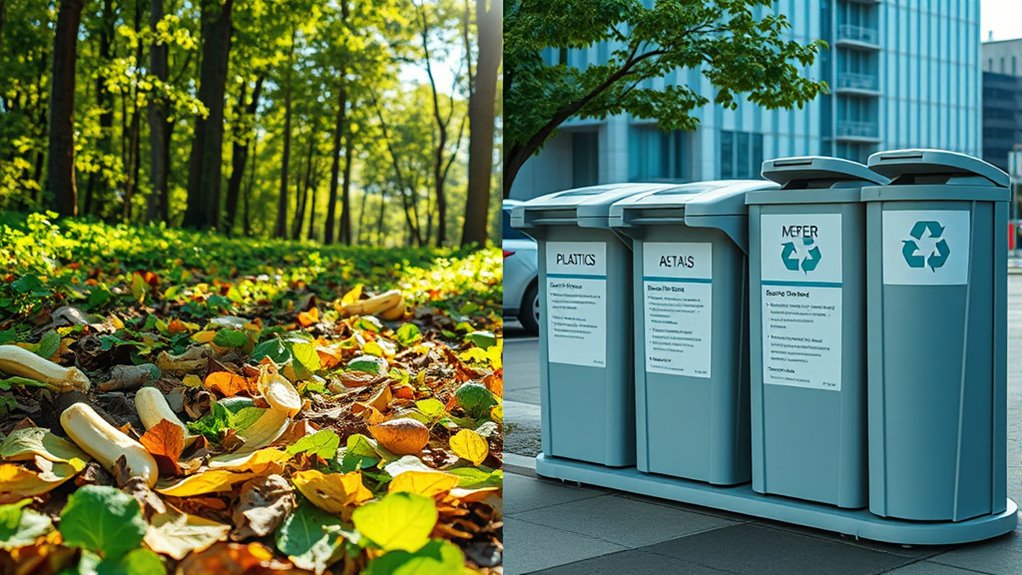
When choosing sustainable materials, understanding the difference between biodegradable and recyclable products is vital. This knowledge helps you make informed decisions that align with your environmental goals. Biodegradable items are designed to break down naturally through biological processes, typically in a composting environment or under specific conditions. Composting processes facilitate the decomposition of biodegradable materials, turning waste into nutrient-rich soil. However, not all biodegradable products break down equally fast or completely; material durability plays a significant role here. Some biodegradable items, like certain plastics, are engineered to last longer before decomposing, which can be a double-edged sword. While longer durability can be beneficial for product lifespan, it may also prolong their presence in landfills if not composted properly. On the other hand, recyclable materials are those that can be reprocessed into new products after their initial use, reducing the need for virgin resources. Recycling relies heavily on collection systems and proper sorting, but it doesn’t necessarily mean the product will biodegrade at the end of its life. Instead, recyclable items are processed through specific recycling processes that transform them into new raw materials, conserving energy and resources.
Understanding composting processes is vital when considering biodegradable options. Some biodegradable plastics, for example, require industrial composting facilities with controlled temperature and humidity to break down efficiently. If these materials end up in regular trash bins, they might not degrade as intended, potentially contributing to waste problems rather than solving them. Conversely, recyclable materials can often be recycled locally, but only if they are correctly sorted and accepted by your local recycling program. Misplaced recyclable items can contaminate entire batches, reducing the efficiency of recycling efforts. Additionally, awareness of material durability helps in selecting products that balance longevity with environmental impact. Moreover, understanding recycling infrastructure in your area can make a significant difference in ensuring proper disposal and processing of recyclable items. Your choice between biodegradable and recyclable products depends on several factors, including how long the material needs to last, how you dispose of it, and the infrastructure available in your area. For items that can be composted, always check whether they meet industrial composting standards to guarantee they will break down properly. For recyclable items, confirm what materials your local program accepts and how to prepare them for recycling. Ultimately, both options aim to reduce environmental impact, but they do so through different processes. Knowing the nuances of composting processes and material durability helps you select the right products for your sustainability efforts, guaranteeing your actions genuinely benefit the planet.
Top picks for "biodegradable recyclable clear"
As an affiliate, we earn on qualifying purchases.
Frequently Asked Questions
Can a Product Be Both Biodegradable and Recyclable?
Yes, a product can be both biodegradable and recyclable. While biodegradable advantages include breaking down naturally without harming the environment, recyclability challenges involve processing and reuse issues. If you choose products made from materials that are both biodegradable and recyclable, you support sustainability by reducing waste and conserving resources. Just keep in mind that some materials may favor one property over the other, so check labels carefully to maximize environmental benefits.
Which Option Is More Environmentally Friendly Overall?
Picture a lush garden, thriving with life; now imagine biodegradable plastics returning to the earth, enriching it naturally, unlike recycling which faces challenges like contamination. Overall, biodegradable plastics tend to be more eco-friendly because they break down without needing energy-intensive processes. Recycling challenges, such as sorting and contamination, can hinder environmental benefits. So, in your efforts, prioritize options that reduce waste and support natural decomposition.
Do Biodegradable Products Require Special Disposal Conditions?
Biodegradable products often require specific composting conditions to break down properly, so they don’t just decompose in regular trash. If you don’t follow proper composting requirements, disposal challenges can arise, leading to slow breakdown or environmental harm. It’s important to check if your local facilities accept biodegradable items and follow disposal instructions carefully, ensuring these products truly benefit the environment and don’t contribute to waste problems.
How Long Does It Take for Biodegradable Items to Decompose?
Ever wonder how long it takes for biodegradable items to decompose? The decomposition timeline varies widely—some break down in weeks, others in months or years—depending on conditions like temperature and moisture. Knowing this helps you understand their environmental impact. While they’re designed to reduce waste, their actual breakdown speed influences how effectively they benefit the planet. So, next time you choose, consider how quickly they return to nature.
Are Recyclable Products Always Reused or Repurposed?
Recyclable products aren’t always reused or repurposed, as their product lifespan depends on material durability and recycling processes. When you recycle, the material often gets processed into new items, but it’s not guaranteed it’ll be repurposed into the same product. Instead, the recycled material might have a different lifespan or be used for less durable products, meaning reuse isn’t automatic. Proper recycling practices help extend the usefulness of materials.
Conclusion
Now that you understand the difference between biodegradable and recyclable, you’re like a gardener tending to a thriving ecosystem. Each choice you make is a seed that shapes our planet’s future—whether it’s composting or recycling. By choosing wisely, you’re not just tossing items away; you’re planting hope and nurturing sustainability. So, go ahead—be the gardener who cultivates a healthier Earth, one mindful decision at a time. Your actions are the roots of tomorrow’s greener world.