
Greywater from your laundry contains soap residues, dirt, and hair, making it a useful resource for watering plants or flushing toilets when properly treated. Installing filtration and treatment systems helps remove solids and soap buildup, ensuring safety and avoiding damage to appliances. It’s also essential to follow local regulations and use separate plumbing to prevent contamination. Want to learn more about how to set up and manage your greywater system effectively?
Key Takeaways
- Greywater from laundry contains soap residues, dirt, and hair, requiring proper filtration before reuse.
- Using greywater for laundry conserves freshwater and reduces water bills.
- Install separate plumbing with backflow preventers to prevent cross-contamination with drinking water.
- Follow local regulations for greywater treatment and system setup to ensure safety and compliance.
- Consult licensed professionals for proper installation and adherence to plumbing standards.
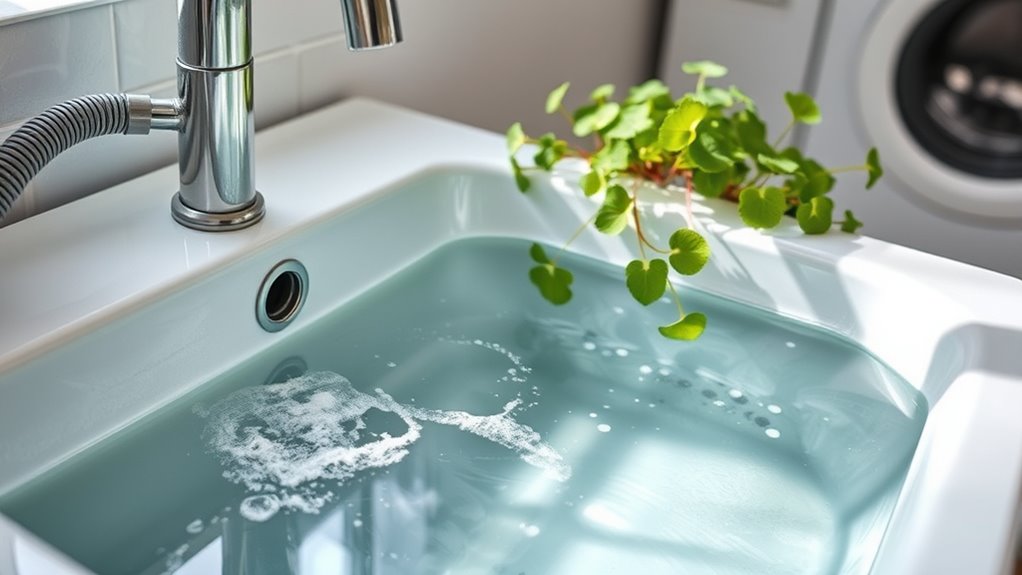
Greywater, which is lightly used household water from sources like laundry, sinks, and showers, offers a sustainable way to conserve freshwater. Using greywater for laundry can notably reduce your water bills and lessen the strain on local water supplies. However, before you start collecting and reusing greywater, it’s essential to understand the importance of proper water treatment and adherence to plumbing standards. These guidelines ensure your system operates safely, efficiently, and in compliance with local regulations.
When considering greywater for laundry, water treatment is a critical factor. Even though greywater is generally cleaner than blackwater, it can still contain soap residues, dirt, hair, and other contaminants. You don’t want these substances to clog your washing machine or cause health issues. To address this, you might install a simple filtration system that removes solids and reduces soap buildup. More advanced systems can include biological or chemical treatment units that further purify the water, making it safer for reuse. Proper water treatment not only protects your appliances but also prevents potential environmental contamination or health hazards. Additionally, understanding the regulations governing greywater use in your area can help you avoid legal issues and ensure your system remains compliant.
Plumbing standards are equally important when setting up a greywater system for laundry. Different regions have specific codes designed to prevent cross-contamination between greywater and potable water supplies. You’ll need to ensure that your plumbing configuration prevents greywater from flowing back into the clean water system. Typically, this involves installing backflow preventers and separate piping that directs greywater away from the main drinking water lines. Following plumbing standards also means using appropriate materials—such as non-corrosive pipes and fittings—that withstand the demands of greywater reuse. Ignoring these standards can lead to leaks, system failures, or violations of local building codes, which might result in fines or the need to dismantle your setup.
In addition to legal compliance, adhering to plumbing standards helps maintain a safe and reliable greywater system. It’s advisable to consult local regulations or work with licensed professionals who are familiar with greywater reuse guidelines. They can help you design a system that meets all safety requirements, from water treatment to plumbing connections. Proper installation ensures that greywater is safely diverted from your laundry area, treated appropriately, and used without risking contamination of your household water supply or the environment.
Frequently Asked Questions
Can Greywater Be Used for Indoor Plants Safely?
Yes, you can safely use greywater for indoor plant watering, but make certain it’s free from harmful chemicals. Use greywater from laundry that doesn’t contain bleach, fabric softeners, or strong detergents. Always filter it to remove solids and avoid overwatering. Safe greywater use helps conserve water while nourishing your indoor plants. Just be cautious and monitor your plants for any signs of stress, adjusting as needed for healthy growth.
Are There Any Legal Restrictions on Greywater Reuse?
You might find that greywater reuse is a bit like steering through a secret garden—full of potential but with some boundaries. Legal restrictions and greywater regulations vary by location, so you should always check local rules before setting up your system. Many areas have specific permits or guidelines to ensure safety and environmental health. Staying informed helps you enjoy the benefits of greywater while respecting the rules that protect everyone.
How Does Greywater Affect Septic System Efficiency?
Greywater can impact your septic system’s efficiency if not managed properly. When you divert greywater to your septic drainfield, it helps maintain a healthy bacterial balance, reducing solids in the tank. However, excessive greywater can overload the system, leading to clogs or reduced treatment. To keep your septic system functioning well, make certain you don’t introduce harmful chemicals and monitor the volume of greywater entering the drainfield regularly.
What Are the Costs Involved in Setting up a Greywater System?
Setting up a greywater system involves installation costs that can range from a few hundred to several thousand dollars, depending on system complexity and property size. You should also plan for ongoing maintenance expenses, including filter replacements and system inspections. While initial costs might seem high, a greywater system can save you money over time by reducing water bills and conserving resources. Proper planning guarantees efficient operation and longevity.
How Often Should Greywater Systems Be Maintained or Cleaned?
You should perform regular system maintenance and cleaning to keep your greywater system functioning properly. Typically, cleaning frequency depends on usage, but it’s recommended to inspect and clean filters and pipes at least once every three to six months. Look out for clogs, odors, or leaks, and address them promptly. Consistent maintenance guarantees your system stays efficient, safe, and free from issues that could cause backups or contamination.
Conclusion
By understanding greywater basics for laundry, you’re channeling a bit of Gaia’s wisdom—respecting nature’s delicate balance while conserving resources. Just as the myth of Pandora’s box reminds us of unintended consequences, handling greywater responsibly ensures we don’t release unforeseen harm. With mindful practices, you become a steward of sustainability, echoing the harmony of ancient ecosystems. Embrace these habits, and you nurture not only your home but also the world’s future, one load at a time.