
Plant-based fabrics can be a great eco-friendly choice because they tend to be durable, breathable, and become softer over time. They’re often produced with sustainable farming methods that reduce environmental harm, but some fabrics involve chemical processing that isn’t as eco-friendly. By choosing responsibly made options, you can support eco-conscious practices and enjoy long-lasting garments. Keep exploring to discover more about how these fabrics fit into a sustainable lifestyle.
Key Takeaways
- Plant-based fabrics like hemp and organic cotton are environmentally friendly, promoting sustainable farming and reducing chemical use.
- They are generally durable and long-lasting, but some, like bamboo, require proper processing to ensure strength.
- Not all plant-based fabrics are produced sustainably; chemical-intensive processes in fabrics like viscose can harm the environment.
- Proper care extends fabric lifespan, maximizing eco benefits and reducing waste over time.
- Choosing sustainably produced, durable plant fabrics supports eco-conscious fashion and minimizes environmental impact.
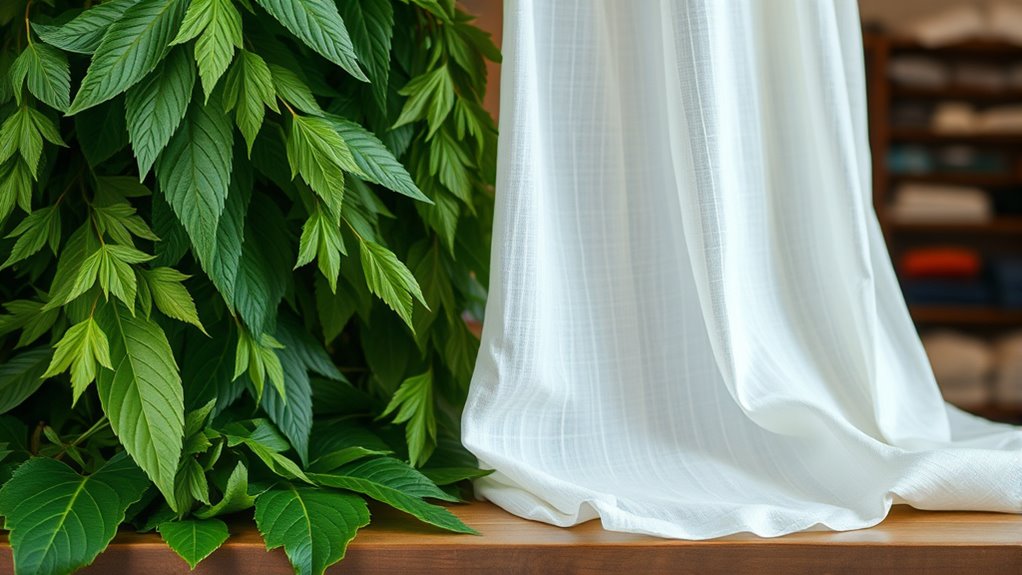
Plant-based fabrics are gaining popularity as sustainable alternatives to traditional textiles. As you explore eco-friendly options, you’ll notice that many of these fabrics rely on sustainable farming practices. This means they are grown using methods that minimize environmental impact, conserve water, reduce the use of harmful chemicals, and promote soil health. When choosing plant-based fabrics, you support farming methods that prioritize long-term ecological balance, making your wardrobe more environmentally responsible. Furthermore, these fabrics often require fewer resources during production compared to conventional textiles, further reducing their carbon footprint.
One of the key advantages of plant-based fabrics is their fabric durability. You’ll find that many of these materials, such as hemp or linen, are naturally strong and resilient. They can withstand regular wear and washing without losing their integrity, which means your clothing can last longer. Durability is a vital factor if you’re looking to make sustainable choices, as longer-lasting garments reduce waste and lessen the need for frequent replacements. Additionally, some plant-based fabrics develop a unique character over time, gaining softness and a lived-in feel that enhances their appeal. This durability also makes them suitable for various applications, from everyday wear to more specialized uses, without sacrificing quality.
Plant-based fabrics like hemp and linen are naturally strong, durable, and develop a soft, lived-in feel over time.
However, it’s important to take into account that not all plant-based fabrics are created equal. While many are produced through sustainable farming practices, others might still involve environmentally harmful processes or extensive chemical treatments. As a conscious consumer, you should research the production methods behind the fabrics you buy. Some plant-based textiles, like organic cotton, are farmed with minimal chemical inputs, aligning well with eco-friendly values. Others, like rayon or viscose, can involve intensive chemical processing, which may negate some of their sustainability benefits. Utilizing audit processes can help ensure that these fabrics meet environmental standards and are produced responsibly.
In terms of fabric durability, some plant-based options outperform traditional textiles, but others may require more delicate handling. For instance, bamboo fabric, while soft and eco-friendly when processed sustainably, can sometimes be less durable if not properly finished. It’s worth investing in well-made pieces and following care instructions to maximize their lifespan. This way, you ensure that your commitment to sustainability extends beyond just buying eco-friendly fabrics—by caring for them properly, you prolong their usability and reduce waste.
Ultimately, plant-based fabrics offer compelling benefits if you focus on those produced through sustainable farming and emphasize their durability. They allow you to make eco-conscious choices without sacrificing quality or longevity, helping you reduce your environmental impact while enjoying stylish, resilient clothing.
Frequently Asked Questions
Are Plant-Based Fabrics Suitable for All Climates?
Plant-based fabrics aren’t suitable for all climates because their climate adaptability varies. You’ll find these fabrics work well in moderate to warm regions, providing breathability and comfort. However, in colder or highly humid areas, they may lack insulation or moisture resistance. It’s important to evaluate regional suitability when choosing plant-based fabrics, ensuring they match your climate needs for comfort, durability, and performance.
How Do Plant-Based Fabrics Compare in Durability?
You’ll find that plant-based fabrics generally have moderate fiber strength, making them suitable for everyday wear but less ideal for heavy-duty use. Their wear resistance varies; some, like hemp, are quite durable, while others may show signs of wear faster. To maximize longevity, consider how you’ll use the fabric and choose options with higher fiber strength and wear resistance, ensuring your clothing lasts longer and maintains its appearance.
Can Plant-Based Fabrics Be Recycled or Composted?
You might be surprised to learn that plant-based fabrics can often be recycled or composted, but biodegradability challenges and limited recycling infrastructure make it tricky. While some materials like hemp or bamboo are compostable, others face hurdles due to chemical treatments or lack of facilities. To truly benefit from eco-friendly fabrics, you’ll need to support improvements in recycling systems and choose options that are designed for composting when possible.
What Are the Common Environmental Impacts of Producing These Fabrics?
When producing plant-based fabrics, you should know that it often involves significant environmental impacts like high water consumption and pesticide use. These crops typically require large amounts of water, which can strain local resources, and pesticides are frequently used to protect them from pests, potentially harming ecosystems and human health. Being aware of these impacts helps you make more sustainable choices when choosing fabric options.
Are Plant-Based Fabrics Hypoallergenic and Safe for Sensitive Skin?
Plant-based fabrics are generally hypoallergenic and safe for sensitive skin, but allergenic properties can vary depending on the material. If you have skin sensitivity, choose fabrics like organic cotton or hemp, which are less likely to cause irritation. Always check for any added chemicals or dyes that might trigger reactions. Testing a small patch first helps confirm your skin reacts well, making these fabrics a comfortable choice for sensitive individuals.
Conclusion
Choosing plant-based fabrics is like walking a tightrope between sustainability and practicality. They offer eco-friendly benefits, but come with challenges you should consider. Weigh the pros and cons carefully, and remember, your choices shape the world around you. By opting for these fabrics, you’re planting seeds for a greener future—one garment at a time. So, step confidently into mindful fashion, knowing your decision is part of a larger, beautiful tapestry of change.