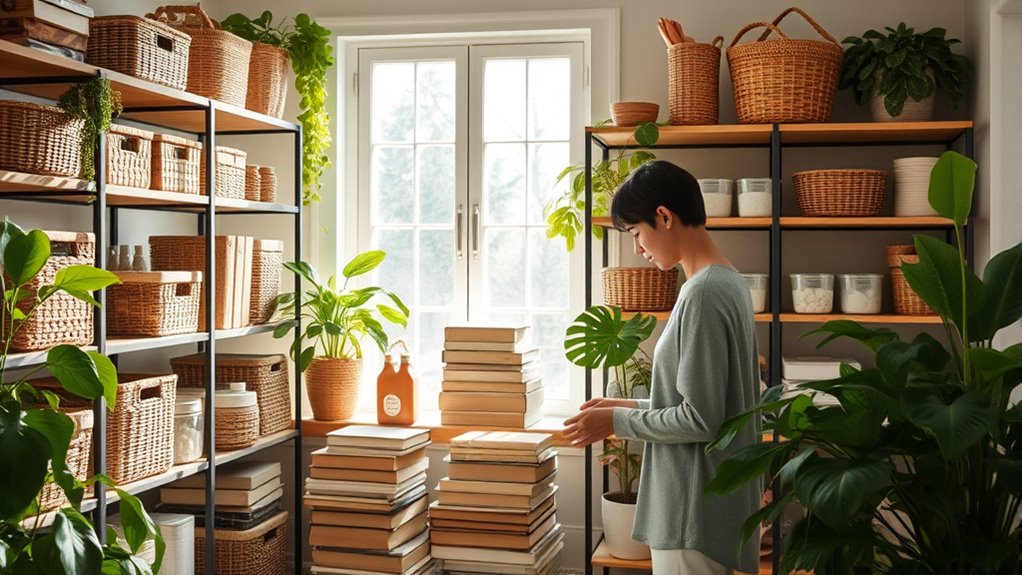

To declutter sustainably, start by sorting your items mindfully, considering what can be upcycled or donated instead of discarded. Focus on quality over quantity to reduce future waste and streamline your space. Get creative with upcycling techniques like transforming jars or fabric scraps, and embrace minimalism to lessen resource consumption. Developing these habits creates a calmer, eco-friendly environment — and if you keep exploring, you’ll discover even more ways to declutter responsibly.
Key Takeaways
- Incorporate mindful sorting to identify items for donation, recycling, or upcycling, reducing waste and supporting sustainability.
- Use upcycling techniques to creatively repurpose old items into useful objects, minimizing landfill contributions.
- Embrace minimalism by evaluating the purpose and longevity of possessions to reduce unnecessary consumption.
- Start decluttering gradually, focusing on specific categories to develop sustainable habits and resourcefulness.
- View decluttering as an opportunity to foster a mindful, eco-friendly lifestyle that prioritizes quality, reuse, and resource conservation.

In today’s world, decluttering isn’t just about tidying up; it’s an essential step toward living sustainably. When you start sorting through your belongings, you have the opportunity to reduce waste and make more mindful choices. One effective way to do this is by adopting upcycling techniques, which allow you to transform old or unused items into something new and useful. Instead of discarding broken furniture or worn-out clothing, consider how you can give them a second life. For example, turning old jars into storage containers or repurposing fabric scraps into cleaning rags. These small acts not only cut down on landfill waste but also help you develop creative habits that support sustainability.
Integrating minimalist habits into your decluttering process amplifies these benefits. By focusing on quality over quantity, you learn to keep only what truly adds value to your life. This mindset encourages you to evaluate each item’s purpose and longevity, reducing impulse purchases and unnecessary accumulation. As you eliminate clutter, you create a more intentional space that’s easier to maintain and less likely to become cluttered again. This simplicity aligns with sustainable living because it minimizes resource consumption—fewer new goods mean fewer environmental impacts from production and transportation. Plus, having fewer possessions often leads to less stress, making your home a calmer, more mindful place. Understanding the importance of resource management can further enhance your efforts toward sustainability.
To successfully incorporate upcycling techniques and minimalist habits, start small. Pick one category—like clothes or kitchenware—and assess what you no longer need. Instead of tossing items away, think about how they could be repurposed or upcycled. If you’re unsure about your skills, look for tutorials and ideas online. The key is to see each item not as trash but as a potential resource. As you practice, you’ll develop an eye for what’s worth upcycling and what should be donated or recycled responsibly. Over time, this approach transforms your perspective on possessions, encouraging you to buy less and cherish what you already have.

Vtopmart Glass Food Storage Jars, 7 Pack Kitchen Containers with Airtight Bamboo Wooden Lids for Pasta, Cookies, Nuts, Coffee Beans, Cereal, Canisters Set for Flour, Pantry Organization, BPA Free
- Set of 7 Glass Jars: Various sizes for different dry foods
- Natural Bamboo Lids: Sealing rings prevent air entry and noise
- Ideal for Dry Food Storage: Store pasta, nuts, flour, cereals, spices
As an affiliate, we earn on qualifying purchases.
As an affiliate, we earn on qualifying purchases.
Frequently Asked Questions
How Can I Declutter Without Creating Waste?
You can declutter without creating waste by adopting a minimalist mindset, focusing on keeping only what you truly need and love. When deciding what to let go, donate or sell items in good condition, rather than throwing them away. Practice eco-conscious shopping moving forward to prevent unnecessary clutter. This approach helps reduce waste, supports sustainability, and keeps your space organized with meaningful possessions.
What Eco-Friendly Disposal Methods Are Best?
Did you know that recycling and upcycling can cut waste by up to 80%? To dispose of items eco-consciously, consider upcycling ideas that transform your clutter into something useful. Use eco-conscious packaging when donating or repurposing goods, ensuring minimal environmental impact. Avoid landfills by donating, recycling, or composting whenever possible. These methods not only reduce waste but also support sustainability and creativity in your decluttering journey.
How Do I Donate Sustainably?
You can donate sustainably by exploring donation alternatives like local charities, thrift stores, or online platforms that prioritize ethical thrift. Before donating, verify your items are in good condition and clean. Research organizations to confirm they practice responsible disposal and fair labor. This way, you support eco-friendly disposal methods, reduce waste, and promote ethical thrift, guaranteeing your unwanted items help others while minimizing environmental impact.
Can Decluttering Save Energy?
A tidy space is a clear mind, and yes, decluttering can save energy. When you reduce clutter, you streamline your environment, making energy conservation easier, like turning off unused electronics and optimizing storage. This promotes eco-conscious habits by minimizing waste and reducing your carbon footprint. Less clutter means less energy needed to clean, maintain, and cool your space, helping you live more sustainably while creating a more efficient home.
How to Repurpose Items Instead of Discarding?
You can repurpose items by exploring upcycling projects and embracing creative reuse. Instead of discarding, think about transforming old jars into planters or turning worn-out clothes into cleaning rags. Get inventive with your materials, such as using cardboard for storage or turning glass bottles into decorative pieces. These efforts reduce waste, extend product life, and add a personal touch to your space while supporting sustainability through thoughtful repurposing.
Conclusion
So, you see, decluttering sustainably isn’t just about freeing your space; it’s about saving the planet from your overflowing closet. Who knew that tossing out those old t-shirts could be a revolutionary act? Next time you feel overwhelmed, remember: minimalism isn’t just chic—it’s a secret weapon against environmental chaos. So go ahead, purge with purpose, and let your clutter be a small act of ecological rebellion. After all, Mother Earth appreciates a well-organized chaos.