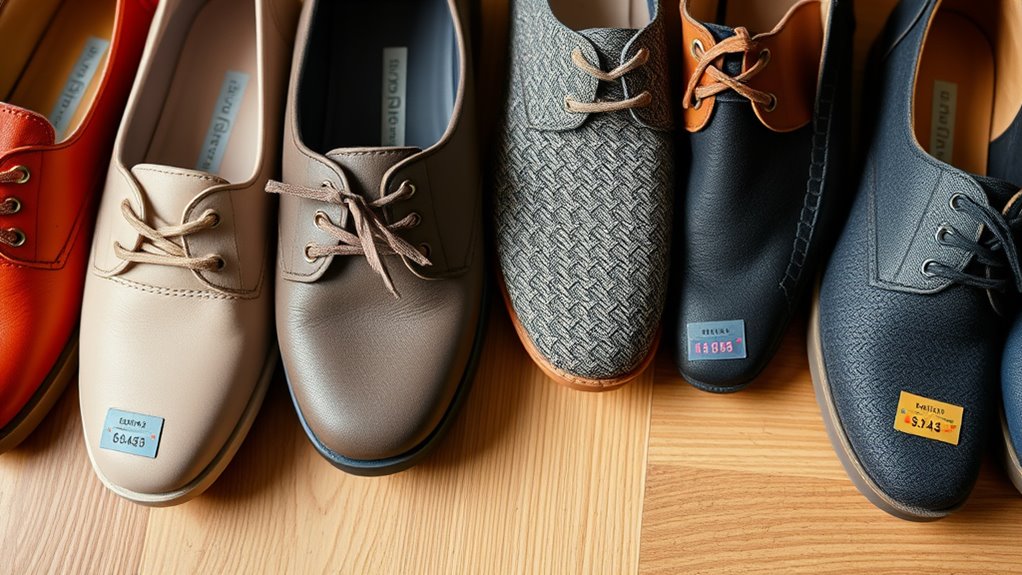

When evaluating vegan shoes, focus on sustainable sourcing of materials like cork or mushroom leather, which are renewable and biodegradable. Check if brands follow ethical manufacturing processes, ensuring fair wages and safe conditions. Look for certifications such as Fair Trade or GOTS, which verify responsible practices. Consider the entire material lifecycle, from production to disposal, to reduce environmental impact. Staying informed about these factors will help you make eco-friendly, responsible choices—continue to explore for more helpful insights.
Key Takeaways
- Verify if the materials are plant-based, renewable, and biodegradable, such as cork or mushroom leather.
- Check for certifications like GOTS or Fair Trade that indicate responsible sourcing and manufacturing practices.
- Ensure transparency in the supply chain and disclosures about ethical manufacturing conditions.
- Evaluate the entire material lifecycle, from production to disposal or recycling, for environmental impact.
- Consider the brand’s commitment to sustainable sourcing and ethical labor practices for a holistic assessment.

Are you curious about how to stay stylish while making a cruelty-free choice? When it comes to vegan shoes, understanding the material scorecard becomes essential. You want footwear that aligns with your values, so evaluating the sustainability and ethics behind each pair is vital. Sustainable sourcing is at the heart of responsible vegan footwear. It involves selecting materials that are harvested or produced without depleting resources or causing environmental harm. For example, plant-based leathers like cork or mushroom leather are renewable and biodegradable, making them better options than traditional animal-derived materials. Knowing whether a brand sources these materials sustainably helps you gauge its commitment to reducing environmental impact. Brands that prioritize ethical manufacturing also play a key role in your decision-making process. Ethical manufacturing means workers are paid fair wages, work in safe conditions, and are treated with respect. When a company emphasizes transparency in its supply chain, it indicates a genuine dedication to social responsibility. This transparency often extends into their choice of materials, ensuring they aren’t sourcing from exploitative or environmentally damaging suppliers. As a consumer, you should look for brands that openly share information about their supply chains, including certifications or third-party audits that verify their claims. Such disclosures help you trust that the shoes you buy are produced ethically and sustainably. Additionally, pay attention to the certifications associated with vegan shoes. Certifications like Fair Trade or Global Organic Textile Standard (GOTS) can serve as markers of responsible sourcing and manufacturing practices. These labels indicate that the materials and production processes meet specific environmental and social standards. When evaluating the material scorecard of vegan shoes, consider the entire lifecycle—how the materials are grown or produced, how they’re manufactured, and how the finished product is disposed of or recycled. Shoes made with sustainable sourcing and ethical manufacturing practices not only reduce your ecological footprint but also support fair labor practices. Incorporating sustainable materials into your footwear choices helps to further lessen environmental harm and promotes innovation in eco-friendly manufacturing. Understanding the impact of certifications can help you make more informed decisions about the shoes you select. Research shows that certification labels often serve as reliable indicators of responsible production. Understanding the contrast ratio of a projector is also crucial for ensuring high-quality visuals, especially in dark room settings. This holistic approach ensures your footwear choices are aligned with your values, making your style sustainable and cruelty-free. Ultimately, selecting vegan shoes that excel in these areas empowers you to make a positive impact on the environment and society, all while staying effortlessly fashionable.
Frequently Asked Questions
Are Vegan Shoes as Durable as Traditional Leather Shoes?
You might wonder if vegan shoes hold up as well as traditional leather ones. Generally, synthetic fibers used in vegan shoes can offer good material longevity, but they often don’t match the durability of leather. While some brands improve durability through innovative materials, you should check specific product reviews. Overall, vegan shoes can be quite durable, but their longevity varies depending on the quality of the synthetic fibers used.
What Are the Environmental Impacts of Vegan Shoe Materials?
When considering the environmental impacts of vegan shoe materials, you’ll find they often have a smaller ecological footprint compared to traditional leather. Vegan materials promote sustainable production by reducing resource use and emissions. This means you’re helping lower pollution and conserve ecosystems. While some vegan options may still have environmental costs, overall, they tend to be more eco-friendly, making your choice better for the planet and supporting greener production practices.
How Can I Identify Genuinely Vegan Shoe Brands?
You’re wise to look before you leap. To identify genuinely vegan shoe brands, check their labels and websites for mentions of vegan leather and cruelty-free manufacturing. Reputable brands often highlight these features, assuring you they avoid animal products and unethical practices. Do your homework—research brand transparency and reviews. A truly vegan brand will clearly state their commitment, so you can step confidently knowing your shoes align with your values.
Do Vegan Shoes Require Special Care or Maintenance?
Vegan shoes do necessitate some special care to keep them looking their best. Regular shoe cleaning with gentle, non-abrasive products is key, and you should avoid harsh chemicals that might damage the material. Waterproofing tips include applying a plant-based, breathable waterproof spray to protect against water and stains. This maintenance ensures your vegan shoes stay durable, clean, and looking great for longer.
Are Vegan Shoes More Affordable Than Non-Vegan Alternatives?
Did you know vegan shoes are often 10-20% more affordable than non-vegan options? When comparing prices, you’ll find that many brands prioritize affordability, making vegan shoes a budget-friendly choice. The price comparison varies by brand, but generally, vegan shoes are more accessible without sacrificing style or quality. So, if you’re looking for a cost-effective, ethical option, vegan shoes often come out ahead in brand affordability.
Conclusion
When choosing vegan shoes, you prioritize ethics, sustainability, and innovation. You weigh materials carefully, considering their environmental impact, durability, and cruelty-free nature. You seek footwear that aligns with your values, that supports ethical practices and minimizes harm. You embrace shoes that combine compassion with style, functionality with responsibility. Ultimately, you make informed choices, balancing quality with conscience, understanding that your footwear reflects your commitment to a better planet and a kinder world.