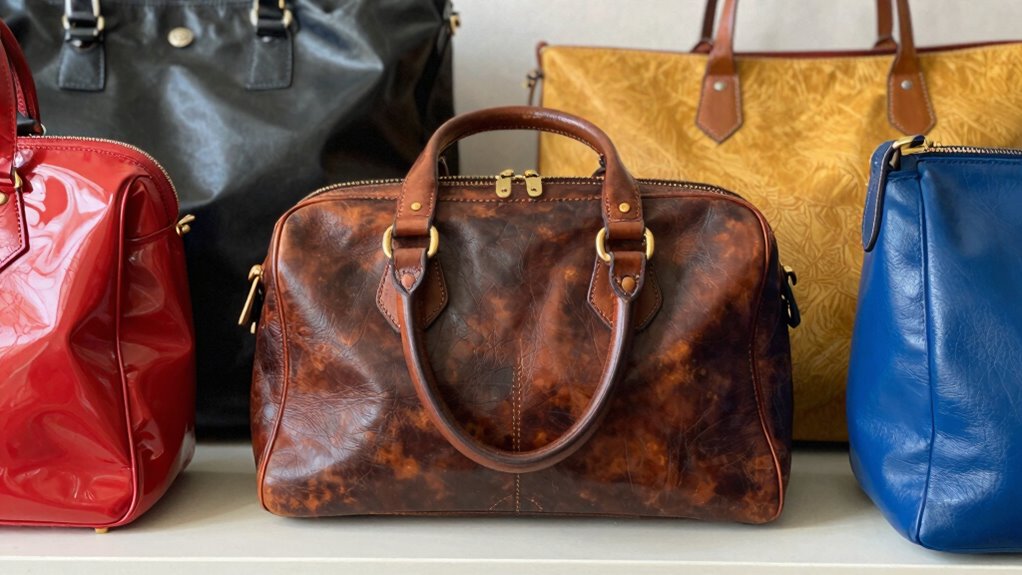

You see, handbags started as simple, practical containers made from basic materials like leather or woven fibers, mainly used to carry essentials. Over time, innovations like synthetic fabrics and exotic leathers transformed their design, making them symbols of status and cultural expression. Different eras reflect societal values, from the elegance of the 1920s to bold experimental styles in the 60s and 70s. If you want to discover more about how their role continues to evolve today, keep exploring their fascinating history.

Get your wardrobe favorites delivered free — and shop member deals
- Fast, free delivery on millions of items
- Access to Prime Big Deal Days deals on October 6–7
- Prime Video, Amazon Music and more included
Key Takeaways
- Handbags originated as practical containers made from basic materials, prioritizing utility over aesthetics.
- Material innovations like synthetic fabrics and exotic leathers transformed handbags into symbols of wealth and craftsmanship.
- Cultural shifts and artistic trends influenced handbag styles, reflecting societal values and artistic expression across eras.
- Handbags evolved from utilitarian items to status symbols and cultural statements, mirroring societal and technological changes.
- Contemporary trends emphasize eco-friendly materials, personalization, and craftsmanship, blending practicality with cultural identity.

Have you ever wondered how handbags have transformed over the years? What started as simple, functional containers for carrying essentials has become a symbol of style, status, and cultural expression. This evolution is driven by materials innovation and cultural influences that shape design choices and societal perceptions. In the early days, handbags were primarily utilitarian, made from basic materials like leather, fabric, or woven fibers. Over time, advancements in materials technology allowed designers to experiment with new textures, colors, and durability, elevating handbags from basic utility to fashion statements. Synthetic materials, such as nylon and polyester, emerged during the 20th century, making bags more affordable and accessible while opening new possibilities for shapes and finishes. Meanwhile, the use of luxurious materials like exotic leathers and embellished fabrics signaled wealth and exclusivity, transforming handbags into status symbols. Material innovation continues to influence contemporary designs, allowing for sustainable alternatives and creative expression. As technology advances, innovative manufacturing techniques are also enabling more intricate and personalized handbag designs, further expanding their cultural significance.
Cultural influences have played a vital role in shaping handbag styles and their significance. Different eras reflect societal values, economic conditions, and artistic trends. For instance, during the 1920s, the flapper era popularized small, elegant clutches that embodied the liberated spirit of women and the jazz age’s exuberance. Post-World War II, practicality and simplicity became priorities, leading to the rise of versatile, minimalist designs that suited a more pragmatic lifestyle. The 1960s and 70s saw handbags become canvases for cultural expression—bold colors, patterns, and experimental shapes reflected the counterculture and revolutionary movements of the time. In recent decades, globalization and multicultural exchange have further diversified handbag aesthetics, blending traditional craftsmanship with modern design. Influences from different cultures—such as Japanese minimalism or African vibrant textiles—have enriched the landscape, making handbags not only functional accessories but also cultural statements. These cross-cultural influences continue to inspire designers and shape consumer preferences worldwide.
Today, the interplay of materials innovation and cultural influences continues to redefine handbags’ role in society. Modern consumers look for bags that combine practicality with personal meaning, often seeking eco-friendly materials and ethically produced designs. The luxury market has shifted towards bespoke and artisanal craftsmanship, emphasizing cultural heritage and sustainability. As fashion evolves, handbags remain a mirror of societal shifts, technological progress, and cultural dialogues. What once served purely as a utility now encapsulates identity, creativity, and social standing. So, as you consider your next handbag purchase, remember that behind every design lies a history of innovation and cultural storytelling—an ongoing journey from utility to status symbol.
As an affiliate, we earn on qualifying purchases.
Frequently Asked Questions
How Did Handbag Materials Change Over Centuries?
You see handbag materials have evolved from vintage craftsmanship using leather, silk, and woven fibers to today’s focus on sustainable materials like recycled plastics, cork, and plant-based fabrics. This shift reflects a growing awareness of environmental impact. You can now choose handbags that blend timeless craftsmanship with eco-friendly innovation, making your accessory stylish and sustainable. Over centuries, materials transformed, balancing tradition with modern sustainability efforts.
Which Cultures First Popularized Handbag Use?
They say “history repeats itself,” and ancient cultures like Egypt and China first popularized handbag use, blending utility with cultural symbolism. You can see how traditional craftsmanship shaped these early designs, often reflecting social status or spiritual beliefs. These cultures valued handbags not just for carrying items but as symbols of wealth and identity, laying the foundation for the handbag’s evolution into a status symbol today.
What Are the Most Iconic Handbag Designs Historically?
You’ll recognize iconic handbag designs like the Hermès Birkin, Chanel 2.55, and the Louis Vuitton Speedy, which symbolize luxury branding and status. These styles gained popularity through celebrity endorsements, making them timeless symbols of wealth and fashion. Their distinctive features and association with high-profile figures have cemented their place in history, transforming handbags from practical accessories into coveted symbols of style and prestige.
How Do Handbag Trends Influence Fashion Cycles?
Handbag trends shape fashion cycles by driving consumer desire and setting seasonal fluctuations in style. When luxury branding introduces innovative designs, it often sparks new trends that influence mainstream fashion, causing shifts in what’s popular. You find yourself constantly adjusting your wardrobe to match these trends, as designers and brands push the boundaries of style, making handbags not just functional items but symbols of status that reflect changing tastes across seasons.
What Innovations Have Advanced Handbag Manufacturing Techniques?
Handbag manufacturing has advanced with innovations like smart closures, which offer improved security and convenience, and sustainable fabrics, making bags more eco-friendly. You’ll notice brands integrating RFID technology and eco-conscious materials, reflecting a shift toward smarter, greener designs. These innovations not only enhance functionality but also appeal to consumers seeking sustainability, pushing the industry toward more innovative and responsible production methods.
Conclusion
As you reflect on the journey of handbags, it’s remarkable how something so simple can embody both practicality and prestige. You might find it fitting that a bag, once purely functional, now carries stories of status and style—just like how your own choices shape your identity. Sometimes, the most unexpected evolutions remind us that even the smallest details can hold profound meaning. After all, isn’t it amazing how a bag can mirror your own transformation over time?
Fall Picks
fall essentials
As an affiliate, we earn on qualifying purchases.