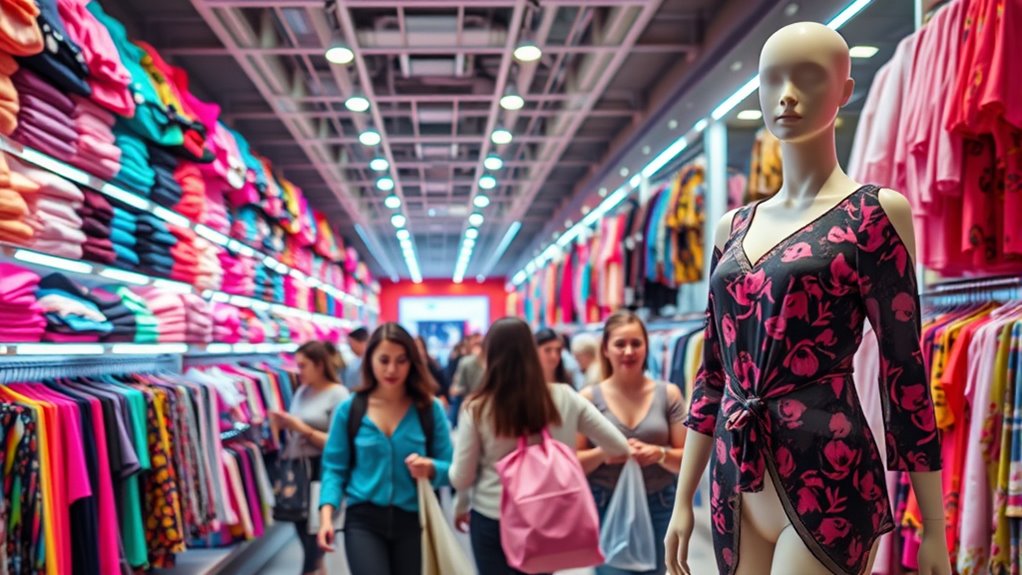

The rise of fast fashion happens as brands quickly produce trendy, affordable clothes that meet your desire for instant style updates. Driven by social media and quick turnaround times, this industry encourages frequent purchases and constant trend-chasing. While it makes fashion accessible, it often overlooks ethical and environmental concerns, with low-cost labor and waste increasing pollution. To understand how this impacts not just your wardrobe but the world around you, there’s more to uncover below.
Key Takeaways
- Rapid, affordable production fueled by social media trends drives consumer demand for frequent wardrobe updates.
- Brands prioritize speed and volume, sourcing cheap materials and labor to meet quick turnaround times.
- Consumer behavior, such as impulsive online shopping, accelerates inventory turnover and clothing waste.
- Fast fashion’s focus on low prices often neglects ethical supply chain practices and environmental sustainability.
- Growing awareness and activism are pushing brands toward more ethical and eco-friendly manufacturing approaches.

Have you ever wondered why fast fashion has exploded in popularity over the past decade? The answer lies in how supply chain ethics and consumer behavior changes have reshaped the fashion industry. Fast fashion brands have mastered the art of producing trendy, affordable clothing quickly, which appeals to your desire for instant gratification and constantly updated wardrobes. The shift in consumer behavior means you’re now more likely to seek out new styles every few weeks, driven by social media trends and the allure of constantly revitalizing your look. This demand puts pressure on brands to deliver rapid turnaround times, often at the expense of supply chain ethics.
Fast fashion’s rise is driven by consumer desire for quick, trendy, affordable clothing, often at ethical costs.
In the past, many fashion companies prioritized quality and durability, but fast fashion has flipped that script. Instead, brands source cheap materials and labor from countries where regulations might be lax, enabling them to cut costs and produce large volumes of clothing swiftly. This focus on low prices attracts a broader customer base, making fashion more accessible than ever before. However, it also introduces ethical concerns because supply chain practices sometimes involve exploitative labor conditions and environmental harm. As a consumer, your expectations for affordability and variety have driven brands to prioritize speed over sustainability, creating a cycle where ethics are often overlooked in favor of rapid production.
Your changing habits have played a significant role in this transformation. With social media fueling a culture of constant comparison and trend-chasing, you’re encouraged to buy more frequently to stay relevant. Retailers respond by increasing their inventory turnover, pushing out new collections every few weeks to meet your demand for fresh styles. This cyclical pattern of consumption leads to more waste and environmental degradation, highlighting the ethical dilemmas behind fast fashion’s rise. It’s a system where consumer behavior directly influences supply chain practices, often without realizing the broader impacts.
Moreover, the convenience of online shopping and fast delivery options has made it easier for you to purchase multiple items at once, further fueling this cycle. The immediacy and ease of access mean you often buy impulsively, reinforcing the trend of rapid consumption. While this meets your desire for variety and affordability, it also perpetuates a system that sometimes disregards ethical considerations in sourcing and manufacturing. As a result, your shopping habits have become intertwined with the ethics of the supply chain, whether consciously or subconsciously. Additionally, increased awareness and activism around ethical supply chain issues are beginning to influence some brands to adopt more sustainable practices.
Ultimately, the rise of fast fashion is a reflection of both industry adaptations and your evolving expectations. While it offers affordability and trendy choices, it raises critical questions about supply chain ethics and the environmental and social costs behind the clothes you wear every day. Recognizing this connection can help you make more informed choices and consider the impact of your consumption habits.
Frequently Asked Questions
How Does Fast Fashion Impact Local Textile Industries Worldwide?
Fast fashion impacts local textile industries worldwide by causing economic decline and job loss. You might notice local artisans struggling to compete with cheap imports, leading to cultural erosion as traditional crafts fade away. Additionally, labor exploitation increases as fast fashion brands prioritize low costs, often at the expense of workers’ rights. This cycle diminishes local industry sustainability and erodes cultural heritage, leaving communities vulnerable and less self-reliant.
What Are Sustainable Alternatives to Fast Fashion Brands?
Think of it like choosing the path less traveled, much like Thoreau’s retreat to Walden Pond. You can opt for sustainable brands that prioritize eco-friendly fabrics and embrace circular fashion, where garments are reused, recycled, or upcycled. These alternatives reduce waste, lower environmental impact, and promote ethical practices. By supporting local artisans and investing in quality pieces, you help foster a more responsible, eco-conscious fashion industry.
How Do Consumer Behaviors Influence Fast Fashion’s Growth?
Your consumer trends and shopping habits directly influence fast fashion’s growth. When you prioritize affordability and quick turnover, you encourage brands to produce more rapidly. If you frequently buy new items and discard old ones, it sustains the cycle. Conversely, if you shift toward sustainable shopping habits, like buying less and choosing quality over quantity, you can slow down fast fashion’s expansion and promote more responsible industry practices.
What Are the Long-Term Environmental Effects of Fast Fashion?
Fast fashion is a double-edged sword, slicing through the environment like a hot knife through butter. You might not see it, but your choices contribute to environmental degradation and resource depletion. Over time, this rapid production pollutes ecosystems, drains water, and exhausts raw materials. By constantly chasing trends, you unknowingly fuel this cycle, leaving a scar on the planet that may take generations to heal.
How Can Consumers Reduce Their Fast Fashion Footprint?
You can reduce your fast fashion footprint by practicing ethical shopping and choosing quality over quantity. Opt for brands committed to sustainability and fair labor practices. Recycle your clothing through donation or recycling programs to extend its life and reduce waste. Additionally, buying secondhand or upcycling items helps cut down demand for new fast fashion pieces, making a positive impact on the environment and promoting more sustainable fashion habits.
Conclusion
You might think fast fashion is just about quick trends, but it’s also fueled by our desire for affordability and instant style. While it seems exciting, remember that supporting sustainable brands can be just as trendy and better for the planet. By choosing quality over quantity, you help slow down this rapid cycle. So, enjoy the fashion world’s fun side, but stay mindful—your choices can make a real difference in shaping a more sustainable future.