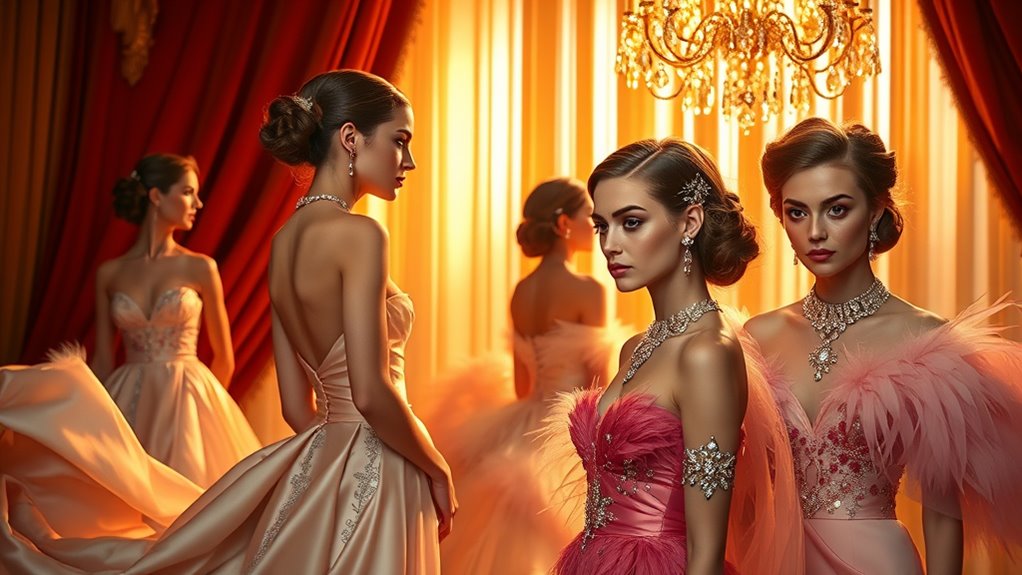

Haute couture’s golden eras are key moments in fashion history when innovation and craftsmanship reached new heights, transforming clothing into art. You’ll see how visionary designers like Coco Chanel and Christian Dior pushed boundaries with new techniques, fabrics, and artistic influences. These periods reflect societal shifts and sparked trends that still influence fashion today. Exploring these iconic eras reveals how fashion continually evolves through creativity and cultural change—continue to uncover the inspiring stories behind these legendary moments.
Key Takeaways
- The 1950s’ post-war elegance, exemplified by Dior’s “New Look,” marked a luxurious, feminine haute couture golden era.
- The early 20th century, with designers like Worth and Chanel, revolutionized craftsmanship and introduced modern silhouettes.
- The 1920s’ Art Deco influence brought innovative embellishments and geometric designs to haute couture.
- The 1960s showcased bold experimentation, mixing avant-garde styles with traditional techniques.
- Technological advances in fabrics and construction during these eras expanded creative possibilities in haute couture.
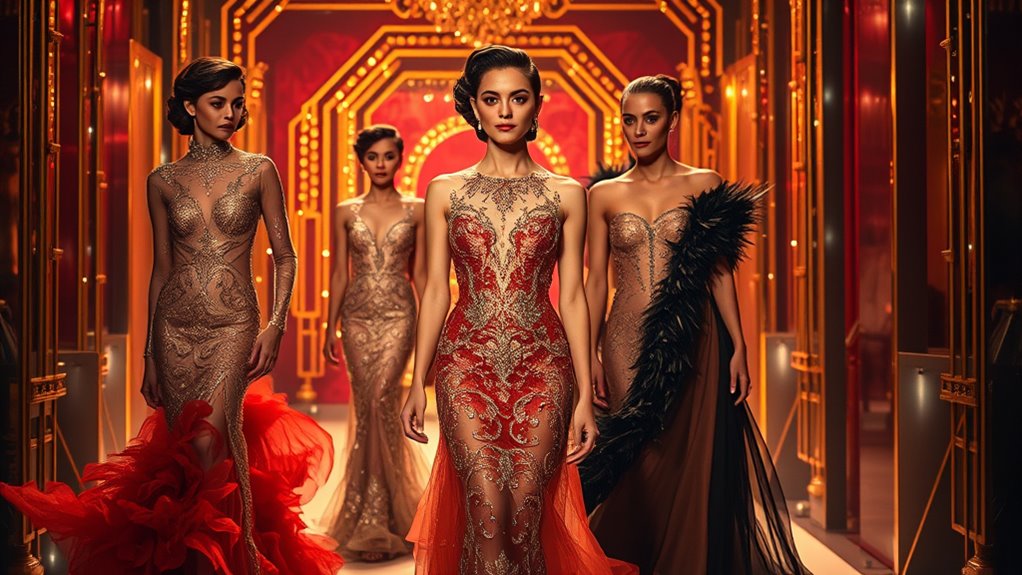
Have you ever wondered what makes certain periods in fashion history stand out as true golden eras for haute couture? It’s a fascinating question because these moments aren’t just about the clothes; they mark pivotal shifts in design evolution that redefine style and influence generations. When you look back at these golden eras, what you’re seeing is a perfect storm of innovation, cultural change, and craftsmanship coming together to elevate fashion beyond mere functionality into an art form. These periods stand out because they embody the spirit of creativity and technical mastery that shape the very foundation of haute couture.
During these iconic times, fashion history is rewritten through groundbreaking designs that broke conventions and set new standards. Think about the early 20th century, when Coco Chanel revolutionized women’s fashion by introducing simpler, more comfortable silhouettes that challenged the ornate restrictions of the Victorian era. Her pioneering approach to design marked a clear turning point in the design evolution, emphasizing practicality without sacrificing elegance. This shift not only transformed how women dressed but also influenced future generations of designers to prioritize innovation and comfort. The 1950s, with Christian Dior’s “New Look,” further exemplifies a golden era where opulence and femininity reigned supreme, creating a new aesthetic that celebrated luxury and craftsmanship. These moments are etched into fashion history because they reflect societal shifts and a desire for renewed self-expression through clothing.
Groundbreaking designs in the early 20th and 1950s revolutionized fashion, blending innovation, societal shifts, and craftsmanship.
The design evolution during these golden eras often involves the mastery of techniques that had been refined over centuries, yet applied in fresh and unexpected ways. Haute couture houses began experimenting with new fabrics, construction methods, and embellishments, pushing the boundaries of what clothing could be. For example, the intricate draping and tailoring seen in the works of designers like Balenciaga or Schiaparelli showcase how craftsmanship elevated fashion into high art. Their innovations set the stage for future designers to explore new forms, textures, and concepts, making these eras essential chapters in fashion history. The integration of art movements, technological advancements, and cultural influences also played a fundamental role in shaping the design evolution, making each golden era a unique reflection of its time. Additionally, advances in fabric technology allowed designers to experiment with new textures and structures, further expanding the creative possibilities within haute couture.
You can see that these periods are more than just fashionable moments; they are the result of continuous evolution driven by visionary designers who dared to challenge norms. Their influence persists today, shaping modern haute couture and reminding us that the essence of a golden era lies in its ability to inspire, innovate, and elevate fashion into a timeless art form.
Frequently Asked Questions
Who Were the Most Influential Designers of Each Golden Era?
You see, during each golden era, famous fashion icons like Coco Chanel, Christian Dior, and Yves Saint Laurent revolutionized couture innovation. Chanel’s timeless elegance, Dior’s New Look, and Saint Laurent’s revolutionary designs defined their periods. These influential designers shaped fashion history, inspiring countless others and elevating haute couture to an art form. Their groundbreaking work continues to influence modern fashion, making them the most impactful figures of each golden era.
How Did Technological Advances Impact Couture During These Periods?
You see, technological advances like digital embroidery and automated tailoring revolutionized couture during these periods. Digital embroidery allowed you to create intricate, detailed designs more efficiently, pushing the boundaries of craftsmanship. Automated tailoring made fitting and customizing garments faster and more precise, enabling designers to experiment with complex structures. These innovations empowered couture houses to produce extraordinary, innovative pieces while maintaining high-quality standards, transforming fashion into a seamless blend of artistry and technology.
What Social Changes Influenced Haute Couture Trends Historically?
You’ll find that social class shifts and evolving gender roles have beautifully shaped haute couture trends. As society became more fluid, fashion reflected newfound freedoms and changing identities, allowing for more expressive designs. During different eras, couture adapted to these shifts—embracing elegance with a touch of rebellion or refinement. These social transformations inspired designers to craft pieces that celebrated individualism, making haute couture a mirror to its time’s cultural evolution.
Were There Any Major Controversies Associated With These Eras?
You’d find that these eras faced major controversies, like fashion industry scandals and ethical controversies, which sometimes tarnished their reputation. For example, some designers were criticized for labor practices or cultural appropriation. These scandals sparked debates about morality versus artistic expression in haute couture. While these controversies challenged the industry, they also pushed it toward more transparency and ethical standards, shaping future fashion trends and practices.
How Did Global Events Affect Couture Production and Popularity?
Global events like economic shifts and cultural exchanges considerably impacted couture production and popularity. During economic downturns, you might notice designers scaling back collections or focusing on timeless pieces, while cultural exchanges introduce new styles and techniques that influence your wardrobe. These events challenge the industry to adapt, making couture more diverse and innovative. As a result, you experience a richer variety of designs, reflecting the changing world around you.
Conclusion
As you imagine the golden eras of haute couture, picture the 1950s when Paris hosted over 50 couture houses, each creating masterpieces that defined elegance. Think about the craftsmanship behind a single gown, taking up to 150 hours to complete. These moments of brilliance transformed fashion into art, inspiring generations. You’re witnessing a legacy built on passion, innovation, and meticulous detail—an enduring tribute to haute couture’s timeless allure.