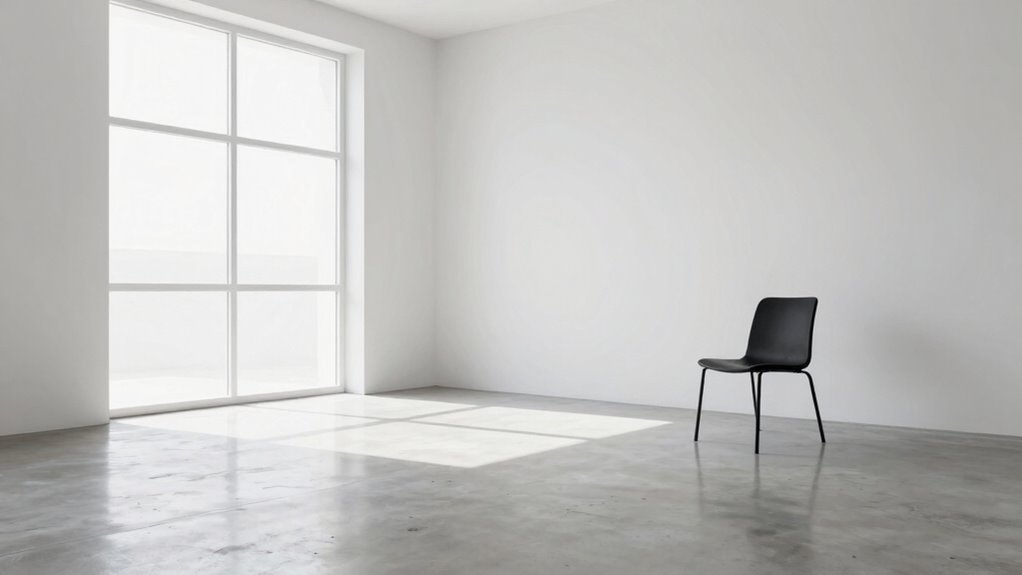

In the late 20th century, you see minimalism rise as a response to cultural upheaval and technological advances. It emphasizes simplicity, clarity, and purpose, shifting away from chaotic Abstract Expressionism toward clean lines and essential forms. This movement influences art, design, architecture, and lifestyles, promoting authenticity, calm, and mindful consumption. If you keep exploring, you’ll discover how minimalism continues to shape contemporary aesthetics and the way we approach everyday life with intention.

Get your wardrobe favorites delivered free — and shop member deals
- Fast, free delivery on millions of items
- Access to Prime Big Deal Days deals on October 6–7
- Prime Video, Amazon Music and more included
Key Takeaways
- Minimalism emerged as a response to the emotional chaos of Abstract Expressionism, emphasizing simplicity and essential forms.
- Technological advancements and societal shifts increased the desire for clean, uncluttered aesthetics.
- The movement influenced art, architecture, and design, promoting functionality and minimal ornamentation.
- It aligned with cultural trends toward authenticity, purposeful living, and mindful consumption.
- Minimalism continues to shape contemporary art and design, emphasizing “less is more” for clarity and calm.

Have you ever wondered how minimalism transformed the art and design landscape in the late 20th century? It’s a fascinating shift that challenged traditional ideas of complexity and ornamentation, pushing creators toward simplicity and clarity. During this period, many artists and designers began to move away from the emotive and often chaotic nature of abstract expressionism, which had dominated earlier decades. Abstract expressionism, with its emphasis on spontaneous brushstrokes and emotional intensity, reflected a world grappling with rapid change and cultural upheaval. But as society grew more interconnected and technology advanced, people started seeking calmer, more stripped-down aesthetics that emphasized function over form. Minimalism emerged as a response, emphasizing clean lines, open spaces, and a focus on essential elements.
Minimalism revolutionized art and design by embracing simplicity, clarity, and essential forms over complexity and ornamentation.
You notice how minimalism aligns with broader cultural shifts, especially the desire for clarity amidst the noise. In a time when information overload was becoming the norm, both artists and consumers sought visual and conceptual simplicity. This shift wasn’t just about style; it was about a different way of engaging with art and design—one that prioritized meaning with less clutter. You might see this in architecture, where sleek, unadorned structures replaced ornate facades, or in graphic design, where typography and layout became more straightforward. Minimalism’s influence stretched beyond aesthetics, reflecting a societal desire to pare down life to its essentials. This emphasis on visual clarity helped to foster a sense of peace and focus in everyday environments. Additionally, the movement’s focus on essential elements encouraged a broader cultural appreciation for authenticity and purpose. The movement’s principles also resonated with the rise of modern minimalist lifestyles, which emphasize simplicity and intentional living. This cultural shift towards minimalism also helped inspire new approaches to sustainability and mindful consumption.
As you explore the late 20th-century art scene, you’ll notice how minimalist works often convey a sense of calm and order, providing a counterbalance to the complexity of the modern world. This movement also challenged the notion that art had to be emotionally overwhelming to be meaningful. Instead, it invites you to focus on the purity of form and space, encouraging reflection and clarity. The shift from abstract expressionism to minimalism wasn’t just stylistic; it marked a cultural reevaluation of what art and design could be. It’s about stripping away the unnecessary to reveal what truly matters. This movement was also influenced by the broader cultural shift toward simplicity, which emphasized authenticity and function over ornamentation.
Ultimately, the rise of minimalism in the late 20th century mirrors your own pursuit of simplicity amid chaos. It’s a response to cultural shifts that valued authenticity and function over ornamentation. By embracing minimalism, you’re participating in a movement that seeks to find beauty and meaning in the essentials, making your environment and your experience more intentional and focused. This movement continues to influence contemporary art and design, reminding you that sometimes, less truly is more.
As an affiliate, we earn on qualifying purchases.
Frequently Asked Questions
How Did Minimalism Influence Global Design Trends Beyond the West?
You see minimalism’s influence beyond the West through cultural adaptation and regional variations. Designers worldwide embraced simple, functional aesthetics, blending local traditions with minimalist principles. In Asia, for example, minimalism integrates traditional craftsmanship, creating unique regional styles. This global shift promotes clean lines and understated elegance, inspiring diverse cultural expressions. As a result, minimalism evolves locally while maintaining its core values, shaping contemporary design across different regions.
What Were the Main Criticisms of Minimalism During Its Rise?
A picture is worth a thousand words, and critics argued that minimalism’s artistic simplicity often led to aesthetic reduction, stripping away emotional depth. They believed it sacrificed personality for clean lines, making designs feel cold or sterile. People felt minimalism prioritized form over function, risking superficiality. These criticisms highlighted concerns that minimalism’s focus on simplicity might overlook the richness of human experience, leading some to see it as overly restrictive or impersonal.
Which Specific Artists or Architects Pioneered Late 20th-Century Minimalism?
You see that artists like Donald Judd and Dan Flavin, along with architects such as Tadao Ando, pioneered late 20th-century minimalism. They focus on a restrained color palette, often neutral or monochromatic, emphasizing simplicity. Their material selection highlights clean lines and industrial materials like metal, concrete, and glass, creating spaces and artworks that evoke calm and clarity. Their work champions essential form, stripping away unnecessary detail.
How Did Minimalism Impact Consumer Culture and Advertising?
Minimalism cuts through the noise like a sharp blade, transforming consumer culture and advertising by emphasizing brand simplicity and visual clarity. You notice fewer cluttered messages, making products feel more refined and trustworthy. This approach encourages brands to focus on core values, creating a sleek aesthetic that appeals directly to your senses. As a result, minimalism shapes your perception, making advertising more honest, memorable, and impactful through its clean, straightforward design.
What Role Did Technology Play in the Development of Minimalism?
Technology played a vital role in developing minimalism by enabling digital decluttering, which promotes aesthetic simplicity and mental clarity. You find that digital tools help you prioritize essential content, reducing distractions and excess. This shift encourages a minimalist lifestyle, emphasizing clean, functional designs both online and offline. As a result, technology fosters a movement that values simplicity, allowing you to focus on what truly matters and creating a more intentional daily experience.
Conclusion
As you reflect on the rise of minimalism in the late 20th century, you realize how it challenged you to find beauty in simplicity and clarity. Just like discovering a vintage vinyl in your modern playlist, minimalism brings a invigorating perspective to a cluttered world. It’s a reminder that sometimes, less truly is more—an idea that still resonates today, proving that even in the age of smartphones, simplicity remains timeless.
Fall Picks
fall essentials
As an affiliate, we earn on qualifying purchases.