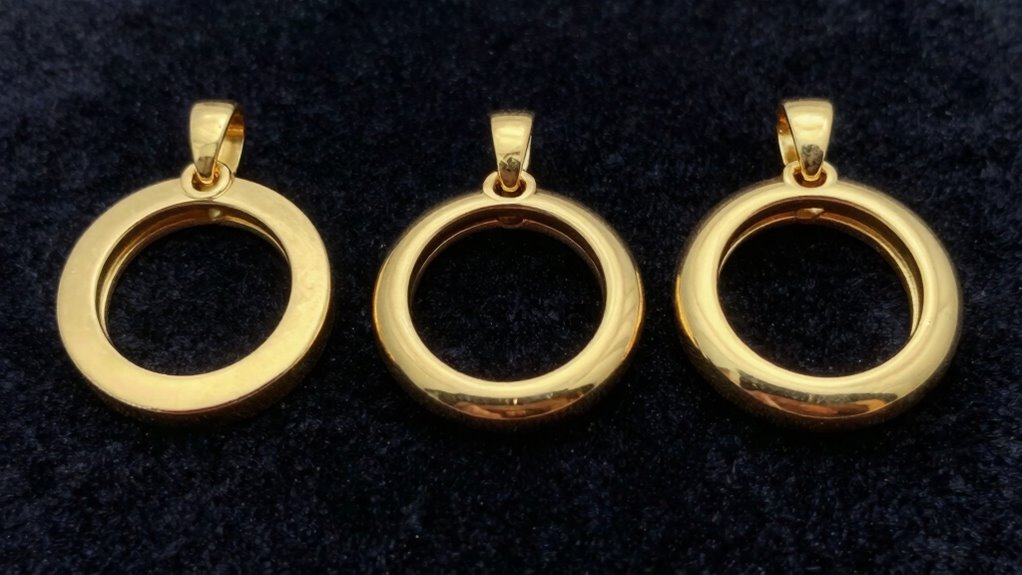
Choosing between 10K, 14K, and 18K gold jewelry depends on your lifestyle and style preferences. 10K is more durable and better for active wear, while 18K offers a richer color and luxurious feel but is softer and needs care. 14K strikes a balance between durability and appearance. Consider how much maintenance you’re willing to do and the look you want. Keep exploring to find the best fit for your jewelry needs.
Key Takeaways
- Consider durability: 10K is most durable, ideal for active lifestyles, while 18K is softer and more delicate.
- Evaluate appearance: 18K offers richer color and a luxurious look; 10K may appear less vibrant.
- Match with lifestyle: Active users benefit from 10K’s toughness; 18K suits those prioritizing luxury and care.
- Assess maintenance: Higher purity (18K) requires more careful handling; 10K needs less maintenance.
- Balance preference: Choose based on desired look, durability, and willingness for care and maintenance.
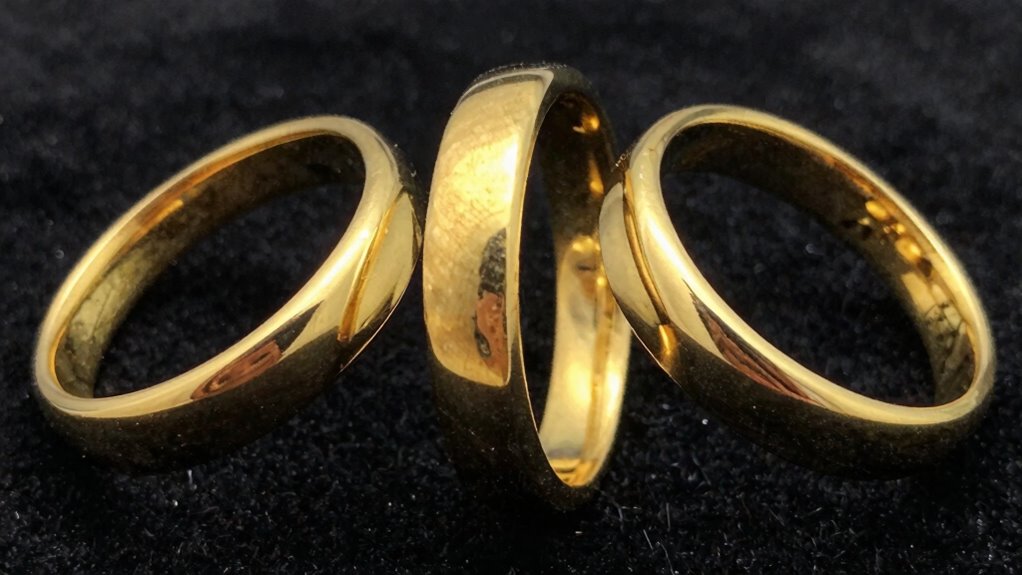
Have you ever wondered why gold jewelry remains a timeless symbol of beauty and wealth? The answer lies in its unique qualities, especially gold purity. Gold purity refers to the amount of pure gold in a piece, measured in karats. For example, 10K gold contains 41.7% gold, while 14K has 58.3%, and 18K boasts 75%. This difference influences not only the appearance but also how you care for your jewelry. Higher purity gold, like 18K, is softer and more delicate, making it more susceptible to scratches and dents. Lower purity options, such as 10K, are tougher and more durable, perfect for everyday wear. When choosing between these, consider how you plan to use your jewelry and how much maintenance you’re willing to perform, since gold purity impacts jewelry maintenance needs.
If you want jewelry that stays looking pristine with minimal effort, 10K might be your best bet due to its durability. However, if you prefer a richer color and a more luxurious feel, 18K gold is more suitable, even though it may require more careful handling and regular cleaning. 14K strikes a balance, offering decent durability while maintaining a beautiful appearance. Remember, regardless of gold purity, proper jewelry maintenance is essential to keep your pieces looking their best. Regular cleaning with gentle solutions, avoiding harsh chemicals, and storing your jewelry properly can prevent tarnishing and scratches. For higher purity gold, you might need to be more cautious, as softer gold can show signs of wear more quickly.
Understanding gold purity is important when selecting jewelry, as it directly affects durability, appearance, and maintenance. Choosing the right karat depends on your lifestyle and aesthetic preferences. If you’re active or prone to knocking your jewelry, a more durable alloy like 10K may be better. If you’re after a piece with a luxurious look and are willing to give it a little extra TLC, 18K offers that elegant appeal. Remember, the higher the gold purity, the more attention your jewelry requires to maintain its shine and luster. Ultimately, your decision should align with how much maintenance you’re comfortable with and the kind of look you want to achieve. By understanding gold purity and committing to proper jewelry maintenance, you’ll ensure your gold jewelry remains stunning and timeless for years to come.
As an affiliate, we earn on qualifying purchases.
Frequently Asked Questions
How Does Karat Affect Gold Durability?
Higher karat purity means softer gold because it has more pure gold in the alloy, making it less durable. With 10K gold, the alloy includes more other metals, which makes it harder and more resistant to scratches or dents. Conversely, 18K gold, with a higher pure gold content, is softer and more prone to damage. So, your choice depends on whether you prioritize durability or higher gold purity in your jewelry.
Is Higher Karat Gold More Hypoallergenic?
Higher karat gold isn’t necessarily more hypoallergenic. If you have allergy sensitivity or skin reactions, lower karat options like 10K may be better because they contain more alloy metals that can cause irritation. While 18K gold has less alloy and might seem gentler, it still contains metals that could trigger reactions. Always check the specific metal composition to find the best hypoallergenic choice for your skin.
Can 10K Gold Be Resized Easily?
Yes, 10K gold can be resized, but it’s a bit more challenging due to its gold alloy composition. Since 10K gold contains less pure gold and more alloy metals, jewelry resizing requires careful handling to avoid damaging the piece. A skilled jeweler can typically resize 10K gold with proper techniques, but keep in mind that the alloy mix may influence the ease and cost of the jewelry resizing process.
How Does Gold Purity Impact Resale Value?
Gold purity directly impacts resale value because higher purity gold, like 18K, is more valuable and desirable on the market. When you sell jewelry, buyers often prefer higher karat gold since it contains more pure gold, increasing its worth. Conversely, 10K gold has lower purity, so its resale value tends to be lower. Ultimately, the higher the gold purity, the better your chances of maximizing resale value.
Are There Specific Care Tips for Different Karat Gold?
Like a delicate garden needing proper care, your gold jewelry requires tailored tips. For higher karats, avoid harsh gold cleaning solutions and store pieces separately to prevent scratches. For lower karats, gently clean with mild soap and water, and keep in a soft pouch. Each karat demands respect—think of it as nurturing a rare bloom, ensuring your jewelry stays radiant and treasured through time.
Conclusion
Choosing between 10k, 14k, and 18k gold is like selecting the right brush for a masterpiece—you want it to suit your style and needs. Consider your budget, lifestyle, and preferred durability. Remember, higher karats offer richer color but are softer, while lower karats are tougher but less vibrant. Ultimately, select the gold that resonates with your personality, turning your jewelry collection into a reflection of your unique story—a treasure chest of memories waiting to be accessed.