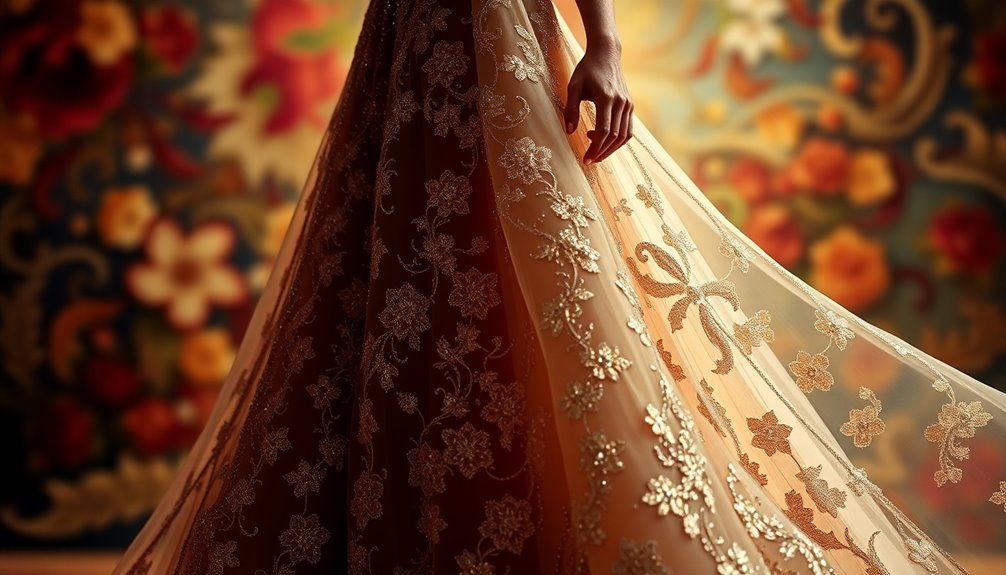
Inside couture gowns, hidden structures like corsetry and reinforcement layers give the gown its perfect shape and stability. You’ll notice that these unseen supports, such as boning and fabric stabilizers, help maintain intricate silhouettes and prevent fabric from sagging or shifting. They enable designers to craft extraordinary, gravity-defying designs with crisp lines and flawless form. If you keep exploring, you’ll discover how these invisible elements play a vital role in creating truly breathtaking couture looks.
Key Takeaways
- Corsetry inside couture gowns provides essential bone reinforcement, shaping the waist and supporting the bust for a flawless silhouette.
- Hidden corsetry uses discreet materials like steel or plastic boning to maintain structure without visible bulk.
- It works in tandem with fabric stabilization methods to prevent stretching, wrinkling, and shifting over time.
- The internal support system ensures complex draping and architectural designs stay intact during wear and movement.
- Properly concealed corsetry enhances comfort, durability, and the gown’s overall aesthetic, transforming it into wearable art.
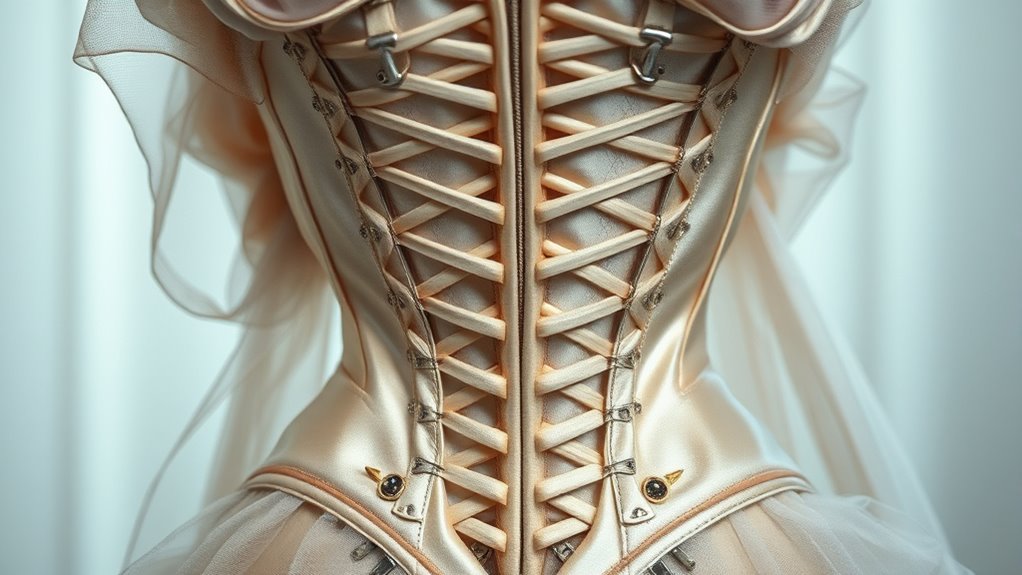
Have you ever wondered what unseen frameworks shape the world around us? When it comes to couture gowns, much of the magic lies beneath the surface—hidden structures that give these designs their form and strength. One of the most critical aspects of this invisible support system is the use of bone reinforcement and fabric stabilization. These techniques ensure that a gown not only looks stunning but also maintains its shape through wear and movement. Without them, the delicate draping and intricate silhouettes would quickly lose their form, leaving you with a garment that appears flimsy or misshapen.
Unseen frameworks like bone reinforcement and fabric stabilization shape the elegance of couture gowns.
Bone reinforcement involves inserting slender, rigid strips—often made of whalebone historically, but now typically of plastic or steel—into the seams or channels of the fabric. These “bones” act as a framework, providing the necessary support to hold the fabric in a desired shape. When you wear a couture gown with bone reinforcement, you might not see these structures, but they play a crucial role in contouring the waist, supporting the bust, or creating dramatic silhouettes. They help the fabric resist collapsing or sagging, giving the gown that couture-quality crispness and definition. Many designers also incorporate supportive structures to enhance comfort and stability during wear. Additionally, understanding the importance of material selection is essential for achieving both durability and aesthetic excellence in couture design.
Fabric stabilization works hand in hand with bone reinforcement. It involves techniques that prevent the fabric from stretching out or wrinkling over time. This could mean adding interfacing, using specific stitching methods, or employing fusible materials that fuse the layers of fabric together securely. When you look at a couture gown, it’s these stabilizing methods that keep the delicate embroidery, lace, or silk from shifting or losing their intended shape. Fabric stabilization ensures that every fold, pleat, or drape remains precisely where it’s meant to be, maintaining the designer’s vision.
Together, bone reinforcement and fabric stabilization form an invisible skeleton that makes couture gowns stand out. They allow designers to push the boundaries of what’s possible in fashion, creating elaborate shapes and architectural structures that seem to defy gravity. If you’ve ever admired a gown’s flawless silhouette, it’s worth remembering that these unseen frameworks are doing much of the heavy lifting. They’re the quiet backbone supporting the artistry, making sure that the gown looks as breathtaking on the runway or at a formal event as it did when it was first crafted. Additionally, choosing the right materials for reinforcement and stabilization is crucial in achieving both durability and aesthetic excellence.
In essence, these hidden structures are what elevate couture from mere clothing to wearable art. They provide the stability and reinforcement necessary for complex, innovative designs to come alive and stay beautiful over time. So, next time you marvel at a stunning gown, consider the unseen but essential role of bone reinforcement and fabric stabilization—these are the secret foundations behind every elegant curve and crisp line.
Frequently Asked Questions
How Do Corsets Affect the Overall Comfort of Couture Gowns?
Corsets can markedly impact your comfort when wearing couture gowns. While they provide shaping and support, their historical evolution shows they were once quite restrictive, affecting ease of movement. Today, designers balance this by considering cultural significance and modern comfort, making corsets less confining. You might find some are more comfortable than others, but overall, they enhance the gown’s silhouette without sacrificing too much wearability.
What Materials Are Commonly Used in Hidden Corsetry?
You’ll find that materials like steel or busk closures, boning, and fabric reinforcement are commonly used in hidden corsetry. These materials help with silhouette shaping, providing structure and support while maintaining comfort. You’ll notice that the combination of sturdy yet flexible fabrics, like coutil or coutil blends, and strong boning materials guarantees the gown stays perfectly fitted, creating a smooth silhouette without sacrificing wearability.
Can Corsetry Inside Couture Gowns Be Customized for Different Body Types?
Yes, corsetry inside couture gowns can be customized to suit different body types. You’ll find that designers create a custom fit by tailoring the corset to your unique measurements, embracing body diversity. This personalization ensures comfort and enhances your silhouette. By adjusting the structure and materials, the corset provides ideal support, making sure every gown fits beautifully and flatters your individual shape, celebrating your unique beauty.
How Do Designers Ensure the Durability of Hidden Corsetry?
You might wonder how designers guarantee hidden corsetry lasts. They focus on sturdy corset construction, using high-quality materials like steel boning and strong fabrics, which prevent deformation over time. Proper stitching and reinforcement enhance garment longevity, ensuring the corset remains supportive and secure through wear. By paying close attention to these details, designers create durable hidden corsetry that maintains its shape and function, even with repeated use.
Are There Specific Techniques to Conceal Corsetry Within the Gown’s Fabric?
You can conceal corsetry within a gown using seamless integration and fabric manipulation techniques. Designers often hide the structure by carefully stitching the corset inside the fabric, ensuring it’s invisible to the eye. They also use tailored fabric folds and pleats to hide seams, creating a smooth appearance. These methods make the corsetry invisible, maintaining the gown’s elegant silhouette while providing the necessary support and shape.
Conclusion
You now see how corsetry acts as the silent backbone of couture gowns, shaping beauty behind the scenes. These hidden structures aren’t just about support—they’re about creating a flawless silhouette that turns heads. Remember, the devil’s in the details, and often it’s what you don’t see that makes all the difference. So next time you admire a stunning dress, know that beneath its elegance lies a carefully crafted secret, holding everything together like clockwork.