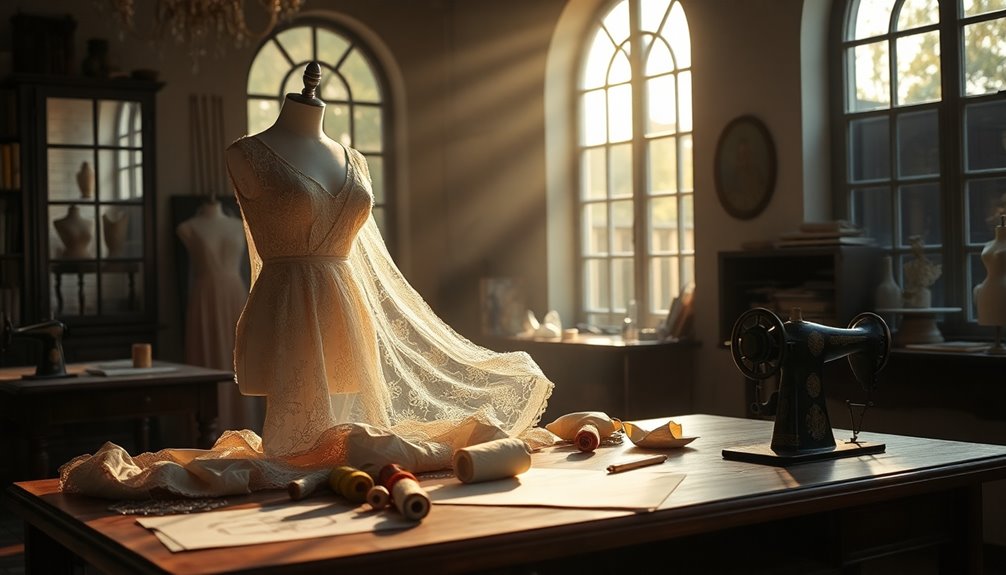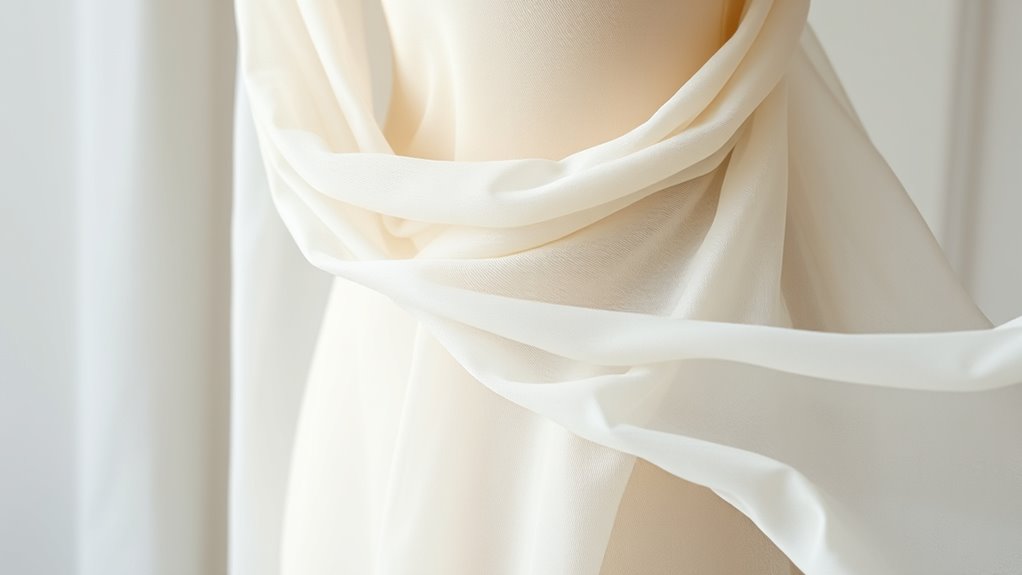

Mastering the art of draping in muslin lets you experiment with fabric manipulation, refine your skills, and develop your creative vision. It provides a low-risk environment to shape, adjust, and test ideas for fit and silhouette, all while understanding how fabric behaves. This hands-on process connects traditional craftsmanship with modern design, empowering you to translate concepts into tangible garments. Keep exploring, and you’ll discover more about harnessing muslin to elevate your fashion projects.
Key Takeaways
- Muslin draping allows for real-time fabric manipulation to explore structure, fit, and form without costly materials.
- It serves as a risk-free platform for experimenting with garment silhouettes and refining design ideas.
- Historically, muslin was used by master dressmakers to test and develop iconic fashion shapes.
- Draping in muslin helps designers understand fabric behavior, fall, and stretch for better garment construction.
- Mastering muslin draping bridges traditional craftsmanship with innovative contemporary fashion design.
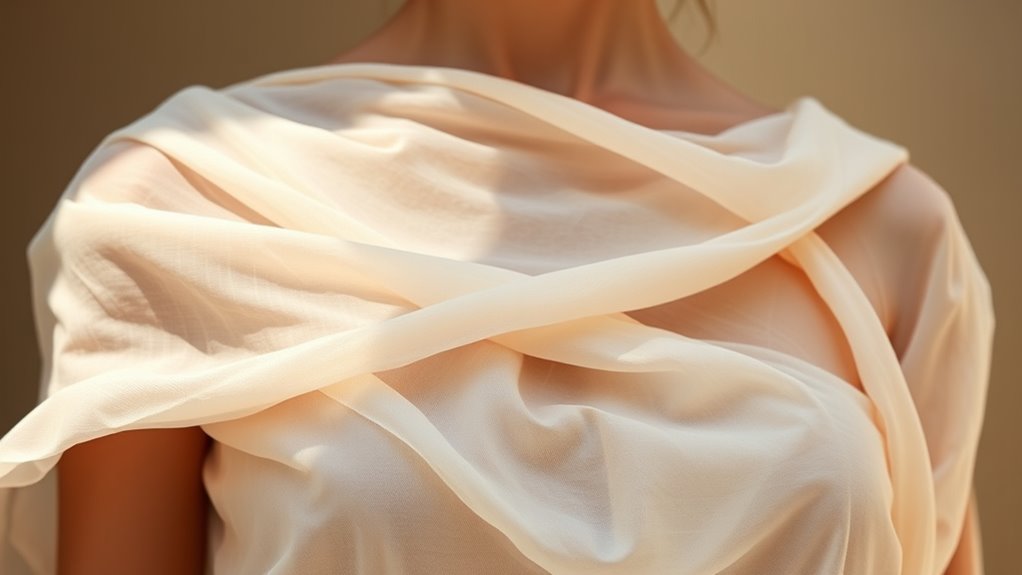
Draping in muslin is a fundamental skill that transforms a designer’s vision into a tangible garment. When you work with muslin, you’re engaging in fabric manipulation that allows you to experiment with structure, fit, and form before committing to more expensive fabrics. This process is essential because it gives you the freedom to adjust, refine, and perfect your design in real-time. You can pin, tuck, and fold the muslin as you see fit, gaining immediate feedback on how the fabric responds to your gestures. As you manipulate the fabric, you develop a deeper understanding of how different materials behave, which directly influences your decision-making when working with final fabrics. This hands-on approach not only hones your technical skills but also enhances your creative intuition, making each draping session a learning experience.
In addition to the technical aspects, draping in muslin carries a rich historical influence that shapes contemporary practices. Historically, master dressmakers and couturiers relied heavily on muslin to craft their designs, especially during the 19th and early 20th centuries. This fabric was prized for its affordability, ease of manipulation, and quick turnaround, making it the perfect medium for testing design ideas. Many iconic fashion moments and silhouettes originated from these muslin mock-ups, which were then translated into luxurious fabrics. By understanding this history, you appreciate muslin not merely as a practice fabric but as a link to the craftsmanship and innovation of past designers. This influence encourages you to honor tradition while exploring your own creative boundaries, blending historical techniques with modern aesthetics. Additionally, practicing with muslin helps develop a foundation in garment construction, which is essential for any aspiring fashion designer.
When you drape in muslin, you’re participating in a centuries-old tradition of shaping garments through fabric manipulation. You learn to read the fabric’s behavior, anticipate how it will fall or stretch, and make precise adjustments accordingly. Recognizing the historical influence behind these techniques deepens your respect for the craft, inspiring you to carry forward the legacy of master drapers who used muslin to perfect their designs. Whether you’re creating a simple bodice or an elaborate evening gown, the skill of draping in muslin anchors your work in a tradition of innovation, experimentation, and craftsmanship. This process ultimately empowers you to translate your conceptual ideas into real, wearable art—an ongoing conversation between past and present that shapes your unique design voice.
Frequently Asked Questions
What Tools Are Essential for Muslin Draping?
You’ll need essential tools like pins, pattern weights, scissors, and a ruler for muslin draping. Start with quality fabric selection that matches your project, making certain of accurate fitting adjustments. Use your pins to secure the muslin to the dress form, and pattern weights to keep fabric steady. Scissors help trim excess, while a ruler ensures straight lines. These tools help you perfect your design through precise fitting adjustments.
How Do I Correct Fitting Issues During Draping?
Think of yourself as a tailor wielding a magic wand. To correct fitting issues during draping, start by fabric adjustment—pin or pinched fabric helps visualize the fit. Then, focus on seam correction, carefully resewing or adjusting seams to smooth out irregularities. Keep checking your work as you go, ensuring the muslin molds perfectly to the form. With patience, your drape will transform into a flawless fit.
Can Muslin Draping Be Used for Complex Designs?
Yes, muslin draping can be used for complex designs because it offers great fabric manipulation and design versatility. You can experiment with intricate folds, pleats, and layers directly on the form, allowing you to visualize your creative ideas clearly. Its flexibility helps you refine details before working with final fabrics, making it an ideal choice for developing complex, innovative fashion designs.
How Long Does a Typical Muslin Draping Session Take?
A typical muslin draping session lasts between 1 to 3 hours, depending on the complexity of your design. You should plan your time carefully, as intricate details or multiple layers can extend draping duration. Effective time management helps you stay organized and guarantees you have enough time to refine the fit and shape. Keep focused, work efficiently, and don’t rush — quality draping takes patience and precision.
What Are Common Mistakes to Avoid in Muslin Draping?
To avoid mistakes in muslin draping, keep an eye on fabric stretch and seam alignment. Don’t pull the fabric too tightly, as it can distort the drape, and always check that seams match perfectly for a clean look. Be mindful of how the muslin behaves; smooth out wrinkles regularly and adjust the fabric as needed. This attention safeguards against uneven draping and ensures your design looks polished and professional.
Conclusion
As you master the art of draping in muslin, you’ll find each fold and curve revealing more than just fabric—you’ll discover your own creativity. Just like how a simple piece of cloth can transform into a stunning design, your skills will evolve with every fold. It’s no coincidence that patience and practice go hand in hand; they guide you toward the perfect drape. Embrace each moment, and watch your artistry unfold naturally, one beautiful fold at a time.