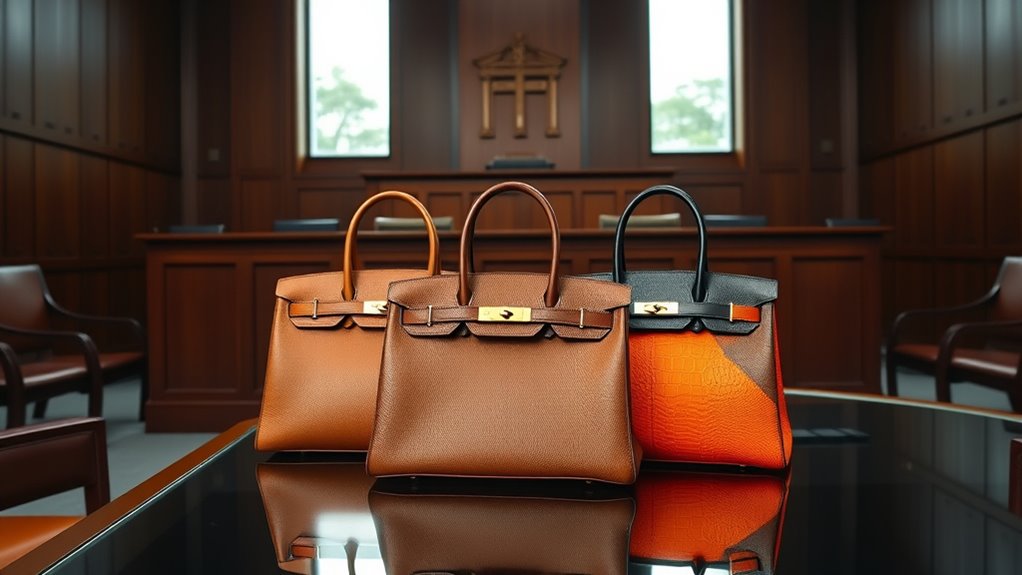

Hermès just scored a legal victory as a court dismissed a class action claiming the brand engaged in illegal tying practices around its Birkin bags. The judge ruled that the plaintiffs failed to prove their claims, allowing Hermès to continue its exclusive sales approach without legal threat. This decision underscores the difficulty of proving antitrust violations in the luxury market. If you’re curious about how this ruling might impact future luxury litigation, there’s more to explore.
Key Takeaways
- The court dismissed the lawsuit, ruling plaintiffs failed to establish a legal basis for their antitrust claims.
- Hermès argued its sales practices do not constitute illegal tying under existing laws.
- The judge affirmed that Hermès’ approach maintains lawful exclusivity in their luxury brand strategy.
- The decision prevents the case from advancing to certification or trial stages.
- This ruling reinforces Hermès’ ability to continue its current sales and marketing practices legally.

In a pivotal development for Hermès, the company secured a legal victory when a federal court dismissed a class action lawsuit accusing it of antitrust violations related to Birkin bag sales. This ruling marks a vital turning point, preventing the lawsuit from proceeding further and shielding Hermès from potential damages. The case, filed on March 19, 2024, in the U.S. District Court for the Northern District of California, was brought by plaintiffs Tina Cavalleri, Mark Glinoga, and Mengyao Yang, who argued that Hermès engaged in illegal tying practices and violated federal and state antitrust laws. They claimed that Hermès conditioned access to Birkin bags on the purchase of ancillary products, such as scarves, shoes, jewelry, or home goods, and alleged that this practice unfairly restricted consumer choice and maintained artificial scarcity.
The plaintiffs contended that Hermès required customers to demonstrate a “sufficient purchase history” of other Hermès products before being allowed to buy a Birkin, and that sales associates pressured buyers into purchasing additional items to qualify for the coveted bag. They argued this amounted to unlawful tying—an illegal practice where the sale of one product depends on the purchase of another—and claimed it distorted the market, limiting competition and inflating prices. The lawsuit sought class-action status, aiming to represent thousands of consumers impacted by these alleged tactics and challenge Hermès’ business model, which relies heavily on exclusivity, limited production, and controlled distribution.
Hermès responded by vigorously denying these allegations. The company asserted that there’s no illegal tying because Birkin bags and ancillary goods are not in separate markets, and that their sales practices are standard for luxury brands aiming to preserve exclusivity. Hermès also argued that the plaintiffs’ claims about market power lacked merit and that their policies are consistent with maintaining the brand’s premium status. The company highlighted that its sales associates do not receive commissions on Birkin sales, suggesting there’s no financial incentive to pressure customers into buying additional products.
Hermès denies illegal tying, asserting their sales practices are standard and aligned with maintaining luxury exclusivity.
The court’s dismissal of the case was based on Hermès’ motion to dismiss, which argued that the plaintiffs failed to establish a legal basis for their claims. The judge agreed, ruling that the plaintiffs did not sufficiently demonstrate that Hermès engaged in unlawful tying or violated antitrust laws. This decision prevents the case from moving forward to certification or trial, providing Hermès with a significant legal safeguard. While the legal battle might still see appeals or related actions, this ruling affirms Hermès’ current sales practices and underscores the challenges of applying antitrust laws to luxury brand strategies. For now, Hermès can continue its exclusive approach, confident that its practices won’t be deemed illegal under current legal standards.
Frequently Asked Questions
Will Hermes Face Future Class Action Lawsuits?
Yes, Hermès might face future class action lawsuits. You should watch for allegations of illegal tying arrangements, exclusive sales practices, or misleading consumers about product availability. Although a recent case was dismissed, plaintiffs keep refiled complaints, indicating ongoing legal challenges. Hermès’ strategies, like requiring purchase histories and pressuring customers to buy ancillary products, could attract new lawsuits, especially as consumer protections and antitrust laws evolve.
How Does This Ruling Affect Birkin Bag Prices?
So, the ruling keeps Birkin bag prices soaring, and surprise, surprise, your wallet stays as tight as Hermès’ supply chain. With no legal pressure to loosen sales restrictions or lower prices, Hermès can keep the bags exclusive—and expensive. The artificial scarcity persists, making your dream Birkin even more elusive. Basically, this decision guarantees you’ll pay top dollar, while Hermès continues to guard its luxury fortress unchallenged.
Are There Similar Cases Against Other Luxury Brands?
Yes, similar cases target other luxury brands over supply and pricing practices. You’ll find lawsuits against brands like Hermès, alleging they restrict product availability to inflate prices and maintain exclusivity. These legal actions focus on alleged antitrust violations, aiming to challenge how luxury brands control distribution channels and manipulate market demand. If you’re interested in luxury market practices, watch for ongoing litigation that could reshape how these brands operate and price their products.
What Legal Grounds Did Hermes Use to Win?
Hermès played their trump card by arguing that Birkin bags occupy a unique luxury market, making antitrust laws inapplicable. They claimed their exclusive sales practices are standard in high-end markets, not illegal tying or monopoly behavior. The court bought their story, ruling the plaintiffs failed to prove market power or harm. It was a classic case of “crying wolf” — the legal system didn’t see any wrongdoing.
Could Consumers Still Pursue Individual Claims?
Yes, you can still pursue individual claims against Hermès. Even without class action status, you may file your own lawsuit if you can prove antitrust injury, coercion, or unfair practices. Make sure to gather detailed purchase records and document any pressure to buy additional products. Consulting an attorney experienced in antitrust law helps strengthen your case, but be aware that legal costs and proof requirements can be challenging.
Conclusion
This ruling is a massive win for Hermes, proving that their craftsmanship and brand integrity can’t be overshadowed by fleeting legal challenges. You now see how fiercely they protect their iconic Birkin bags, like a fortress guarding priceless treasure. This victory isn’t just a small win; it’s a tidal wave that solidifies Hermes’ legacy as the unrivaled king of luxury. Rest assured, they’ll continue to stand tall, unshaken, amidst any storm that dares to threaten their empire.