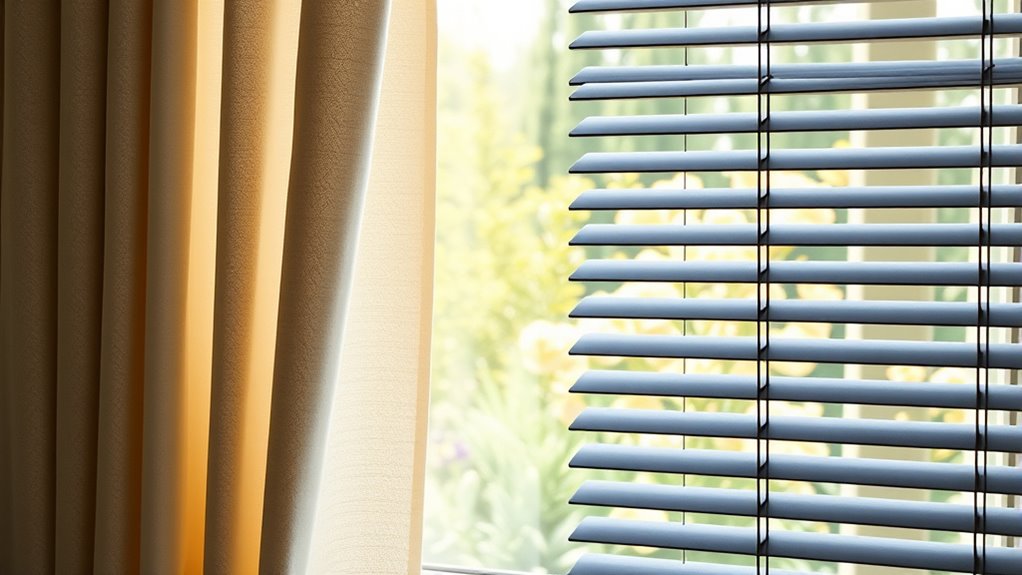

When choosing between curtains and blinds, consider your privacy, energy needs, and style. Curtains offer full coverage for enhanced privacy and insulation but may require more maintenance. Blinds provide adjustable light control and are easier to clean, giving a modern look. If you want cozy warmth or full privacy, curtains might suit best, but for sleek design and flexibility, blinds work well. Keep exploring to discover how each option fits your space perfectly.
Key Takeaways
- Curtains offer superior privacy and insulation, ideal for bedrooms and colder climates.
- Blinds provide adjustable light control and easier maintenance for busy households.
- Thick, lined curtains enhance energy efficiency by trapping heat, while honeycomb blinds also improve temperature regulation.
- Curtains add warmth and texture to a room’s decor, whereas blinds deliver a sleek, modern aesthetic.
- Choose based on your privacy needs, energy goals, maintenance preferences, and desired interior style.

When it comes to dressing up your windows, choosing between curtains and blinds can be a tough decision. Both options have their strengths, but your choice ultimately depends on your priorities, especially when it comes to privacy concerns and energy efficiency. Curtains tend to offer a higher level of privacy because they completely cover the window when drawn, preventing outsiders from peeking in. If privacy is a top priority, especially in bedrooms or street-facing rooms, thick, lined curtains can be an excellent choice. They provide an extra layer of security and help block out sounds, giving you a sense of solitude. Blinds, on the other hand, often provide adjustable coverage, allowing you to control how much light and visibility you permit. While they can be closed tightly for privacy, some styles, like Venetian or mini blinds, might leave small gaps that compromise privacy if not properly adjusted.
Curtains offer full privacy and sound insulation, ideal for bedrooms and street-facing windows.
Energy efficiency is another critical factor to contemplate. Curtains, especially those made from insulating fabrics, can considerably reduce heat transfer through the window. During winter, thick curtains trap warm air inside, keeping your space cozy and reducing your reliance on heating. Likewise, in summer, they help block out heat from the sun, keeping rooms cooler. This added insulation can lead to noticeable savings on energy bills. Blinds can also contribute to energy efficiency, but their effectiveness depends on the material and style. Cellular or honeycomb blinds, for example, are designed with insulating pockets that trap air, providing a barrier against temperature changes. Traditional blinds may not offer the same level of insulation but can still help in controlling indoor temperatures if used strategically. Additionally, the integration of innovative materials in window treatments is becoming increasingly popular to boost energy savings even further.
Another point worth contemplating is the ease of maintenance and how each option fits into your lifestyle. Curtains can be washed or dry cleaned, but they may require more effort to keep clean, especially if they’re made of delicate fabrics or are large. Blinds are generally easier to wipe down and less prone to dust buildup, making them a practical choice for busy households or allergy sufferers. Additionally, curtains tend to add softness and texture to a room, creating a warm, inviting atmosphere, while blinds offer a sleek, modern look that can complement minimalist decor.
Ultimately, your decision hinges on balancing your privacy needs, energy-saving goals, and aesthetic preferences. Whether you opt for the full coverage of curtains or the adjustable control of blinds, understanding how each affects privacy and energy efficiency will help you create a comfortable, stylish space tailored to your needs.
Frequently Asked Questions
Which Window Treatment Is More Energy-Efficient?
You’ll find blinds generally more energy-efficient because they offer better thermal insulation, helping keep your home warm in winter and cool in summer. Choose cellular or honeycomb blinds for ideal insulation, and look for options with UV protection to block harmful rays while maintaining temperature. Curtains can also provide insulation, but blinds tend to be more effective at sealing windows and reducing energy loss, saving you money on heating and cooling costs.
Are Curtains or Blinds Better for Allergy Sufferers?
You’ll find that curtains are better for allergy sufferers because they trap dust and allergens, making dust accumulation easier to remove during regular washing. They also help with mold prevention by reducing moisture buildup around your windows. Blinds can collect dust in small gaps, aggravating allergies. So, if you want to minimize allergens and prevent mold, opting for washable curtains is your best choice for a healthier home environment.
How Do Curtains and Blinds Affect Room Acoustics?
You might be surprised to learn that curtains can reduce noise levels by up to 10 decibels, improving room acoustics considerably. Curtains excel at sound absorption, dampening echoes and minimizing external noise, making your space quieter. Blinds, on the other hand, reflect sound, offering less noise reduction. If you want better room acoustics and a peaceful environment, opt for thick, heavy curtains that enhance sound absorption.
Can Curtains or Blinds Be Child-Safe?
Yes, you can find child-safe curtains and blinds. Look for window treatments with cordless designs or safety devices to prevent accidents. Child safety is vital, so choose options that eliminate hanging cords, which pose strangulation risks. Additionally, make certain your window treatments improve window security by preventing easy access for children to open or fall through. Always follow manufacturer safety guidelines to keep your kids safe while enhancing your home’s security.
Which Options Are More Durable Long-Term?
Blinds tend to be more durable long-term because their material, like aluminum or vinyl, resists wear and tear better than fabric curtains. They require less maintenance, usually just wiping down, whereas fabric curtains need regular washing or dry cleaning. If you want a long-lasting option, blinds are your best bet. They withstand daily use and exposure to sunlight better, making them a smarter investment for durability over time.
Conclusion
So, now that you’ve weighed the pros and cons, it’s clear that both curtains and blinds have their own charm. Ultimately, the choice boils down to your style, needs, and how much effort you’re willing to put in. Remember, it’s your home, and you should pick what feels right for you. Don’t forget, sometimes the best solution is to find a middle ground—striking a balance can turn out to be the best of both worlds.