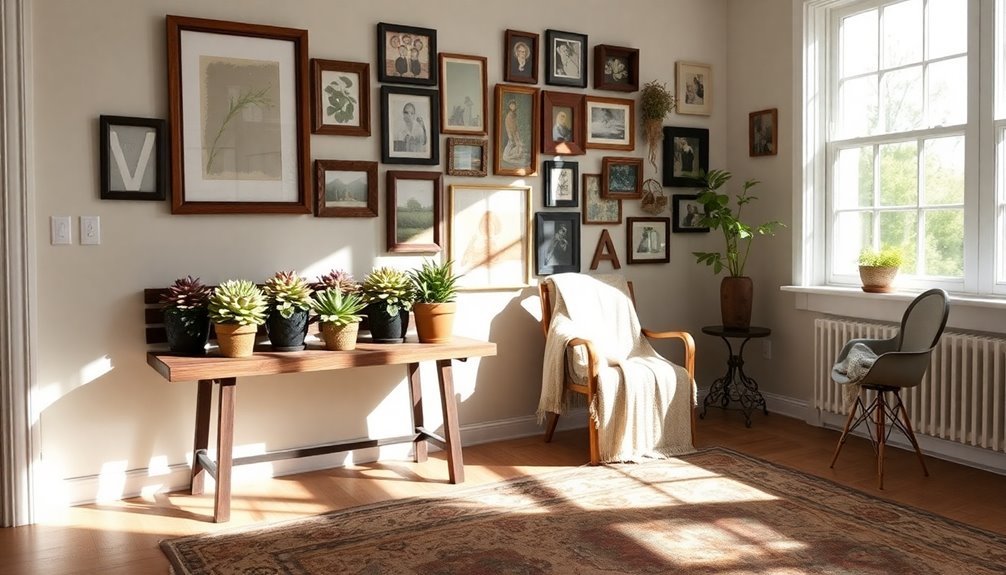
To apply the rule of thirds in shelf styling, imagine dividing your shelf into three sections—top, middle, and bottom. Place your main focal objects, like vases or framed photos, in these areas for balance. Fill the remaining spaces with books and smaller items, being mindful of size, color, and texture to create visual rhythm. Practice this method to craft a cohesive, attractive display that naturally guides the eye—keep exploring for more tips to perfect your style.

Get your wardrobe favorites delivered free — and shop member deals
- Fast, free delivery on millions of items
- Access to Prime Big Deal Days deals on October 6–7
- Prime Video, Amazon Music and more included
Key Takeaways
- Divide the shelf into three sections: top, middle, and bottom for balanced placement.
- Position main objects or focal points in the middle or at the thirds for visual harmony.
- Arrange books and decor to occupy the top and bottom thirds, creating a natural flow.
- Use spacing to prevent overcrowding, allowing each section to breathe visually.
- Balance items across all three sections to achieve a cohesive and appealing shelf display.

Shelf styling transforms empty or cluttered shelves into eye-catching displays that enhance your space. When you focus on creating a balanced and visually appealing arrangement, you can turn a simple shelf into a focal point in any room. One effective technique to achieve this is the rule of thirds, which helps you organize your items in a way that feels natural and harmonious. This approach isn’t just about aesthetics; it’s about creating a sense of order that guides the eye smoothly across your display. To start, think about your book arrangement. Instead of lining books up uniformly, mix vertical stacks with horizontal piles. Varying the orientation adds interest and breaks the monotony. When arranging books, consider grouping them by size, color, or theme so they don’t look random. Incorporating books of different heights and widths creates a dynamic visual flow, making the shelf feel intentional rather than cluttered.
Color coordination plays a vital role in applying the rule of thirds effectively. When you select books, accessories, or decorative objects, aim for a balanced distribution of colors across the shelf. Instead of clustering similar hues in one spot, spread them out, creating a rhythm that pleases the eye. For instance, if you have a collection of blue and white books, place a blue book on one side, then balance it with a white one on the opposite end or in the middle. This technique helps prevent one section from feeling too heavy or overwhelming. It’s also helpful to introduce pops of contrasting colors or metallic accents to add visual interest without disrupting the overall harmony. The rule of thirds encourages you to divide the shelf into three sections—top, middle, and bottom—and place your main focus items in these areas. For example, a statement piece like a decorative vase or a framed photo might anchor the middle third, while books and smaller objects fill the top and bottom sections.
When you follow the rule of thirds, you avoid overcrowding and create a sense of balance. It’s about intentional placement, guiding the viewer’s eye naturally from one section to another without feeling overwhelmed. Remember, you don’t have to fill every inch of space—leaving some breathing room makes your display more inviting and sophisticated. Additionally, incorporating quality ingredients in your decorative choices, such as textured materials or high-end finishes, can elevate the overall look. The key is to position your items thoughtfully, considering both their size and color, so each piece complements the others. With practice, this method helps you craft a cohesive, stylish shelf that reflects your personality while maintaining visual harmony. By mastering book arrangement and color coordination through the rule of thirds, you’ll elevate even the simplest shelves into stunning design elements.
Frequently Asked Questions
Can the Rule of Thirds Apply to Irregularly Shaped Shelves?
Yes, the rule of thirds can apply to irregularly shaped shelves, helping you create a balanced and visually interesting display despite an unconventional layout. When styling irregular shelf shapes, imagine dividing the space into thirds, both horizontally and vertically, to position your items thoughtfully. This technique guides your eye naturally across the shelf, making even the most unconventional layout feel intentional and harmonious, enhancing your overall decor.
How Do I Balance Color Schemes Using the Rule of Thirds?
Imagine you’re a master painter, blending colors with finesse. To balance color schemes using the rule of thirds, focus on creating color harmony by placing dominant hues along the grid lines or intersections. This guides the eye naturally, establishing a visual flow. Use contrasting or complementary colors strategically, ensuring no single hue overwhelms. Think of your shelf as a canvas, where balanced colors draw viewers in effortlessly.
Is the Rule of Thirds Suitable for Small or Cluttered Shelves?
The rule of thirds can work on cluttered shelves if you focus on creating visual balance. For small or cluttered spaces, use this rule to position key items off-center, which helps avoid overwhelming the eye. Keep some areas minimal, with fewer items, to create breathing space. By strategically placing objects according to the rule of thirds, you’ll make your small or cluttered shelves look more organized and appealing.
Should the Rule of Thirds Be Used With Symmetrical or Asymmetrical Arrangements?
Think of your shelf as a stage where symmetry and asymmetry take center stage. You should use the rule of thirds with asymmetrical arrangements, creating dynamic focal points that draw the eye. Symmetrical setups feel balanced but can become dull if overused. By placing focal points off-center according to the rule of thirds, you add visual interest and energy, transforming your shelf into a mesmerizing display rather than just a storage space.
How Can I Adapt the Rule of Thirds for Themed or Seasonal Shelf Displays?
You can adapt the rule of thirds for themed displays by placing key seasonal items at the intersection points, creating visual interest. Use asymmetrical arrangements to highlight specific elements, like a holiday ornament or a seasonal flower, while balancing the overall look. Mix in complementary colors and textures to enhance your themed or seasonal arrangements. This approach keeps your shelf dynamic, engaging, and perfectly aligned with the spirit of the occasion.
Conclusion
So, next time you’re obsessing over perfectly aligned shelves, remember the rule of thirds—because nothing says “I’ve got it all together” like an artful chaos that screams “I’m a sophisticated mess.” Embrace the imperfection, let your shelves tell a story, and maybe, just maybe, stop sacrificing your soul for symmetry. After all, if your shelves look like they were styled by a robot, are they really worth admiring? Or just a missed opportunity for personality?
Fall Picks
fall essentials
As an affiliate, we earn on qualifying purchases.