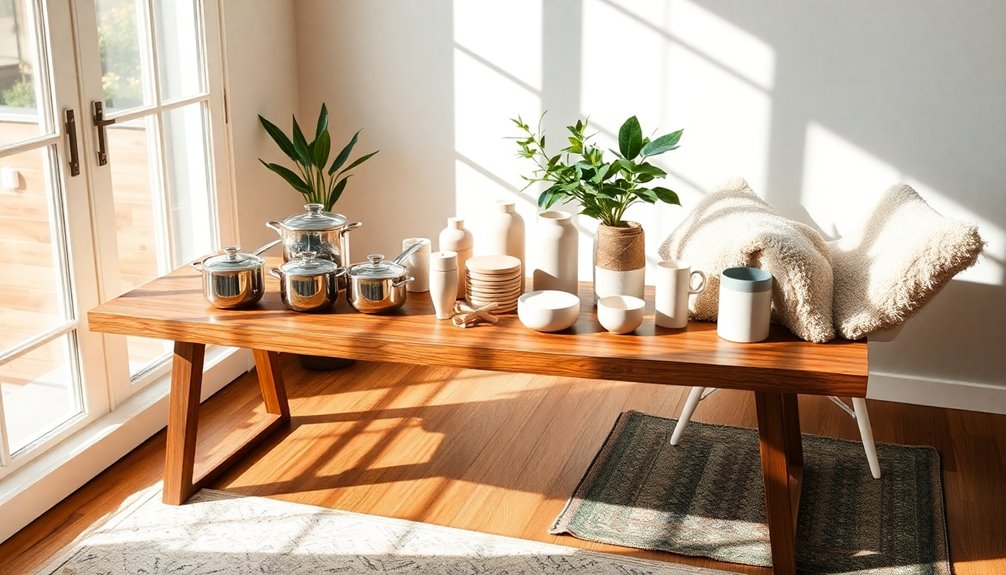
To master tablescaping for casual dinners, focus on creating a clean and inviting foundation with neutral tablecloths or placemats. Choose dinnerware that reflects your style, using complementary colors and textures for a cohesive look. Add seasonal or themed decor to personalize the space, and incorporate soft lighting like candles to set a cozy tone. Small details like neatly folded napkins and elegant glassware elevate the vibe — explore more tips to make your gatherings truly memorable.
Key Takeaways
- Start with a neutral, clean foundation like a simple tablecloth or placemats for a relaxed vibe.
- Choose dinnerware in harmonious colors and mix patterns to add personality without clutter.
- Incorporate seasonal or themed decor, such as centerpieces or motifs, to personalize the setting.
- Use soft lighting like candles or string lights to create a warm, inviting atmosphere.
- Keep accessories minimal, focusing on quality tableware and thoughtful placement for an elegant look.
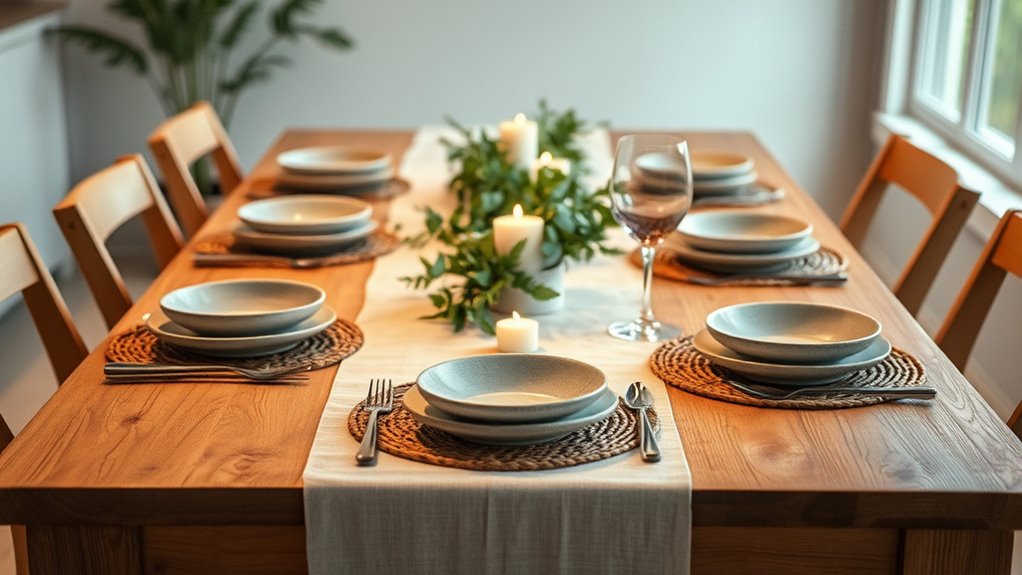
Setting a beautiful table can elevate any casual dinner, making your guests feel special without the fuss of formal dining. It’s all about creating an inviting atmosphere where comfort meets style. The foundation of a stunning tablescape begins with your place setting. Think of it as the centerpiece of your table’s visual appeal. Start with a clean, neutral tablecloth or placemats that set the stage without overpowering the look. From there, carefully select your dinnerware, ensuring it complements the overall vibe you want to convey. Mixing and matching plates can add personality, but for a cohesive look, stick to a consistent style or color palette.
A beautiful tablescape starts with a clean, neutral foundation and thoughtfully selected dinnerware.
Color coordination is key to pulling your tablescape together effortlessly. You don’t have to match everything perfectly, but choosing a harmonious color scheme can make your table look thoughtfully curated. For example, if your dinnerware is white or cream, consider adding napkins, candles, or a centerpiece in shades that contrast or complement these tones. Soft pastels evoke a relaxed, breezy feel, while bold hues like navy and gold add sophistication. The aim is to create a balanced look where each element enhances the next. You can incorporate different textures and patterns to add depth without disrupting the color flow. For instance, a patterned napkin in a color that echoes your dinnerware or centerpiece can unify the look.
Pay attention to your cutlery placement and glassware arrangement to keep your place setting functional yet stylish. Place the fork on the left, with the knife and spoon on the right, ensuring everything is within easy reach. Glasses should sit just above the knives, with a water glass and wine glass if needed, arranged in a natural, accessible manner. Small details like cloth napkins folded neatly or held with decorative rings can elevate the entire setting. Remember, simplicity often creates the most elegant effect. Overloading the table with too many accessories can distract from the overall aesthetic. Additionally, choosing high-quality tableware can significantly enhance the overall look and feel of your tablescape. When considering the ambiance, incorporating elements like seasonal themes can make your decor feel more festive and personalized for your gathering. Incorporating elements like animated movies in your decor, such as themed centerpieces or subtle motifs, can add a touch of whimsy and charm, especially for casual gatherings.
Lighting plays a subtle but important role. Soft, warm lighting, such as candles or string lights, can enhance your color coordination and create a cozy ambiance. The goal is to make your guests feel comfortable and welcomed, and a well-thought-out tablescape does just that. With attention to your place setting and thoughtful color coordination, you transform a simple casual dinner into a memorable gathering. It’s about making your table inviting and beautiful, so everyone feels at home and appreciated.
Frequently Asked Questions
How Do I Choose Tableware for Different Casual Themes?
When choosing tableware for different casual themes, you should consider plate styles and color schemes. Pick plates that match your theme, like rustic for farmhouse or sleek for modern look. Mix and match colors to create visual interest, but keep them harmonious with your overall vibe. Think about how the plate styles complement your table setting, making it inviting and cohesive without feeling too formal or cluttered.
What Are Budget-Friendly Tablescaping Ideas?
Did you know that 70% of people prefer eco-friendly decor? For budget-friendly tablescaping, you can get creative with DIY decor using everyday items like mason jars or fabric scraps. Opt for eco-friendly materials like bamboo or recycled paper for chargers and napkins. Repurposing items you already own also saves money and adds a personal touch. These simple ideas make your casual dinners stylish without breaking the bank.
How Can I Incorporate Seasonal Elements Into My Tablescape?
You can easily incorporate seasonal decor into your tablescape by using natural elements like fresh flowers, leaves, or pinecones that reflect the current season. Add small accents such as pumpkins for fall or holly for winter to enhance the theme. Incorporate seasonal colors and textures, and consider using candles or string lights to create a cozy, inviting atmosphere. This approach makes your table feel festive and fresh without breaking the bank.
What Are Common Mistakes to Avoid in Casual Tablescaping?
Think of your tablescape as a story; clutter and overcrowding are like bad punctuation, confusing your message. Avoid mismatched accessories that clash like a noisy orchestra. Keep it simple and balanced—let each piece breathe. Don’t overcrowd the table, or it’ll feel cramped and chaotic. Remember, less is more; aim for harmony instead of chaos, so your guests can enjoy the scene as much as the meal.
How Do I Balance Style and Practicality in a Casual Setting?
To balance style and practicality, start by layering textures to add depth without cluttering. Mix patterns carefully—stick to a cohesive color palette to keep it visually appealing. Choose durable, easy-to-clean materials for everyday use, and add stylish accents like napkins or placemats for flair. Keep essentials within reach, so your table stays functional, but don’t be afraid to experiment with textures and patterns to make it inviting and personal.
Conclusion
As you master tablescaping for casual dinners, you might find that the little touches you add often surprise your guests—like a spontaneous bloom or a favorite mug. Sometimes, it’s those unexpected details that turn a simple meal into a memorable gathering. So, keep experimenting and enjoy the process. Before you know it, you’ll discover that the art of tablescaping isn’t just about the setup, but the joy it brings to everyone sharing the table.