You're likely making some common mistakes with your appliances that can hurt their efficiency and lifespan. First, neglecting to regularly clean your oven can lead to dangerous buildup and costly repairs. Overfilling your freezer restricts airflow, reducing its cooling ability. Are you using too much soap in your dishwasher? It can leave spots and residue on your dishes. Ignoring garbage disposal maintenance can cause clogs and unpleasant odors. Finally, leaving items in your pockets before washing can damage your machines. Fixing these habits can save you time and money, and there's more to discover about keeping your appliances in top shape.

Get your wardrobe favorites delivered free — and shop member deals
- Fast, free delivery on millions of items
- Access to Prime Big Deal Days deals on October 6–7
- Prime Video, Amazon Music and more included
Key Takeaways
- Neglecting regular oven cleaning increases fire risks and reduces cooking efficiency due to grease buildup and uncleaned spills.
- Overfilling your freezer restricts airflow, reducing cooling efficiency and increasing energy consumption, while also risking frost buildup.
- Using excess dishwasher soap leads to cloudy dishes and residue, while adhering to recommended amounts ensures optimal cleanliness.
- Ignoring garbage disposal maintenance can cause clogs and odors; regular cleaning and proper use of cold water are essential for longevity.
- Leaving items in pockets before washing can damage appliances and lead to clogged drains; always check for loose change and small objects.
Neglecting Regular Oven Cleaning
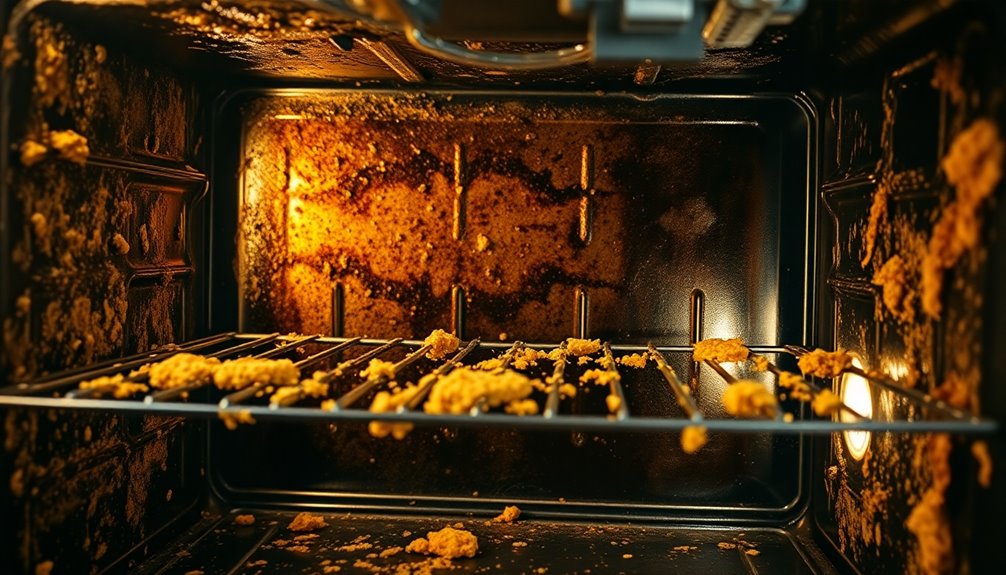
While it might seem easy to overlook regular oven cleaning, doing so can result in serious consequences. Neglecting this essential task leads to dangerous food debris and grease buildup, increasing fire risks and damaging your oven's components over time.
If spills are left uncleaned, they can generate smoke and harmful fumes when burnt, negatively affecting your air quality and cooking performance. Regular oven cleaning not only enhances your cooking quality but also boosts efficiency, allowing for better heat distribution and reduced energy consumption.
Overfilling Your Freezer

Keeping your kitchen appliances in check goes beyond just regular oven maintenance; overfilling your freezer is another common mistake that can lead to significant issues.
When you overfill your freezer, you block air vents and restrict airflow, which reduces cooling efficiency and hikes up your energy costs. Surprisingly, a near-empty freezer actually operates more efficiently, as it needs less energy to maintain cold temperatures. Additionally, maintaining proper air circulation is crucial for optimal freezer performance. Regular filter replacement can also play a vital role in ensuring that the freezer remains efficient over time. Commercial grade heat pumps, like freezers, rely on efficient operation to minimize energy consumption. Additionally, keeping the freezer clean and free of dust accumulation can further enhance its efficiency.
Excessive items can also overload the condenser, increasing the risk of appliance burnout and costly repairs. To enhance performance and prolong your freezer's lifespan, aim for ideal filling that allows for proper air circulation. Regular maintenance can enhance the efficiency of the refrigeration cycle by up to 70%, further improving your freezer's performance.
This balanced load not only improves food preservation but also prevents frost buildup, ensuring better quality for your stored items.
Using Excess Dishwasher Soap
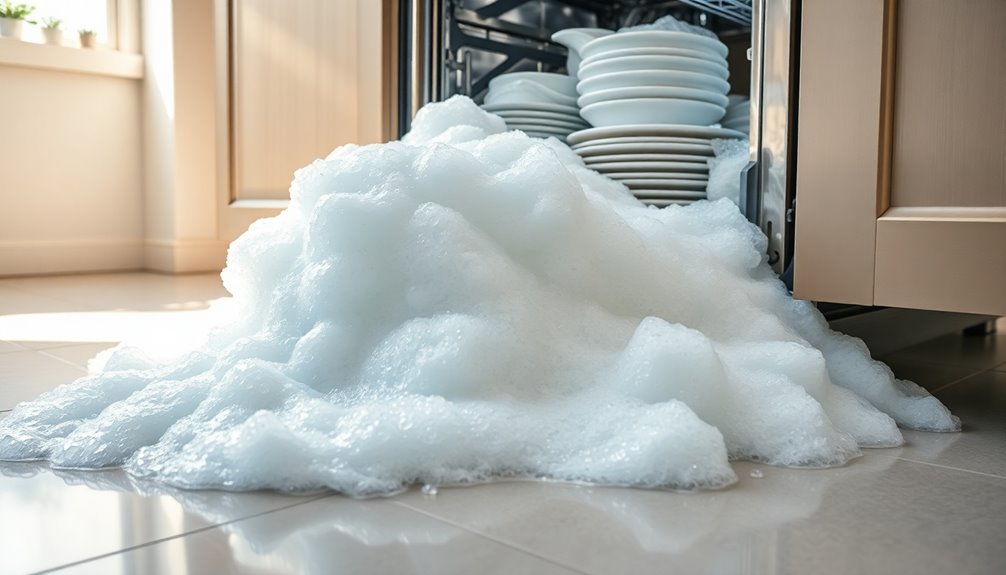
Using too much dishwasher soap can lead to frustrating results, leaving your dishes with unsightly spots and a cloudy film.
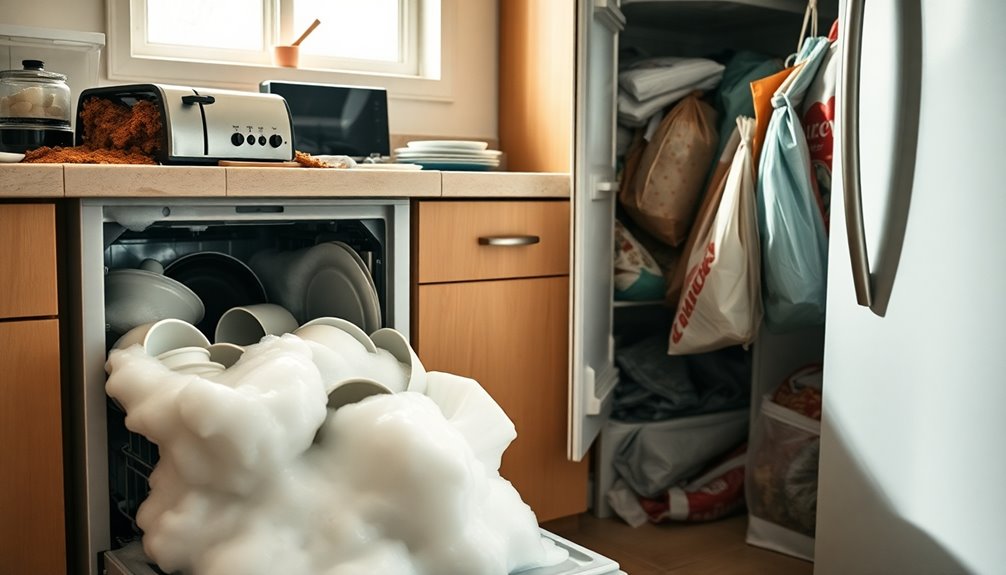
To guarantee peak cleanliness, it's crucial to use the recommended amount of detergent. Overdoing it can't only reduce your dishes' shine but also cause dishwasher overflow, leading to leaks and costly repairs.
For lighter loads, you often need less detergent, which helps prevent residue buildup and maintains your appliance's efficiency.
Here are some tips for proper detergent use:
- Follow the manufacturer's guidelines for detergent amounts.
- Adjust detergent based on load size and soil level.
- Monitor for signs of excess soap, like suds or residue.
- Use high-quality detergent for better cleaning performance.
Ignoring Garbage Disposal Maintenance
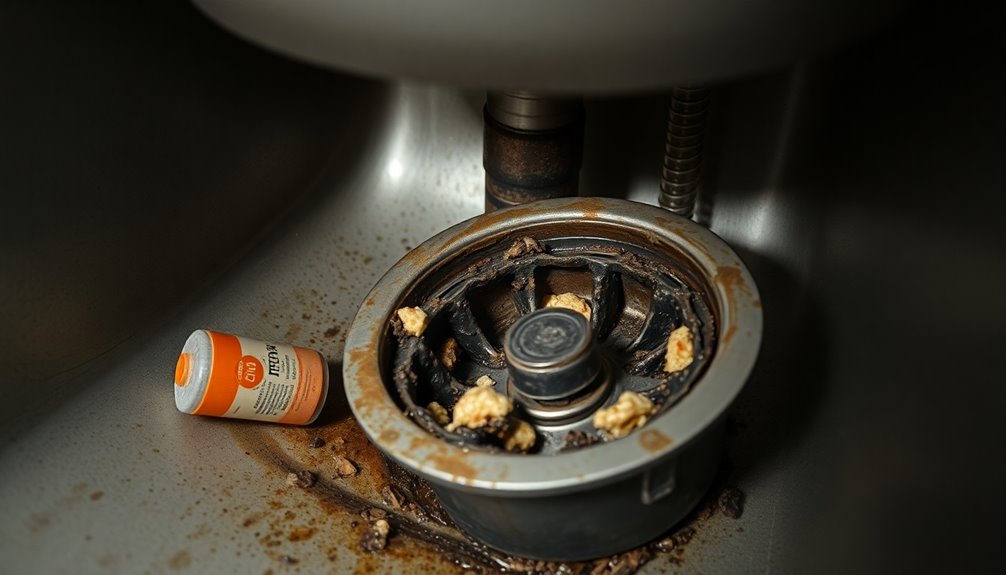
Neglecting your garbage disposal can lead to a host of problems that affect not only the appliance's performance but also your kitchen's overall cleanliness.
Regularly using cold water while running your garbage disposal helps food debris flow smoothly, preventing clogs and sticky residue buildup in your pipes. Failing to clean the disposal can result in unpleasant odors and increased wear, shortening its lifespan.
Be mindful of what you grind; fibrous or starchy foods can strain the motor and cause clogs. To keep it fresh, run the disposal with ice cubes and citrus peels for cleaning the blades and removing odors. Additionally, maintaining clean garbage disposals can significantly enhance your home's indoor air quality, as a well-functioning disposal minimizes the risk of odors that can affect your living space.
Finally, inspect and clean the splash guard and drain regularly to maintain peak performance and prevent blockages.
Leaving Items in Pockets Before Washing
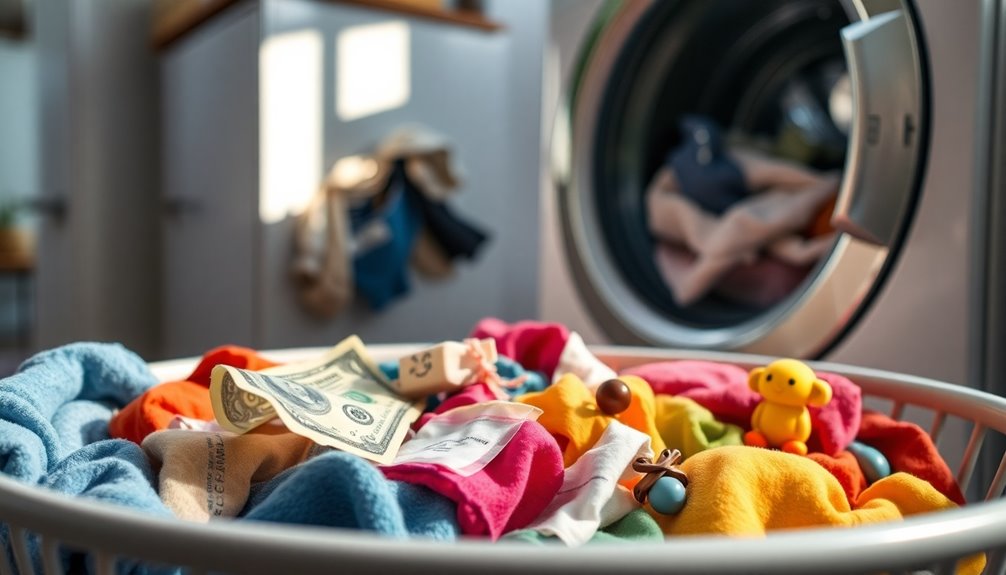
Before tossing your clothes into the washing machine, take a moment to check your pockets.
Failing to do so can lead to serious issues, like clogged drains or damaged dryer components. Loose change and small items can get caught, affecting performance and causing blockages.
Here are a few common culprits you might forget:
- Coins
- Keys
- Tissues
- Gum wrappers
Frequently Asked Questions
What Are the Common Causes of the Appliances Breakdown?
Common causes of appliance breakdown include overloading machines, neglecting regular maintenance, and improper usage.
When you overload your washing machine, you risk damaging essential components. Not cleaning your dryer vent can lead to overheating and fire hazards.
If you don't clean refrigerator coils, it can increase energy costs and compressor failure.
Finally, improper use of the oven's self-clean feature may warp internal parts, leading to costly repairs.
Stay proactive to avoid these issues!
Who Is Responsible for Replacing Appliances?
Replacing appliances is like maneuvering through a maze; it can get tricky.
If you're a homeowner, you're generally responsible for replacements, since most warranties only cover repairs.
As a renter, it depends on your lease and your landlord's policies.
If an appliance breaks down beyond repair, manufacturers might offer replacements under certain warranty terms.
How Do You Test for Faulty Appliances?
To test for faulty appliances, start by checking their temperature settings. For your refrigerator, use a thermometer to verify it's between 37°F and 40°F.
Listen for unusual noises in your dishwasher, and inspect the filter for clogs.
In your washing machine, make certain the load's balanced and check the drive belt.
For ovens, compare the set temperature with an oven thermometer.
Finally, test your microwave's door latch and listen for the magnetron.
What Are Appliances to Control Harmful Habits?
When you think about appliances that help control harmful habits, consider using air purifiers to reduce allergens and improve indoor air quality.
Smart thermostats can encourage energy efficiency while maintaining comfort, helping you save money and reduce waste.
Water filtration systems promote hydration by providing clean drinking water, making it easier to choose healthy options.
Ultimately, smart kitchen gadgets can help you prepare healthier meals, steering you away from processed foods and unhealthy eating patterns.
Conclusion
By avoiding these common appliance mistakes, you’ll not only extend their lifespan but also improve efficiency. Did you know that regular oven cleaning can reduce energy consumption by up to 20%? Taking the time to maintain your appliances pays off in the long run, saving you money and hassle. So, make a habit of cleaning, organizing, and checking your appliances regularly—your home and wallet will thank you! Start today for a smarter, more efficient kitchen! Investing in energy efficient kitchen appliances can also significantly reduce your electricity bills and environmental impact. Look for appliances with Energy Star ratings or other energy efficient certifications to ensure that you’re getting the most out of your purchases. Not only will this benefit you financially, but it will also contribute to a more sustainable future for our planet. By being mindful of the way we use and maintain our appliances, we can all play a part in creating a greener, more efficient world.
Fall Picks
fall essentials
As an affiliate, we earn on qualifying purchases.