
When cleaning and restoring secondhand home decor, start by evaluating each piece’s condition and materials. Use gentle, eco-friendly techniques like soft damp cloths for wood and spot cleaning fabrics with mild detergents. Guarantee good ventilation and avoid harsh chemicals to protect delicate finishes. Tighten loose joints or re-glue parts carefully, and air dry textiles away from sunlight. Proper handling and preservation techniques help maintain charm and value—keep going to discover more tips for safe restoration.
Key Takeaways
- Assess each item’s condition and material to determine suitable cleaning and restoration methods.
- Use gentle, pH-balanced cleaning solutions and test on small areas first to prevent damage.
- Ensure proper ventilation and choose eco-friendly products to protect health and the environment.
- Repair loose joints and damaged finishes with appropriate adhesives or professional refinishing.
- Handle items carefully, avoiding harsh scrubbing, to preserve character, value, and longevity.
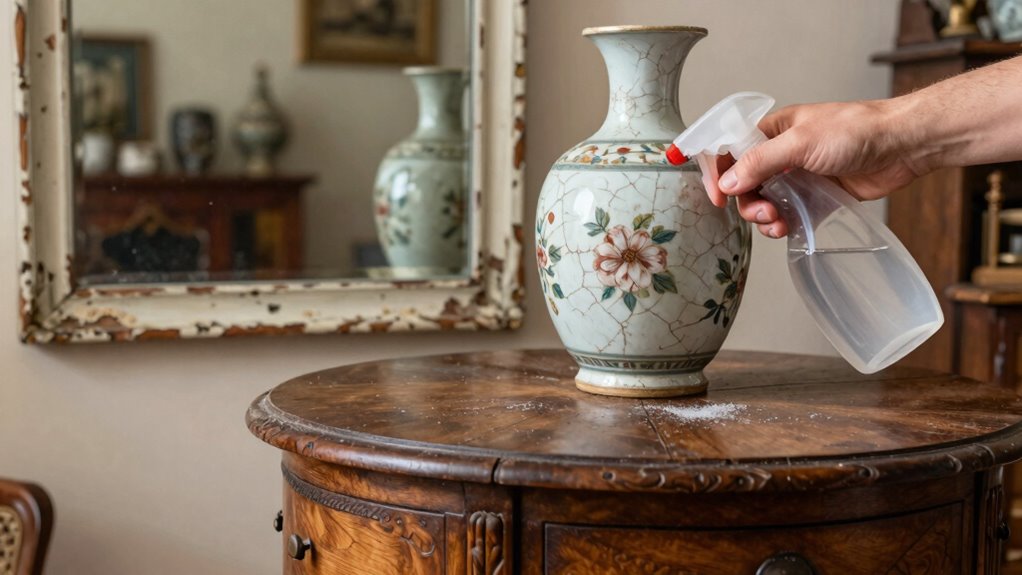
Decorating your home with secondhand items is a smart way to save money and add unique character to your space. Whether you’re hunting for antique furniture or vintage textiles, these pieces often carry history and charm that new items can’t replicate. But before you incorporate them into your decor, you need to clean and restore them properly to guarantee they’re safe and look their best. The key is to approach each piece with care, respecting its age and material.
Start by evaluating the condition of your antique furniture or vintage textiles. For furniture, check for loose joints, peeling paint, or any signs of damage. Vintage textiles, like curtains or upholstery, may have stains, odors, or fraying. Before cleaning, research the specific materials—wood, fabric, or metal—to determine the safest cleaning methods. For example, wood surfaces often need gentle dusting first, followed by a mild cleaner, while fabrics may require vacuuming or spot cleaning.
Assess each piece’s condition and research materials before gentle cleaning to preserve its character and longevity.
When cleaning antique furniture, avoid harsh chemicals that could strip the finish or damage the wood. Instead, use a soft cloth dampened with a mixture of water and a mild, pH-balanced soap. For stubborn grime, a mixture of vinegar and water can be effective. Always test a small, inconspicuous area first. If the wood has a delicate finish, consider applying a furniture polish or wax after cleaning to restore luster. Be cautious with vintage textiles—if they’re dusty, a gentle vacuum with an upholstery attachment works well. For stains or odors, spot clean with a mixture of mild detergent and water, but avoid saturating the fabric. Proper ventilation during cleaning can also help reduce lingering odors and improve air quality. Additionally, using appropriate cleaning techniques helps preserve the value and longevity of your pieces. Understanding biodiversity and its importance can guide you to choose eco-friendly cleaning products that minimize environmental impact. When dealing with delicate or valuable textiles, consulting with a professional conservator can sometimes be the safest option.
Restoration may involve more than just cleaning. For antique furniture, you might need to tighten loose joints or re-glue parts with appropriate adhesives. If the finish is damaged, consider professional refinishing rather than attempting to strip or repaint it yourself. When dealing with vintage textiles, gentle hand washing or professional cleaning may be necessary, especially if they’re delicate or valuable. Always air dry textiles away from direct sunlight to prevent fading. Additionally, understanding proper restoration techniques can help maintain the integrity of your pieces while bringing out their best features. Being aware of the materials used in your items can also influence the best restoration approach, ensuring that you do not inadvertently cause damage.
Throughout the process, handle each piece with patience and respect. Avoid aggressive scrubbing or harsh chemicals, as these can compromise the integrity of your vintage textiles or antique furniture. Remember, preserving their character and value is often more important than making them look new. With careful cleaning and thoughtful restoration, your secondhand finds will not only look beautiful but will also last for many years to come, adding warmth and history to your home.
As an affiliate, we earn on qualifying purchases.
Frequently Asked Questions
How Do I Identify Authentic Vintage Decor?
To identify authentic vintage decor, you look for signs of vintage authenticity like unique craftsmanship, age-related wear, and specific manufacturing marks. Check the decorative provenance by researching the item’s origin, designer, or era. Genuine vintage pieces often have distinct characteristics that mass-produced items lack. Trust your intuition, examine details closely, and consult reputable sources or experts to confirm the item’s authenticity and verify it’s a true vintage find.
Are There Eco-Friendly Cleaning Options for Delicate Items?
You can definitely find eco-friendly cleaning options that are gentle on delicate items. Look for natural solutions like diluted vinegar, gentle castile soap, or baking soda, which clean without harsh chemicals. These methods help with delicate item preservation and are safe for your vintage treasures. By choosing eco-friendly cleaning, you’re killing two birds with one stone—protecting your decor and the environment. It’s a win-win situation!
How Often Should I Clean Secondhand Furniture?
You should clean your secondhand furniture every 3 to 6 months to keep it fresh and safe. Start with upholstery cleaning to remove dust and dirt, especially from fabric surfaces. Don’t forget surface disinfecting for hard surfaces to eliminate germs and bacteria. Regular cleaning prevents buildup and prolongs the life of your furniture. If it’s heavily used or visibly dirty, clean more often to maintain a healthy, inviting space.
Can I Restore Damaged Upholstery Safely at Home?
Yes, you can restore damaged upholstery fabric safely at home. Start by evaluating the damage and choosing appropriate repair techniques like patching or sewing for tears. Use fabric-safe adhesives for small rips, and consider upholstery fabric repair kits for more extensive damage. Always test any cleaning or repair product on a hidden area first to prevent further harm. With patience and care, you can breathe new life into your secondhand furniture.
What Safety Precautions Are Recommended for Restoring Antique Pieces?
Antique preservation is a delicate dance, and safety takes the lead. Always wear gloves, masks, and eye protection to shield yourself from dust, chemicals, or fragile materials. Use proper restoration tools carefully, following manufacturer instructions. Work in a well-ventilated area to avoid inhaling fumes. Remember, patience and respect for the piece’s history guarantee your restoration efforts are safe and successful, turning old treasures into timeless classics.
Conclusion
By carefully cleaning and restoring secondhand decor, you breathe new life into pieces that once held memories, transforming them into your own unique style. For instance, imagine rescuing a vintage wooden chair—sanding, polishing, and reupholstering it not only saves money but also creates a personalized statement in your home. With patience and the right techniques, you can confidently revive and enjoy beautiful, one-of-a-kind decor that reflects your personality and sustainability values.