
To prevent pilling on your cashmere, start by choosing high-quality, tightly woven fabrics with long fibers. Store your garments folded in breathable containers and avoid hanging them. Wash gently with cold water and a delicate detergent, then lay flat to dry. Handle with care, avoid friction, and use tools like fabric shavers or pilling brushes to keep fibers smooth. Keep your cashmere looking fresh longer by following these tips—more helpful advice awaits.

Get your wardrobe favorites delivered free — and shop member deals
- Fast, free delivery on millions of items
- Access to Prime Big Deal Days deals on October 6–7
- Prime Video, Amazon Music and more included
Key Takeaways
- Handle cashmere gently to minimize friction and prevent fiber snagging during wear and storage.
- Wash in cold water with delicate detergents and avoid agitation to maintain fiber integrity.
- Store folded in breathable containers, avoiding hanging to prevent stretching and fiber damage.
- Regularly use fabric shavers or pilling brushes to remove surface pills safely before they worsen.
- Avoid rough surfaces and jewelry that can cause fibers to snag or break, reducing pilling risk.
As an affiliate, we earn on qualifying purchases.
How to Choose High-Quality Cashmere That Won’t Pill
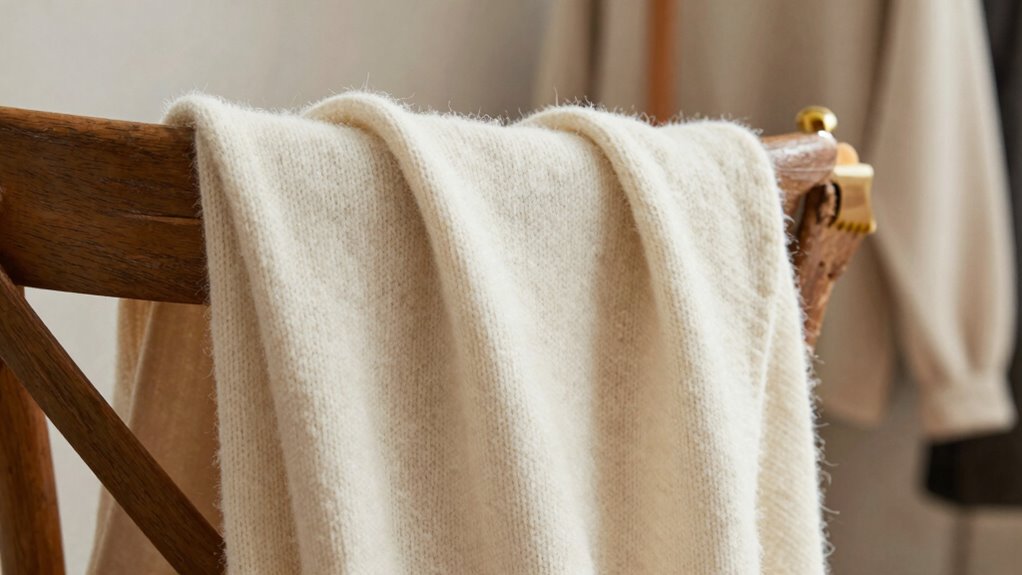
When shopping for cashmere, it’s essential to look for qualities that indicate high durability and resistance to pilling. Start by examining the fiber quality; the best cashmere comes from fine, long, and uniform fibers, which create a smoother, more resilient fabric. Next, check the fabric weave—tightly woven cashmere reduces the likelihood of pills forming, as it minimizes loose fibers that can tangle. A high-quality weave should feel dense yet soft, with consistent stitching throughout. Avoid overly thick or loosely woven pieces, as they tend to pill more quickly. Good fiber quality combined with a carefully executed fabric weave ensures your cashmere will stay smooth and beautiful longer, giving you a luxurious garment that withstands daily wear without pilling. Additionally, understanding the fabric construction can help you select pieces that are less prone to pilling over time. A suprem fabric blend can also enhance durability and resistance to pilling, making your cashmere last even longer.
Proper Washing and Storage to Protect Your Cashmere

To keep your cashmere looking its best, you need to wash it gently, avoiding harsh detergents or wringing. After washing, use proper drying methods like laying it flat to prevent stretching, and store it in a clean, breathable space. Following these simple practices will help protect your cashmere from damage and keep it soft for years to come. Be sure to properly care for delicate fabrics to maintain its quality over time. Additionally, paying attention to color accuracy in your storage conditions can prevent fading and preserve its vibrant appearance. Regularly checking your storage environment for humidity control can further help prevent fiber damage and maintain softness. Incorporating free floating storage techniques can also help ensure your cashmere remains in optimal condition. Remember that understanding fiber properties can help you tailor your care routine for better longevity.
Gentle Washing Techniques
Proper washing and storage are essential to maintaining the softness and shape of your cashmere. When washing, always opt for gentle techniques to prevent pilling. Use eco-friendly detergents that are free from harsh chemicals, which can damage fibers over time. Avoid fabric softeners, as they can coat the fibers and reduce the natural softness of your cashmere. Instead, wash your sweater in cold water on a delicate cycle, or better yet, hand wash for extra care. Be gentle with your movements, and never wring or twist the fabric. After washing, lay your cashmere flat on a clean towel to dry, avoiding direct sunlight. Proper handling during washing preserves the luxurious feel and helps prevent pilling before it starts.
Proper Drying Methods
After washing your cashmere, it’s crucial to dry it correctly to maintain its softness and shape. Proper drying prevents fabric stiffness and helps preserve vibrant color. To guarantee the best results:
- Lay your cashmere flat on a clean towel, reshaping it gently to avoid stretching.
- Avoid hanging, as this can distort the fabric and cause uneven drying.
- Keep it in a well-ventilated area, away from direct sunlight, to prevent fading and color loss.
Skip the tumble dryer—heat damages fibers and dulls hues. Following these steps keeps your cashmere soft, vibrant, and in perfect shape for many wears to come. Proper drying is key to long-lasting, luxurious cashmere.
Safe Storage Practices
Ensuring your cashmere stays in excellent condition begins with how you wash and store it. Proper storage organization is key to fabric protection and preventing pilling. Always fold your cashmere instead of hanging it to avoid stretching. Store it in a breathable container, like a cotton storage bag, to prevent dust and moisture buildup. Keep your cashmere away from direct sunlight and damp environments, which can weaken fibers. Using lavender sachets or cedar blocks can deter moths naturally. Avoid overcrowding your closet to prevent wrinkles and fabric stress. Regularly inspect stored items for signs of damage or pests, and re-fold your cashmere periodically to maintain its shape. Good storage habits ensure your cashmere remains soft, pristine, and pill-free for years. Incorporating proper fabric maintenance techniques helps extend the life of your delicate garments. Additionally, choosing reliable home security systems for your home can give you peace of mind while you focus on caring for your belongings.
Prevent Pilling Before It Starts: Simple Tips

To prevent pilling before it begins, handle your cashmere with care and avoid unnecessary friction. Always wash your garments gently and use mild detergents to keep fibers intact. When you’re not wearing them, store your cashmere properly in a cool, breathable space to minimize wear and pilling. Practicing proper garment care ensures your cashmere stays luxurious and pill-free over time. Additionally, choosing quality fibers can significantly reduce the likelihood of pilling from the start. Being mindful of fiber strength can help maintain the fabric’s appearance and longevity. Incorporating visual and auditory cues from speech therapy techniques can also help you develop a better understanding of how to handle delicate fabrics gently. Using gentle washing techniques can further preserve the delicate fibers and prevent pilling.
Handle With Care
Pilling is a common issue that can make your cashmere look worn and less luxurious, but the good news is that preventing it is simple if you handle your garments with care. To protect your cashmere, focus on these key tips:
- Avoid excessive friction, which can damage the fiber texture and cause pills. Be gentle when wearing and storing.
- Choose high-quality dye and fabrics, as better dye quality reduces surface fuzz that pills form around.
- Limit rough surfaces that rub against your cashmere, such as bags or jewelry, to prevent fibers from snagging and pilling.
Wash Gently Always
Handling your cashmere with care extends beyond how you wear and store it—how you wash it makes a significant difference. Always use a gentle detergent designed for delicate fabrics, and select the delicate cycle on your washing machine. This minimizes agitation, reducing the risk of pilling and fiber damage. To make it even easier, follow this quick guide:
| Tip | Why it Matters |
|---|---|
| Use gentle detergent | Protects fibers from harsh chemicals |
| Choose delicate cycle | Prevents excessive agitation |
| Wash in cold water | Maintains softness and shape |
| Avoid wringing | Prevents stretching and pilling |
Treat your cashmere gently to keep it looking silky and pill-free for longer. Proper laundering helps preserve the integrity of delicate fibers and ensures your cashmere stays beautiful over time. Additionally, understanding fiber characteristics can help you choose the best care methods for your garments. Being aware of common pilling causes can further help you prevent pilling before it starts, especially when paired with appropriate backup power systems to avoid interruptions during laundry days. Knowing that some electric bikes produce high horsepower or reach speeds of up to 50 mph can remind you to handle your delicate fabrics with the same respect and care as you would when riding high-performance electric vehicles.
Store Properly When Not Used
Proper storage is essential to prevent pilling before it even starts. When you’re not wearing your cashmere, taking care of clothes preservation means storing it correctly. Follow these tips:
- Fold your cashmere garments gently to avoid stretching or snagging.
- Store them in breathable containers or cotton bags to prevent moisture buildup.
- Keep clothes away from direct sunlight and heat sources to maintain fibers’ integrity.
- Using proper storage techniques can significantly extend the lifespan of your cashmere and reduce the risk of pilling. Additionally, ensuring your storage methods align with fabric care standards helps maintain the quality of delicate fibers. Proper storage also minimizes friction and abrasion, which are common causes of pilling over time.
- Incorporating sound healing science principles, such as reducing environmental stressors like static and friction, can further help preserve your cashmere.
- Avoid hanging cashmere, as it can stretch the fibers over time. Instead, fold and store in a cool, dry place. Being mindful of fiber integrity during storage ensures your garments stay soft and pilling-free longer. Proper storage reduces friction and pilling caused by rubbing against other items. With these simple steps, you’ll maintain your cashmere’s softness and appearance longer, preventing pilling before it even begins.
Regular Care to Keep Your Cashmere Smooth and Soft

To keep your cashmere looking its best, regular care is essential. Gently washing your sweater helps maintain the delicate balance of cashmere blending, which preserves its softness and appearance. When you wash, use cold water and a mild detergent designed for delicate fibers. Avoid harsh agitation, as it can damage fiber elasticity, making the fabric more prone to pilling. After washing, lay your cashmere flat to dry, preventing stretching or misshaping. Regularly brushing your sweater with a soft garment brush can also help remove surface dirt and maintain its smooth texture. Additionally, understanding the fiber elasticity of cashmere can help you better care for its delicate structure. Proper storage techniques, such as folding rather than hanging, can prevent deformation and maintain the garment’s shape and fit. Being mindful of pilling prevention strategies ensures your cashmere remains luxurious and pristine over time. These simple steps keep your cashmere fibers elastic and well-maintained, ensuring your garment stays soft, luxurious, and free from pills for longer.
Tools and Products to Prevent and Remove Pilling
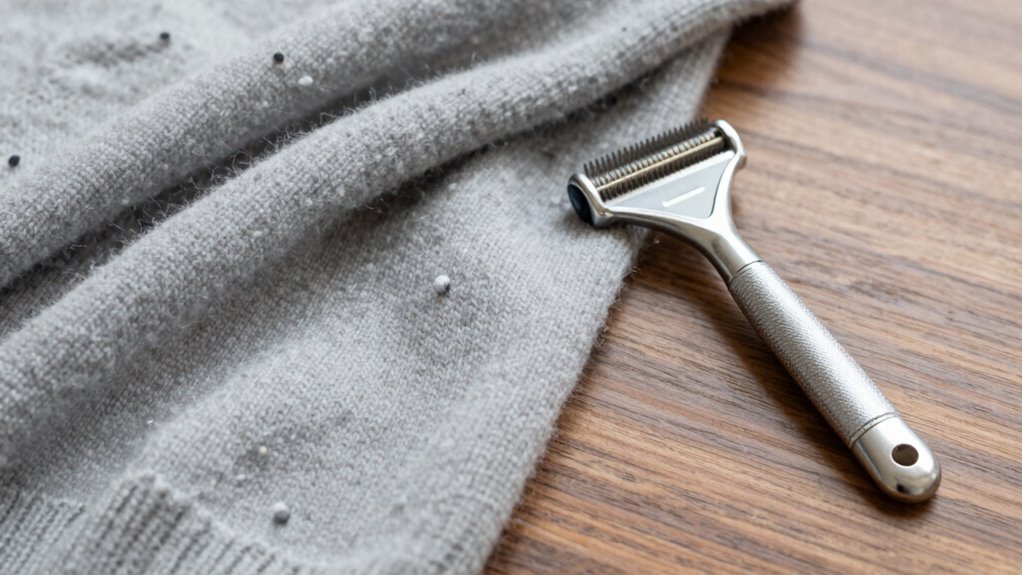
Wondering how to keep your cashmere looking pristine and free from pills? Using the right tools and products makes a big difference. First, a fabric shaver or lint remover is essential for quick, safe pill removal without damaging delicate fibers. Second, a gentle cashmere comb helps prevent pills by smoothing out surface fuzz. Third, specialized pilling brushes are great for targeted care, especially on fabric blends with varying fiber types and dye fastness. To prevent pilling entirely, wash your cashmere carefully and avoid high friction. Choosing products designed specifically for delicate fabrics ensures you won’t compromise dye fastness or weaken fibers. With these tools, you’ll maintain your cashmere’s softness and appearance, extending its lifespan while keeping it looking as luxurious as day one.
How to Tell When Pilling Means Your Cashmere Needs Repair
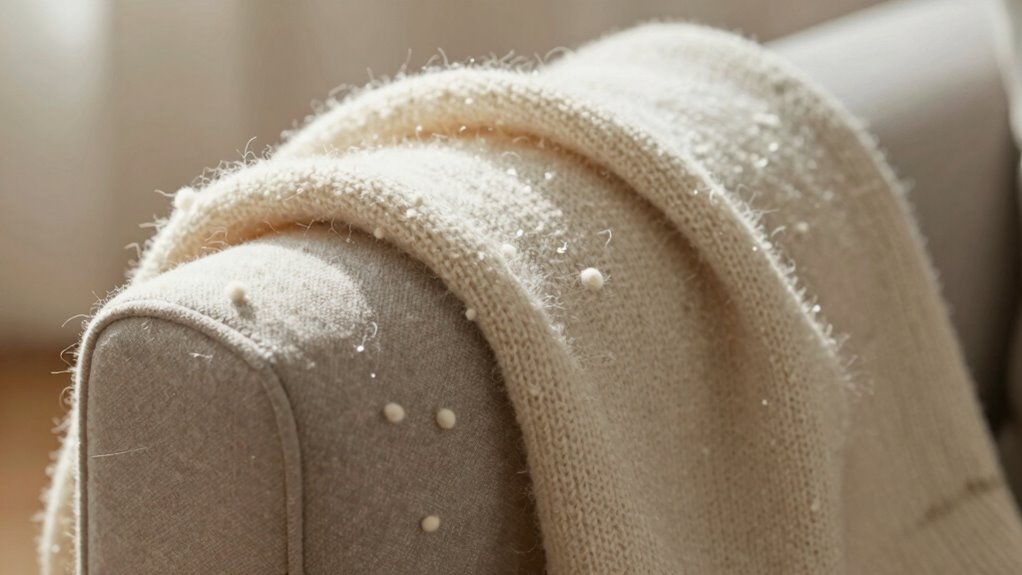
While pilling is a common sign of wear, not all pills signal the need for repair. When pills become frequent or stubborn, it may indicate your cashmere’s fiber strength is compromised. Check the fabric density; if it’s thin or worn down in high-friction areas, pills are more likely to form and persist. If pills are easy to remove but reappear quickly, it suggests the fibers are weakening. In contrast, pills that are hard to remove and keep returning could mean the fibers are fraying or breaking, signaling your cashmere needs reinforcement. Pay attention to how your sweater feels and looks—persistent pilling in specific areas often points to underlying damage rather than surface wear. Recognizing these signs helps you determine when repair or reinforcement is necessary.
How Often Should You Wash and Maintain Your Cashmere?
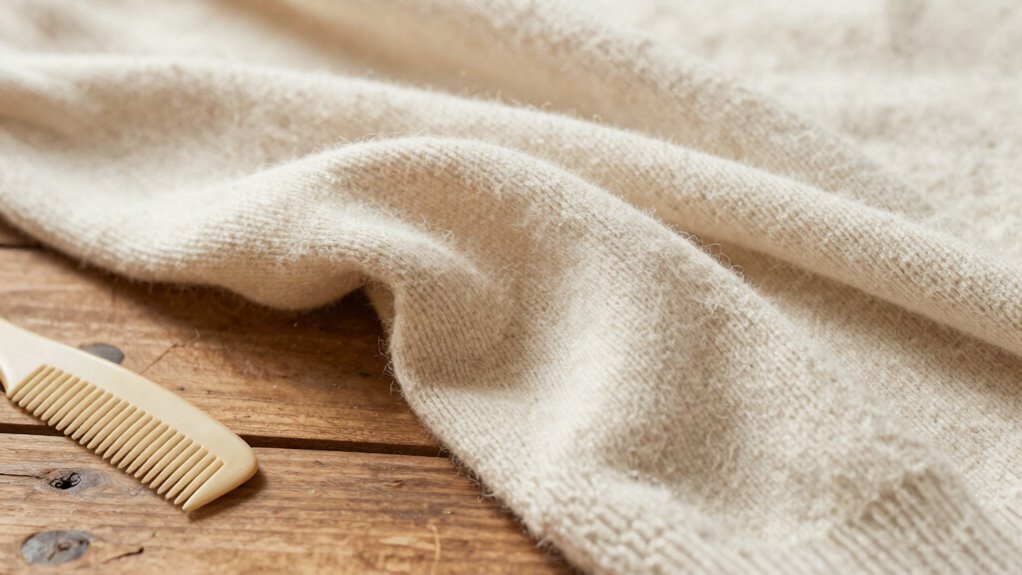
Cashmere is a delicate fabric that requires proper care to maintain its softness and longevity. To guarantee fabric durability and prevent pilling, wash your cashmere only when necessary—about once every 3 to 4 wears, unless it’s visibly dirty. When you do wash, follow these steps:
- Gently hand wash or use a delicate cycle with cold water.
- Use a mild detergent designed for wool or cashmere.
- Lay flat to dry, avoiding hanging, which can stretch the fibers.
Regular maintenance, like brushing with a cashmere comb, also helps prevent pilling and keeps your garment looking fresh. By following these guidelines, you’ll extend the life of your cashmere and keep it feeling soft and luxurious longer.
Tips to Make Your Cashmere Last for Years

To make certain your cashmere stays beautiful for years, it’s crucial to handle it with care and follow some simple maintenance tips. The key to enhancing cashmere durability lies in protecting its fiber quality. Always store your cashmere folded in a cool, dry place, avoiding hanging, which can stretch the fibers. When wearing, rotate your pieces to prevent overuse. Gently hand wash or use a delicate cycle with mild detergent, and avoid excessive agitation. To keep pilling at bay, use a fabric shaver regularly. Here’s a quick reference:
| Tip | Why it matters |
|---|---|
| Proper storage | Maintains fiber integrity |
| Gentle washing | Preserves fiber quality |
| Regular de-pilling | Extends cashmere lifespan |
Following these tips ensures your cashmere remains soft, durable, and stylish for years.
Frequently Asked Questions
Can I Wear Cashmere Directly Against My Skin Without Irritation?
Yes, you can wear cashmere directly against your skin, but if you have sensitive skin or are prone to fabric irritations, it’s best to test first. Some cashmere feels softer and less irritating, especially if it’s high quality. To minimize discomfort, choose finely woven cashmere and wash it properly. If irritation occurs, consider layering with a soft cotton or silk shirt underneath to create a barrier and keep your skin comfortable.
Are There Specific Detergents Recommended for Cashmere Care?
Yes, you should choose detergents with gentle detergent ingredients for your cashmere. Look for eco-friendly cleaning options that avoid harsh chemicals and enzymes, as these can damage delicate fibers. Always opt for a mild, wool-safe detergent designed specifically for cashmere or wool. This helps maintain softness, prevents pilling, and keeps your sweater looking its best while being environmentally conscious.
How Does Climate Affect My Cashmere’s Durability and Pilling?
Climate plays a big role in your cashmere’s durability and pilling. High humidity can make fibers softer, increasing pilling, while dry air helps maintain its structure. Temperature impacts fiber strength too—hotter weather may cause fibers to weaken, leading to more pilling. To keep your cashmere in top shape, store it properly, avoid excessive heat, and consider using a fabric refresher to combat humidity effects.
Can I Repair Pilled Cashmere at Home Effectively?
Ever wondered if you can fix pilled cashmere at home? You definitely can, with careful pilling prevention in mind. Use a fabric-shaver or a sweater comb to gently remove pills, but avoid over-shaving to prevent damage. Remember, fabric blending affects how prone your cashmere is to pilling, so choose high-quality, blended fibers for durability. Regular maintenance keeps your cashmere looking fresh and smooth, saving you time and money.
What Signs Indicate My Cashmere Has Reached the End of Its Lifespan?
If your cashmere shows signs of fiber deterioration, like thinning or fraying, it’s nearing the end of its lifespan. Color fading also indicates age and wear, making the fabric look dull. When these signs become noticeable, it’s time to contemplate replacing or repurposing your cashmere. You might also notice a loss of softness and increased pilling, which further signals that your beloved piece has reached its natural end.
Conclusion
By choosing high-quality cashmere, washing and storing it properly, and preventing pilling before it starts, you guarantee your investment stays beautiful and soft. Maintain regular care, use the right tools, and recognize when repairs are needed, so your cashmere remains luxurious for years. With consistent attention and simple habits, you protect your pieces from wear and tear, preserve their elegance, and enjoy their comfort—making your cashmere wardrobe a lasting symbol of quality and care.
Fall Picks
fall essentials
As an affiliate, we earn on qualifying purchases.