To steam clothes properly and avoid water spots, start by choosing the right steam setting for your fabric, using the lowest for delicate fabrics like silk and chiffon, and higher for cotton or linen. Keep the steamer a few inches away and move it smoothly in a downward motion. Make sure your garments are clean and hang them on a sturdy hanger. Proper technique and water quality help prevent spots and wrinkles—keep going to learn all the tips for perfect results.

Get your wardrobe favorites delivered free — and shop member deals
- Fast, free delivery on millions of items
- Access to Prime Big Deal Days deals on October 6–7
- Prime Video, Amazon Music and more included
Key Takeaways
- Use the appropriate steam setting based on fabric type, increasing for sturdy fabrics and lowering for delicate ones.
- Keep the steamer a few inches away from the fabric and move it steadily to prevent water spots.
- Ensure garments are clean and dry before steaming to avoid trapping dirt or moisture that causes spots.
- Use distilled or purified water to prevent mineral buildup and water spots on clothing.
- Hang garments properly and steam from top to bottom, maintaining a consistent distance and motion.

Steaming clothes is a quick and effective way to remove wrinkles and refresh your garments, but doing it properly guarantees the best results. The key lies in understanding fabric types and adjusting steam settings accordingly. Different fabrics respond differently to steam, so knowing what you’re dealing with helps prevent water spots and damage. For delicate fabrics like silk and chiffon, use the lowest steam setting or a gentle steam flow to avoid oversaturation. Wool and polyester can handle medium steam levels, but always check their care labels first. Cotton and linen, which are generally more durable, can tolerate higher steam settings, making it easier to smooth out stubborn wrinkles.
Before you start steaming, make certain your garment is clean and free of dirt or debris. If you’re using a handheld steamer, fill it with distilled water to prevent mineral buildup, which can cause water spots. Turn on the steamer and give it a few minutes to heat up; a properly heated steamer produces consistent steam, which is essential for effective results. Adjust the steam settings to match the fabric type. Many steamers have multiple levels, so select the lower setting for delicate fabrics and the higher for thicker, more resilient materials. Proper fabric care knowledge can help you select the right settings and technique. Being aware of metal parts on garments can also prevent accidental damage from steam. Additionally, proper steamer maintenance can extend the device’s lifespan and ensure optimal performance. Using appropriate water quality is crucial because minerals in tap water can cause buildup and water spots.
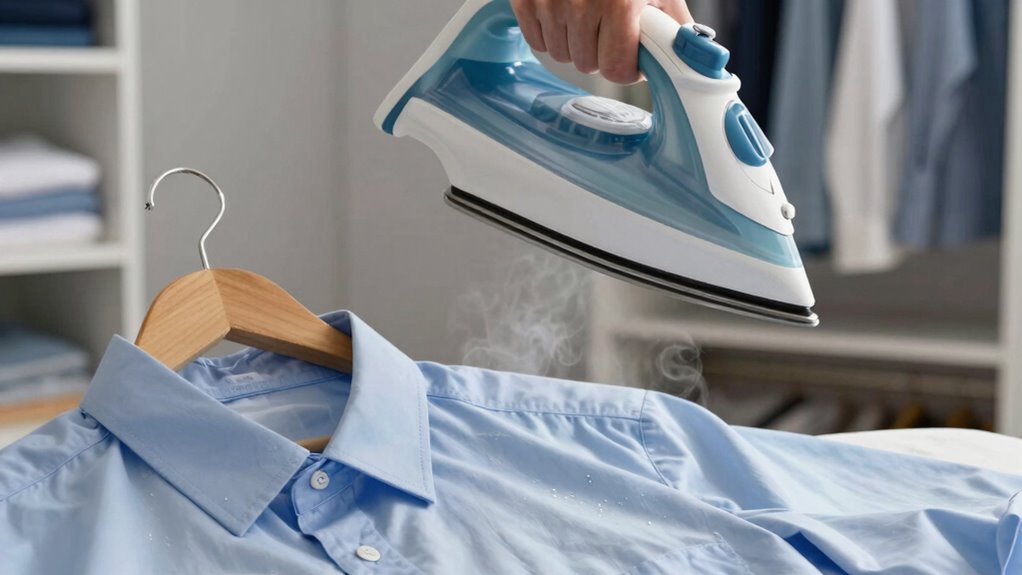
Hold the steamer a few inches away from the fabric, allowing the steam to penetrate and relax fibers without drenching the material. Keep the steamer moving smoothly and steadily to avoid concentrating steam in one spot, which can cause water spots or even fabric damage. If you notice any water droplets forming on the fabric, pause and let the garment dry slightly before continuing. Always steam in a downward motion, and avoid pressing the steamer directly onto the fabric, as this can cause water spots or shiny patches. Properly maintaining your steamer ensures consistent performance and reduces the risk of water spots.
For best results, hang your garment on a sturdy hanger and steam from top to bottom. This helps gravity assist the process and prevents new wrinkles from forming. If you’re steaming multiple garments, switch off the steamer and empty excess water regularly to maintain consistent steam output. Remember, patience is key—rushing through the process can lead to uneven results or water spots. By choosing the right fabric type settings and maintaining a steady, gentle motion, you’ll achieve wrinkle-free clothes that look fresh and well-maintained, all while avoiding the common mistake of water spots.
Frequently Asked Questions
Can I Steam Delicate Fabrics Without Damaging Them?
Yes, you can steam delicate fabrics without causing steam damage. To do this, keep the steamer at a safe distance from the fabric, usually about 6 inches, and use a gentle, continuous motion. Always test on a small, inconspicuous area first. This approach prevents water spots and steam damage, protecting your delicate fabrics while effectively removing wrinkles. Be patient and cautious for the best results.
How Often Should I Descale My Steamer?
Think of your steamer like a car engine; it needs regular maintenance. Descaling frequency depends on your water’s mineral content, but generally, you should descale every 1-3 months. If you use hard water, descale more often. Ignoring this can cause mineral buildup, reducing steam quality and damaging your steamer. Regular descaling keeps it running smoothly, ensuring your clothes stay wrinkle-free and fresh-looking.
Is It Safe to Steam Clothes in Direct Sunlight?
Steaming clothes in direct sunlight isn’t recommended because sunlight exposure can cause fabric discoloration over time. The heat from the sun may also make the fabric more fragile, increasing the risk of damage. To keep your clothes looking their best, steam them in a shaded area or indoors where there’s controlled temperature. This prevents fabric discoloration and guarantees your garments stay vibrant and intact.
What Temperature Should the Steamer Be Set to for Different Fabrics?
For fabric care, set your steamer to the appropriate temperature based on the fabric type. Generally, use around 212°F for cotton and linen, 185°F for wool, and lower, about 140°F, for delicate fabrics like silk or polyester. Adjusting the temperature guarantees effective steaming without damaging your clothes. Follow proper steaming techniques to prevent water spots, and always test on a small area first to protect your fabrics.
Can I Use Tap Water in My Steamer Without Issues?
You can use tap water in your steamer, but be aware of tap water concerns like mineral buildup. Hard water minerals can clog the steamer over time, reducing its efficiency. To prevent this, consider using distilled or filtered water, especially if your tap water is very hard. Regularly descaling your steamer also helps keep it in good condition and makes sure your clothes steam smoothly without water spots or mineral deposits.
Conclusion
Now that you know the secrets to steaming clothes without water spots, you’re well on your way to looking sharp and polished. With a gentle touch and a little patience, you’ll keep your wardrobe fresh and flawless. Remember, every smooth fold and steamy swirl is a step toward effortless elegance. So go ahead—embrace the art of steaming, and let your clothes speak volumes about your impeccable style. Happy steaming!
Fall Picks
fall essentials
As an affiliate, we earn on qualifying purchases.