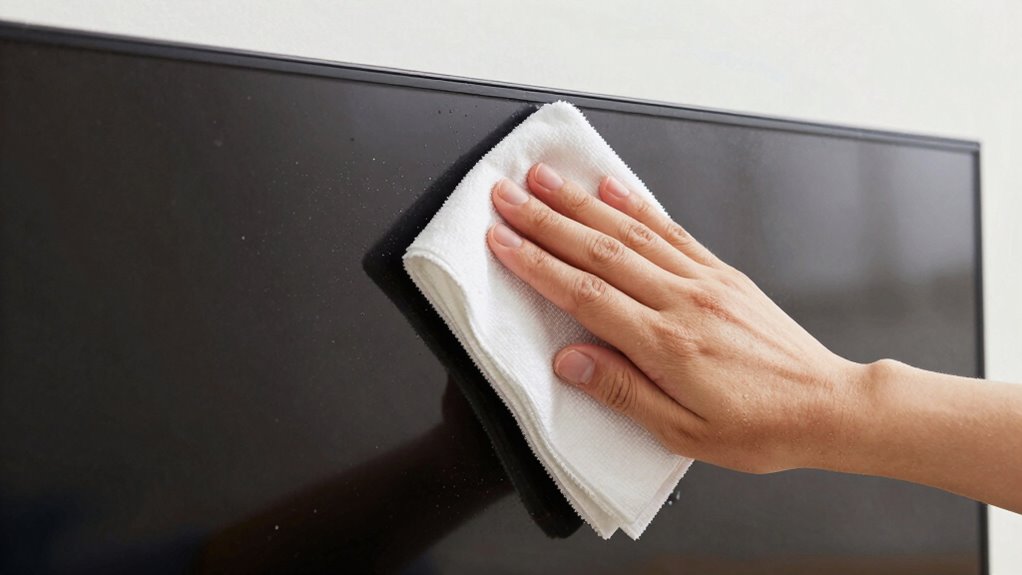
To safely clean your TV screen and prevent streaks, turn off and unplug the TV first. Use a soft microfiber cloth dampened with a mixture of distilled water and a gentle cleaner like white vinegar or a screen-safe solution. Wipe gently in circular motions without applying pressure or spraying directly on the screen. Avoid harsh chemicals and abrasive materials. For more tips on maintaining a streak-free display, keep exploring how proper techniques can extend your TV’s lifespan.

Get your wardrobe favorites delivered free — and shop member deals
- Fast, free delivery on millions of items
- Access to Prime Big Deal Days deals on October 6–7
- Prime Video, Amazon Music and more included
Key Takeaways
- Turn off and unplug the TV before cleaning to prevent streaks and electrical damage.
- Use a soft microfiber cloth lightly dampened with a safe cleaning solution, avoiding direct spray on the screen.
- Gently wipe the screen in circular motions with minimal pressure to prevent streaks and surface damage.
- Avoid harsh chemicals like alcohol or ammonia; opt for distilled water, white vinegar, or dedicated screen cleaners.
- Regularly dust the TV and clean with a dry microfiber cloth to prevent streaks and maintain display clarity.
TV screen microfiber cleaning cloth
As an affiliate, we earn on qualifying purchases.
As an affiliate, we earn on qualifying purchases.
Why Harsh Chemicals Damage Your TV Screen
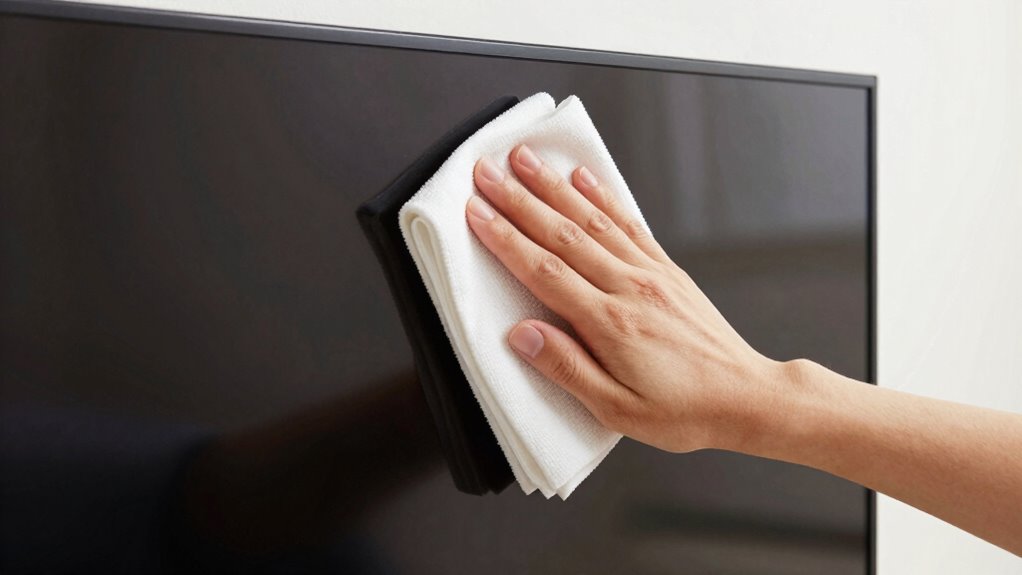
Harsh chemicals can quickly damage your TV screen because their strong, abrasive formulas strip away the protective coating and cause discoloration. When you attempt screen dusting or remote cleaning with these cleaners, you risk leaving streaks or scratches that are hard to fix. Many store-bought cleaners contain alcohol, ammonia, or other harsh ingredients that can eat away at the delicate surface of your display. Instead, use gentle, screen-specific products or a soft microfiber cloth. Avoid sprays directly onto the screen; instead, lightly dampen the cloth. By steering clear of harsh chemicals, you preserve the screen’s clarity and prevent permanent damage, ensuring your TV stays vibrant and streak-free over time.
What Tools You Need to Safely Clean Your TV Screen
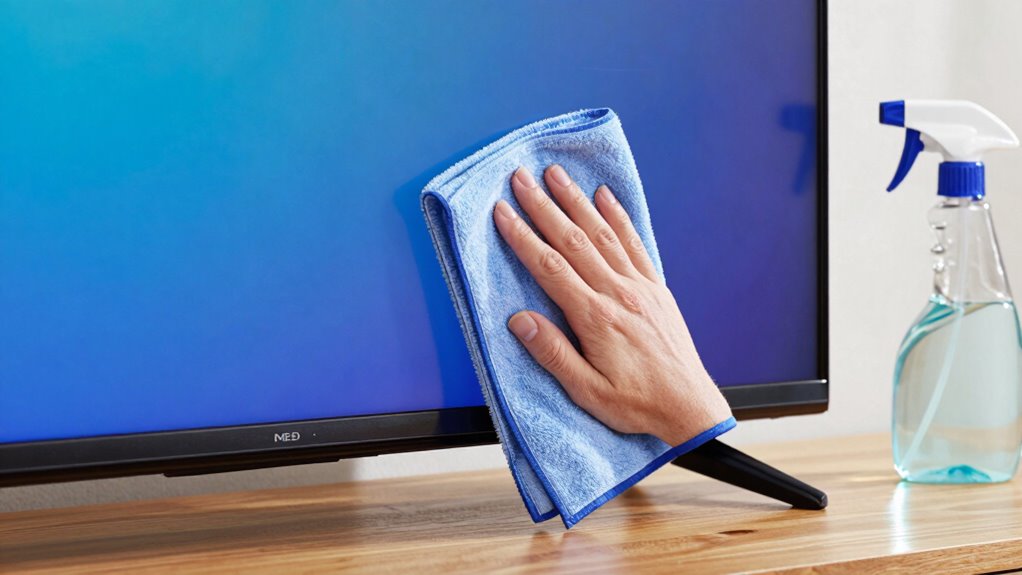
To clean your TV screen safely, you need the right tools that won’t cause damage. Use a soft microfiber cloth, which gently lifts dust and prevents scratches. Avoid paper towels or rough fabrics that can harm delicate screen coatings. A gentle, electronics-safe cleaning cloth helps maintain the screen’s clarity and protects its coatings. A compressed air canister is excellent for dust prevention, removing particles from corners and edges without contact. Keep a small, designated cleaning brush nearby for stubborn dust buildup. These tools ensure you avoid streaks and damage while maintaining the screen’s integrity. Proper tools are essential for safe, effective cleaning that preserves your TV’s picture quality over time. Additionally, selecting cleaning products that are specifically designed for screens can prevent coating damage and ensure a streak-free finish. Using the right tools also reduces the risk of damage from improper cleaning techniques, which can compromise your screen’s lifespan. Incorporating proper cleaning methods and appropriate tools into your routine helps maintain optimal display performance and extends the life of your TV.
Which Cleaning Solutions Are Best for Your TV Screen
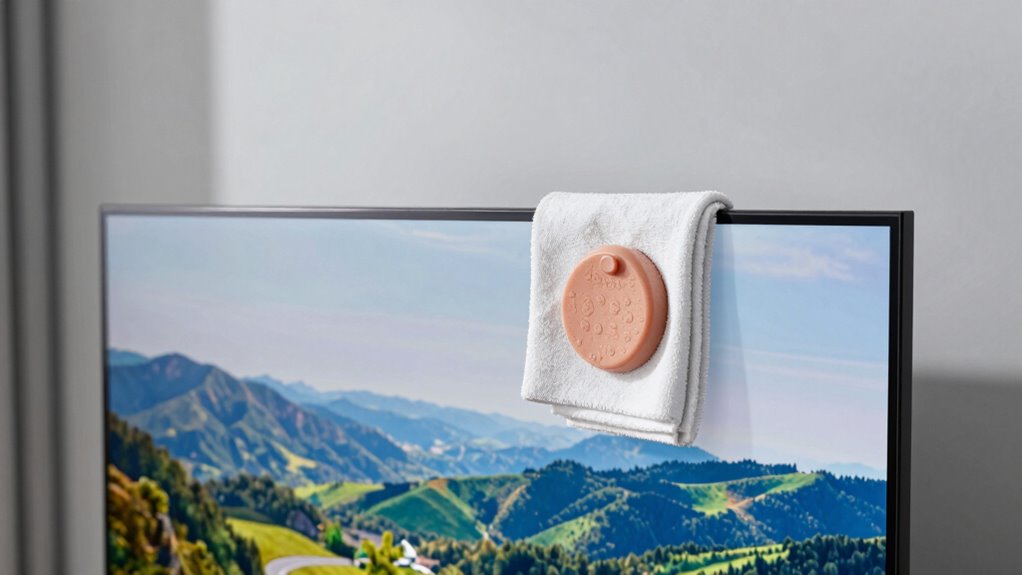
Choosing the right cleaning solution is key to keeping your TV screen spotless without causing damage. Use gentle, screen-safe cleaners to prevent streaks and reduce glare. Avoid harsh chemicals like ammonia or alcohol, which can harm the screen’s coating. Instead, opt for a mixture of distilled water and a small amount of white vinegar or a commercial screen cleaner designed for electronics. Keep your remote control clean with the same solutions, but avoid spraying directly onto it. Regularly maintenance routines can help prolong the lifespan of your screens and devices. Here’s a quick guide:
| Cleaner Type | Suitable For | Warning |
|---|---|---|
| Distilled Water + Vinegar | TV screen, remote control | Use lightly; avoid excess moisture |
| Commercial Screen Cleaner | All screens | Check for compatibility |
| Isopropyl Alcohol (70%) | Remote control (spot cleaning) | Use with caution; don’t spray directly |
This ensures your screen stays clear without glare or streaks. Proper cleaning techniques help maintain the thermal behavior of your screens, ensuring optimal performance over time.
How to Clean Your TV Screen Step-by-Step
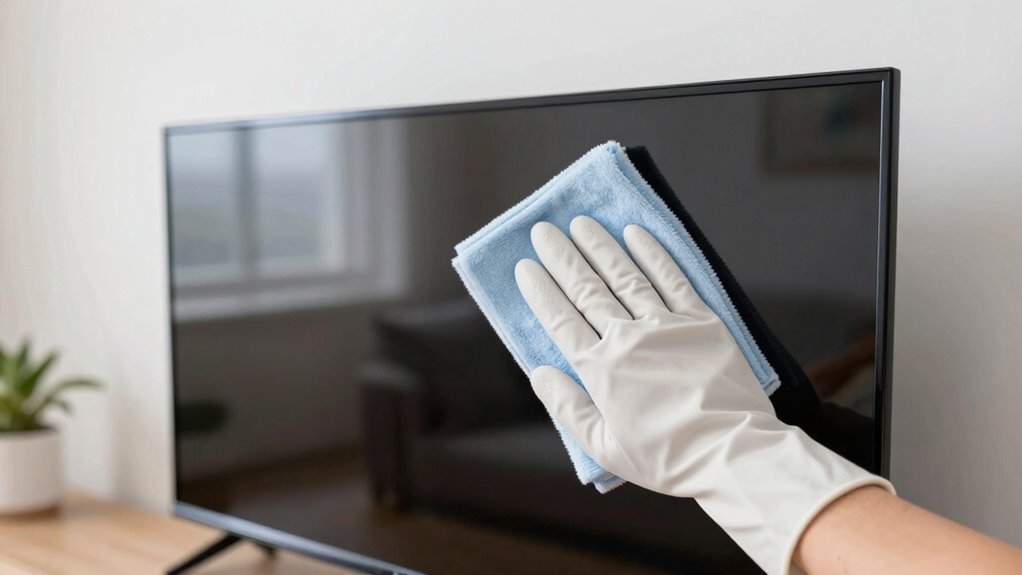
Cleaning your TV screen effectively involves a few simple, deliberate steps to guarantee a streak-free and safe finish. First, turn off your TV and unplug it. Gently remove the remote control and place it safely nearby. Use a microfiber cloth to wipe the screen in gentle, circular motions, avoiding excessive pressure. If needed, lightly dampen the cloth with a safe cleaning solution, never spray directly onto the screen. While cleaning, check the TV stand to ensure dust and debris aren’t transferred onto the screen. Wipe the stand with a separate cloth if necessary. When choosing cleaning products, it’s best to select gentle and safe cleaning solutions that won’t damage your display. It’s also helpful to avoid harsh chemicals that can harm the screen’s coating. To further protect your display, consider appropriate cleaning techniques that preserve the screen’s integrity and prevent damage. Once done, dry the screen with a clean, dry microfiber cloth. To preserve your TV’s display quality, it’s important to use energy-efficient cleaning methods that minimize potential damage. Finally, replace the remote control and turn your TV back on, ensuring the display is clear and streak-free.
Tips to Prevent Streaks and Smudges After Cleaning
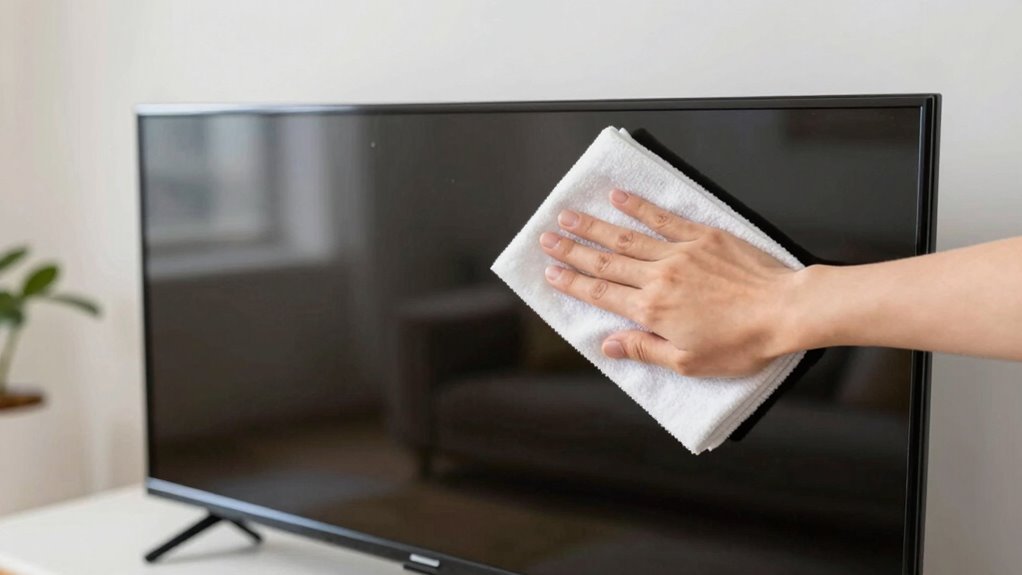
Even after thoroughly cleaning your TV screen, streaks and smudges can still appear if you don’t take specific precautions. Finger smudges are common, so avoid touching the screen with your fingers afterward. Use a microfiber cloth to gently wipe away any new smudges without pressing too hard. Dust buildup can also cause streaks when it mixes with cleaning residue, so regularly dust your TV to prevent this. Always use a dry or slightly damp cloth, and avoid spraying liquids directly onto the screen. If you notice streaks, gently buff the surface with a clean, dry microfiber cloth. Taking these steps helps prevent streaks and keeps your TV looking clear and spotless long after cleaning. For optimal care, consider using a gentle cleaning method similar to how electric bikes are maintained to ensure longevity and performance. Additionally, understanding your cleaning appliances can help you choose the safest tools to avoid accidental damage.
Common Mistakes That Could Damage Your TV : and How to Avoid Them
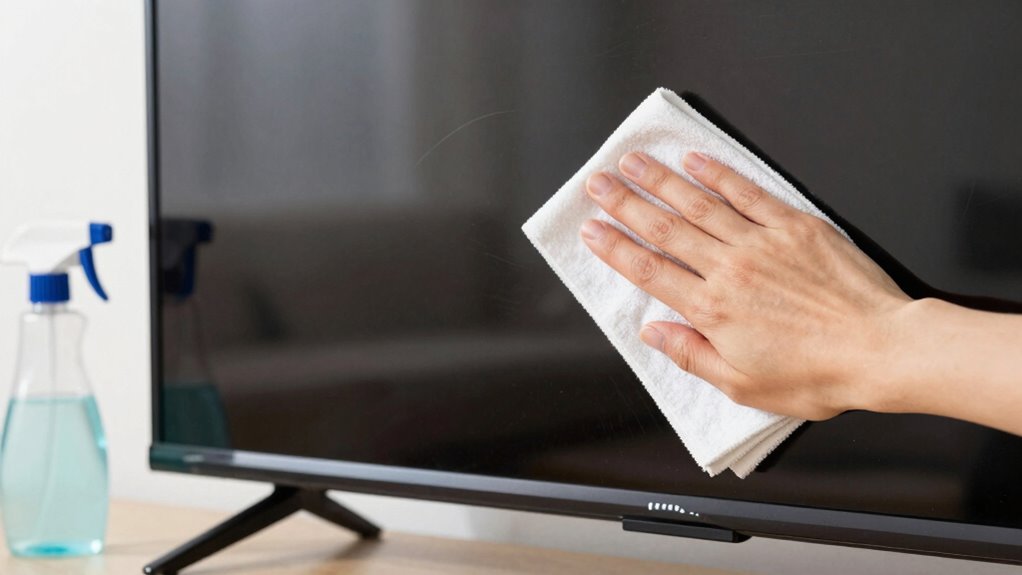
Using harsh cleaners can damage your screen’s coating, so always choose gentle, approved solutions. Applying too much pressure while cleaning can cause cracks or discoloration, so be gentle and use a soft cloth. Additionally, ignoring your TV’s specific screen type may lead to damage, so check the manufacturer’s guidelines before cleaning. Remember, understanding your TV as an art care and living device can help you maintain it properly and extend its lifespan. Being aware of screen technology differences can also guide you in selecting the safest cleaning methods. Regularly monitoring your TV’s performance can help identify issues early and prevent long-term damage. Incorporating proper maintenance practices is essential for preserving your TV’s display quality and ensuring a streak-free viewing experience.
Using Harsh Cleaners
Many people make the mistake of using harsh cleaners on their TV screens, believing stronger solutions will do a better job. However, these chemicals can damage the screen’s delicate coating, leading to permanent streaks or discoloration. Instead, avoid alcohol, ammonia, or abrasive sprays. Using harsh cleaners can also increase screen glare, making it harder to see clearly. When cleaning your remote, don’t spray cleaners directly onto it; instead, use a soft cloth dampened with a gentle cleaner. This prevents liquid from seeping inside and damaging sensitive components. Always stick to manufacturer-approved cleaning methods to keep your TV looking pristine and functioning properly. Remember, gentle cleaning preserves your screen’s clarity and prevents costly repairs down the line. To ensure your TV remains in optimal condition, consider adaptive cleaning techniques that are designed to be safe for delicate electronic screens, which align with proper maintenance practices for electronic devices.
Applying Excessive Pressure
Applying too much pressure while cleaning your TV screen is a common mistake that can cause permanent damage. Excessive pressure application during cleaning may lead to scratches, discoloration, or even cracks in the screen. Forceful cleaning doesn’t remove dirt better; it risks damaging the delicate surface. Instead, use gentle, consistent pressure to avoid leaving streaks or harming the display. Remember, your screen is sensitive, and a light touch is all that’s needed. If you press too hard, you might compromise the screen’s integrity or cause pixel damage that’s irreversible. Always opt for soft, microfiber cloths and avoid applying forceful cleaning techniques. Proper pressure application ensures your TV stays clear and undamaged, maintaining its quality and lifespan over time. Using gentle techniques is essential for preserving your display’s longevity, especially considering the delicate nature of electronic screens. Additionally, understanding the proper cleaning methods helps prevent accidental damage and extends the lifespan of your device.
Ignoring Screen Types
Ignoring the differences between screen types can lead to serious damage to your TV. Different screens have unique coatings, like matte or glossy finishes, which require specific cleaning methods. For example, glossy screens may show streaks easily if cleaned with harsh chemicals, while matte screens can be damaged by abrasive materials. Additionally, some screens have delicate coatings that protect against glare and preserve display brightness. Using the wrong cleaning solution or applying too much pressure can strip these coatings, reducing brightness and clarity. Always identify your screen type before cleaning and choose products designed for that surface. Taking care to match your cleaning method to your TV’s specific screen coating helps prevent damage, preserves display brightness, and keeps your TV looking its best.
How Often Should You Clean Your TV Screen?
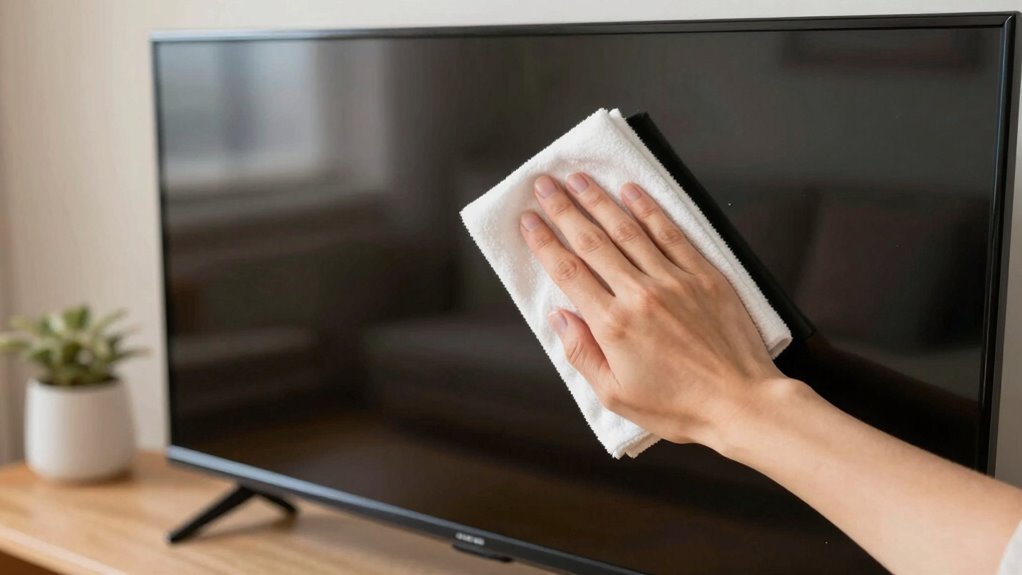
You should clean your TV screen regularly to keep it looking its best and prevent dust buildup that can affect picture quality. How often depends on your environment and usage. If your room tends to accumulate dust or pet hair, consider wiping the screen weekly. Regular cleaning reduces screen glare caused by fingerprints or smudges, improving viewing clarity. Use a soft, microfiber cloth for remote cleaning to avoid scratches and remove dust or fingerprints easily. If you notice more dirt or smudges, cleaning more frequently may be necessary. However, avoid over-cleaning, which can lead to streaks or damage. Typically, bi-weekly or monthly cleanings are sufficient for most households. Staying consistent helps maintain ideal picture quality and prolongs your TV’s lifespan. Incorporating smart cleaning techniques can further enhance your maintenance routine and ensure the longevity of your device. Additionally, using appropriate cleaning solutions specifically designed for electronic screens can help prevent streaks and damage. Properly cleaning your TV not only preserves its appearance but also supports optimal picture quality over time, especially when dust and smudges are regularly managed.
How to Fix Persistent Streaks or Dirt Residue on Your TV Screen
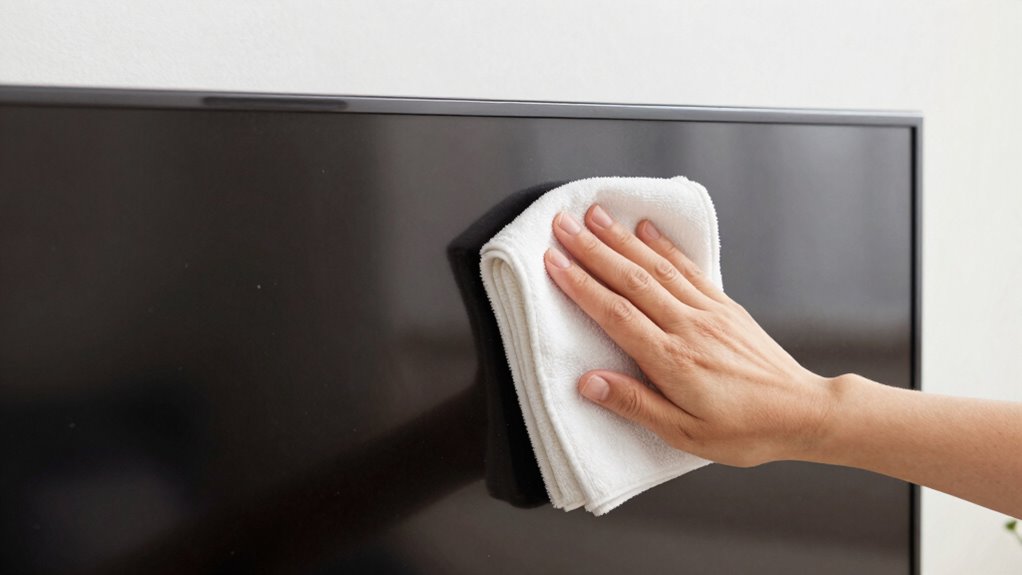
Streaks and dirt residue often result from improper cleaning or leftover grime. To fix this, you need to identify what caused the streaks and use gentle cleaning solutions. Proper techniques guarantee your screen stays clear without causing damage.
Identify Streak Causes
Persistent streaks or dirt residue on your TV screen often stem from improper cleaning techniques, damaged screen coatings, or airborne dust settling on the surface. Screen smudges are common when you use abrasive materials or harsh cleaners, which can scratch or dull the coating. Dust buildup also contributes to streaks and reduces clarity, especially if dust particles settle into crevices or get trapped under cleaning cloths. Identifying the root cause involves inspecting the screen for signs of damage or rough patches and noting if streaks appear after cleaning. If streaks persist despite gentle cleaning, it may indicate a compromised coating or persistent dust beneath the surface. Recognizing whether the issue is caused by smudges or dust buildup helps you choose the right cleaning method to restore your screen’s clarity.
Use Gentle Cleaning Solutions
To effectively remove streaks and dirt residue from your TV screen, it’s essential to use gentle cleaning solutions that won’t damage the delicate coating. Harsh chemicals can worsen screen glare and leave behind streaks, making dirt buildup more noticeable. Choose solutions specifically designed for screens or make a mixture of distilled water and a small amount of isopropyl alcohol. Always test a small area first.
- Use a soft, microfiber cloth to prevent scratches
- Avoid sprays directly onto the screen; spray on the cloth instead
- Steer clear of ammonia or alcohol-based cleaners
- Regular cleaning helps minimize dust buildup and reduces streaks
Proper Cleaning Techniques
If you notice streaks or dirt residue lingering after your initial cleaning, don’t panic—these issues can usually be fixed with some proper techniques. First, turn off your TV and gently wipe the screen with a microfiber cloth to remove dust and loosen stubborn spots. Avoid pressing too hard, which can cause streaks or damage. For persistent dirt, lightly dampen the cloth with a mixture of water and a small amount of vinegar or a screen-safe cleaner. When cleaning, be mindful of screen glare; clean in a gentle circular motion to prevent streaks that catch the light. Also, remember to clean your remote control separately, as it can transfer dirt back onto the screen. Patience and gentle, consistent cleaning methods are key to a streak-free, clear picture.
Additional Maintenance Tips for a Crystal-Clear TV Screen
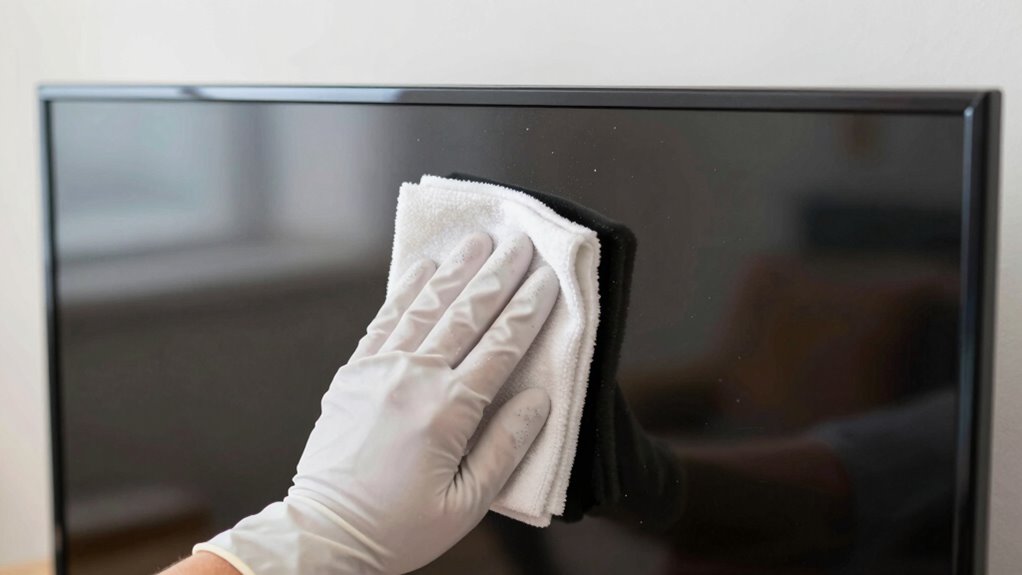
Maintaining a crystal-clear TV screen requires more than just regular cleaning; it also involves some simple yet effective maintenance practices. Protecting screen coatings is essential, as harsh chemicals can damage them over time. To keep dust accumulation at bay, dust your TV regularly with a microfiber cloth, preventing buildup that can cause streaks or damage. Avoid placing your TV in direct sunlight or near heat sources, as extreme temperatures can affect the screen’s quality. Additionally, ensure your living space is kept at a stable humidity level to prevent moisture-related issues.
- Use gentle, non-abrasive cloths for cleaning and dusting
- Keep your TV in a dust-free environment as much as possible
- Regularly check for and remove dust buildup behind the screen
- Avoid applying excessive pressure to prevent damaging delicate screen coatings
Frequently Asked Questions
Can I Use Household Vinegar to Clean My TV Screen Safely?
You shouldn’t use household vinegar to clean your TV screen, as vinegar risks damaging the delicate surface. Instead, opt for household alternatives like distilled water or a mixture of water and a small amount of gentle, screen-safe cleaner. Always turn off your TV and use a soft, microfiber cloth to wipe gently. This prevents streaks and keeps your screen safe from scratches or harm caused by harsh cleaning agents.
Is It Safe to Use a Microfiber Cloth for Cleaning?
Using a microfiber cloth is safe for cleaning your TV screen because microfiber safety guarantees it won’t scratch or damage the surface. Plus, microfiber cloths are durable, allowing you to use them multiple times without losing effectiveness. Just make sure the cloth is clean and dry, and avoid harsh chemicals. This way, you’ll maintain a streak-free, crystal-clear screen while protecting its delicate surface.
Are There Specific Cleaning Products for OLED or LED Screens?
You don’t need special cleaning products for OLED or LED screens, but using a gentle, alcohol-free cleaner is recommended. Consider applying screen protectors or anti-glare coatings to reduce fingerprints and glare, making cleaning easier. When cleaning, always use a microfiber cloth and avoid harsh chemicals that could damage the delicate surface. This approach guarantees your screen stays clear, streak-free, and protected, extending its lifespan.
How Do I Clean a Curved or Irregularly-Shaped TV Screen?
To clean a curved or irregularly-shaped TV screen, you should use gentle, curved-screen cleaning techniques. Start by turning off your TV and using a soft microfiber cloth to avoid streaks. Lightly dampen the cloth with a mixture of distilled water and a small amount of isopropyl alcohol. Gently wipe the entire surface, following the curves or irregular shape to guarantee thorough, streak-free cleaning without damaging the screen.
Can Cleaning Too Often Damage or Wear Out My TV Screen?
Cleaning too often can actually cause screen damage, especially if you’re aggressive or use harsh materials. While regular cleaning keeps your TV looking great, excessive cleaning may wear out the screen’s protective coating or cause scratches. To avoid this, maintain a balanced cleaning frequency, using gentle methods. Think of it as giving your screen proper care, not overdoing it, to preserve its clarity and longevity.
Conclusion
Think of your TV screen like a window to your favorite movies—clean and clear, it shines brightest. When I once used harsh chemicals, I ended up with streaks that looked like a spider’s web. But with gentle tools and proper techniques, I restored its clarity. Regular cleaning keeps your screen pristine and prevents damage. Treat it like a delicate gem, and it’ll continue to provide you with a stunning view, day after day.
Fall Picks
fall essentials
As an affiliate, we earn on qualifying purchases.