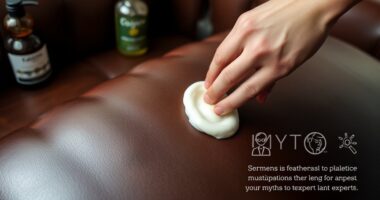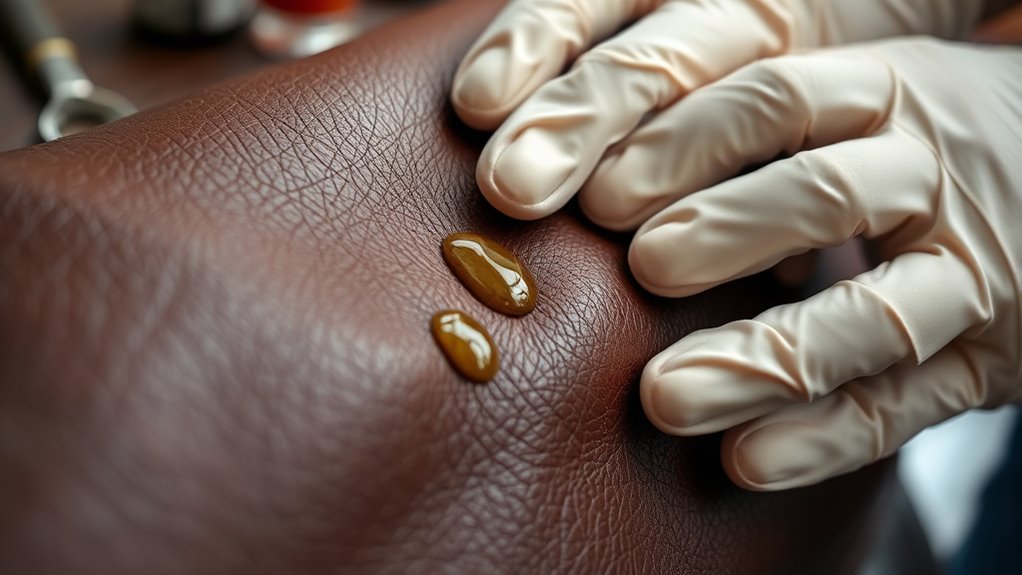

To keep your leather looking great and lasting longer, you should regularly condition it with products designed specifically for leather, like those containing glycerin or lanolin. Gently clean the surface before applying a small amount of conditioner in circular motions, then let it soak for 15-20 minutes before buffing. Store leather away from heat and sunlight, and consider protective sprays for added resilience. Keep exploring to discover more tips on preserving your leather’s beauty over time.
Key Takeaways
- Use specially formulated leather conditioners with glycerin, mink oil, or lanolin to keep leather supple and prevent dryness.
- Clean leather gently with a soft, damp cloth before applying conditioner for optimal absorption.
- Apply conditioner in circular motions, let it soak for 15-20 minutes, then buff with a dry cloth to remove excess.
- Condition leather every few months for daily items or less frequently for occasional pieces to maintain flexibility and appearance.
- Store leather away from direct sunlight and heat, and consider using leather protectors to enhance moisture retention and stain resistance.
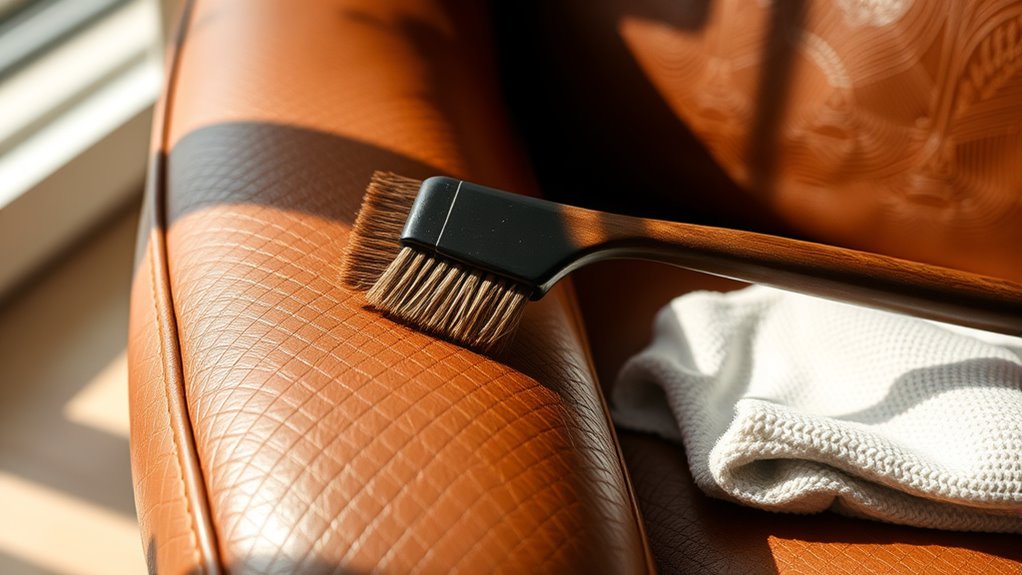
Have you ever wondered how to keep your leather items looking their best? The secret lies in understanding leather conditioning basics, especially how to manage leather aging and apply proper conditioning techniques. Leather, being a natural material, ages over time, which can lead to dryness, cracking, or dullness. But with the right care, you can slow down this process and even restore some of its original luster. The key is regular conditioning, which helps maintain its suppleness and appearance.
Proper leather conditioning preserves its beauty and durability over time.
Leather aging is inevitable, but it doesn’t have to be a negative thing. Over time, leather develops a unique patina that adds character, but if left untreated, it can become brittle and prone to damage. This is where conditioning techniques come into play. Proper conditioning involves applying suitable products that penetrate the leather, replenishing lost oils and moisture. When you choose a conditioner, look for those specifically designed for leather; avoid products containing harsh chemicals or petroleum-based substances that can cause more harm than good. The best conditioners are usually glycerin-based or contain natural oils like mink or lanolin.
To start, clean your leather item gently with a soft, damp cloth to remove dust and surface dirt. This step ensures the conditioner can absorb evenly. Once clean, apply a small amount of conditioner using a soft cloth, working in circular motions. Remember, less is more—over-conditioning can lead to a sticky or greasy surface. Let the conditioner sit and soak in for about 15-20 minutes, then buff away excess with a clean, dry cloth. Regular conditioning—every few months for items in daily use and less often for occasional pieces—helps preserve leather’s flexibility and prevents cracking caused by dry leather aging. Additionally, using appropriate storage techniques can significantly extend the lifespan of your leather goods.
It’s also important to think about the environment where your leather is stored. Keep your items away from direct sunlight and heat sources, which can accelerate aging and dry out the leather. Using a leather protector spray after conditioning can add an extra layer of defense against moisture and stains, prolonging the life of your leather goods. Remember, consistency is key. Regular maintenance, coupled with proper conditioning techniques, will keep your leather looking rich, supple, and durable for years to come. Understanding how to care for your leather ensures you get the most out of your investment while enjoying its timeless appeal.
Frequently Asked Questions
How Often Should I Condition Different Types of Leather?
You should condition different types of leather based on their age and exposure. For new leather, condition every 3 to 6 months to prevent aging and maintain flexibility. Older or frequently used leather may need monthly conditioning to keep it supple and prevent cracking. Always follow a regular conditioning schedule, especially if your leather is exposed to harsh elements, to prolong its life and keep it looking its best.
Can I Use Household Products to Condition Leather?
Using household products to condition leather is like trusting a wizard with a broken wand—it’s risky. Household products can contain chemicals that cause leather damage, so it’s best to steer clear of them. Instead, opt for products specifically designed for leather care. This ensures your leather stays supple and durable, avoiding cracks or stains. Don’t play the role of a misguided hero—stick to proper leather conditioners for the best results.
What Signs Indicate My Leather Needs Conditioning?
You’ll notice your leather needs conditioning if it shows signs of leather dryness, feeling rough or stiff to the touch. Cracking signs also indicate it’s time to condition your leather item. When the surface looks dull or loses its suppleness, it’s a clear sign that moisture has evaporated. Address these signs promptly with proper leather conditioner to restore flexibility and prevent further damage, keeping your leather looking its best.
Is Leather Conditioning Suitable for Vintage or Antique Items?
You bet, leather conditioning is suitable for vintage or antique items, but you must proceed with care. Think of it as giving your prized possessions a gentle touch, ensuring their longevity. Using proper preservation techniques and restoration methods helps prevent damage. Always test a small area first and choose conditioners specifically designed for delicate, aged leather. This way, you enhance beauty without risking harm, keeping your treasures alive for generations.
Are There Eco-Friendly Leather Conditioning Options Available?
Yes, eco-friendly leather conditioning options are available. You can choose products made with natural oils that nourish leather without harmful chemicals, making them safer for the environment. If you’re interested in vegan leather, look for conditioners specifically designed for it, often free from animal-derived ingredients. These options help maintain your leather’s beauty while supporting sustainable practices, giving you peace of mind that you’re caring for your items responsibly.
Conclusion
By regularly conditioning your leather, you nourish its surface, restore its flexibility, and preserve its beauty. Consistency keeps it soft, protects it from damage, and extends its lifespan. Proper care maintains its shine, prevents cracking, and ensures it ages gracefully. Embrace these simple steps, apply quality products, and dedicate time to your leather items. In doing so, you safeguard their value, enhance their appearance, and enjoy their durability for years to come.