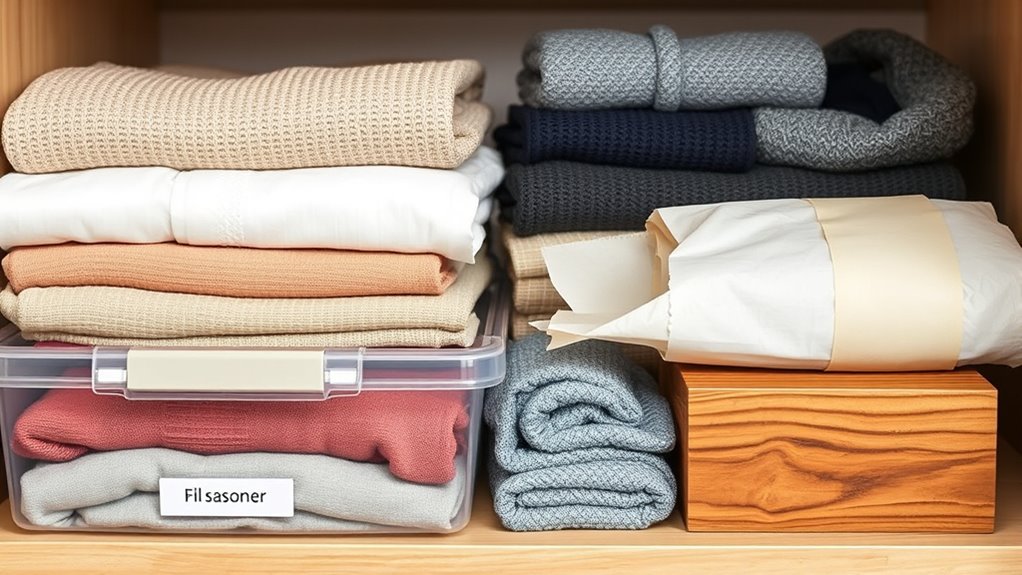

To store off-season clothes properly, start by thoroughly cleaning and drying your items to prevent mold and pests. Use breathable storage containers like fabric bins or acid-free boxes, and avoid plastic which traps moisture. Fold clothes neatly or hang delicate items in breathable garment bags. Keep them in a cool, dry, dark place, and add moisture absorbers if needed. Regularly check your stored clothes for signs of damage, ensuring they stay fresh and protected for future wear. Keep exploring to learn more tips.
Key Takeaways
- Clean and thoroughly dry clothes before packing to prevent mold and pest attraction.
- Use breathable storage materials like fabric bins or acid-free boxes to avoid moisture trapping.
- Store clothes in a cool, dry, dark environment with moisture absorbers or silica gel packets.
- Fold garments neatly and layer with acid-free tissue paper to prevent creases and staining.
- Regularly inspect stored clothes for pests or damage and maintain a clean, pest-free storage space.
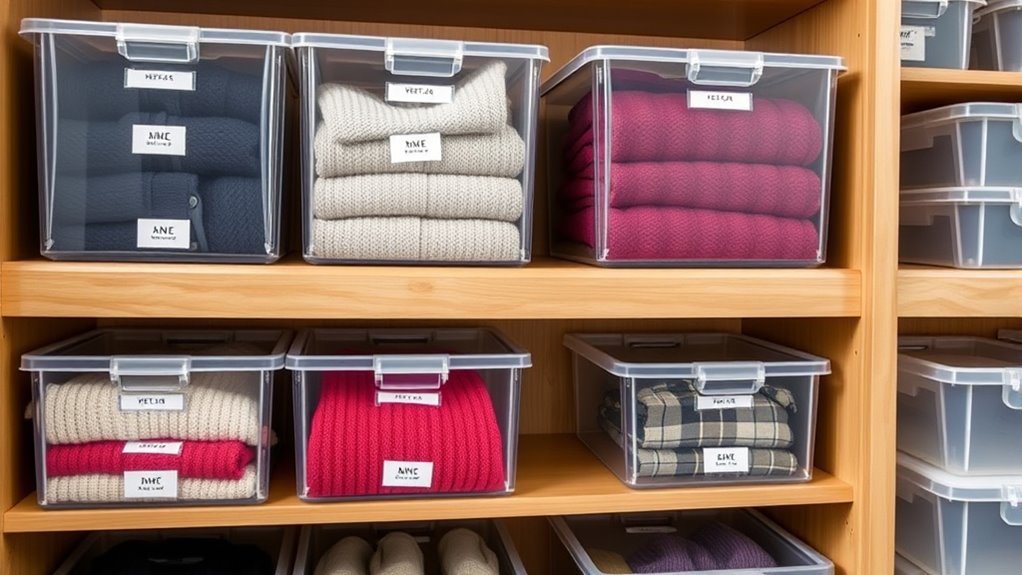
Storing off-season clothes properly guarantees your wardrobe stays organized and your clothes remain in good condition. The key to achieving this is understanding how to protect your garments from damage during storage. Proper garment protection involves more than just folding or hanging your clothes; it requires using the right storage materials that shield them from dust, moisture, pests, and light. When choosing storage materials, opt for breathable fabric bins, acid-free boxes, or garment bags made from natural fibers. These materials prevent mold growth and fabric deterioration, ensuring your clothes stay fresh and in excellent shape until you need them again.
Proper storage materials like breathable fabric bins and acid-free boxes keep off-season clothes fresh and protected.
Before packing, take the time to clean your clothes thoroughly. Dirt, sweat, or stains left on garments can attract pests or cause discoloration over time. Dry everything completely, and follow the care instructions for delicate items. Once clean, fold your clothes neatly to avoid wrinkles and unnecessary stress on the fabric. For delicate or valuable garments, consider hanging them in breathable garment bags. These bags protect against dust and light exposure while allowing air circulation, which reduces the risk of mildew and mustiness. Avoid plastic bags, as they trap moisture and can lead to mold or fabric damage.
When placing your clothes into storage, always layer them with acid-free tissue paper to prevent creasing and fabric staining. This extra step helps maintain the shape and quality of your garments over extended periods. Make sure your storage space is cool, dry, and dark, as sunlight and humidity accelerate fabric deterioration and color fading. A closet or under-bed storage is ideal if it’s clean and free from pests. If you’re storing clothes in a basement or attic, consider adding moisture absorbers or silica gel packets to control humidity levels. Additionally, color accuracy in your storage environment can help prevent fading or discoloration of your clothing over time. Using climate control measures can help maintain ideal conditions and extend the lifespan of your garments.
Label your storage containers clearly so you can easily identify garments when season change approaches. This saves you time and effort when you’re ready to swap out your wardrobe. Regularly check on your stored clothes, at least once a season, to ensure they remain in good condition. Look for signs of pests, mold, or fabric damage, and address any issues immediately. Using the right storage materials and garment protection techniques helps preserve the quality and longevity of your off-season clothes, ensuring they stay fresh, clean, and ready to wear when the time comes. Proper storage isn’t just about keeping your wardrobe tidy—it’s about safeguarding your investment in quality clothing. Additionally, storage environment considerations can help maintain ideal conditions and prolong the lifespan of your garments. Proper clothing care practices combined with suitable storage methods will ensure your wardrobe remains in excellent condition year after year.
Frequently Asked Questions
Can I Store Clothes in Plastic Bags Long-Term?
Storing clothes in plastic bags long-term isn’t ideal, especially for delicate fabrics. Plastic bag storage can trap moisture, leading to mold, mildew, and fabric damage over time. For long-term clothing storage, it’s better to use breathable garment bags or storage bins that allow air circulation. This helps keep your clothes fresh, prevents damage, and ensures they stay in good condition when you need them again.
How Do I Prevent Moths Without Chemicals?
Imagine moths as uninvited guests that you want to keep out. To do this naturally, you can use repellents like cedar blocks, lavender sachets, or dried herbs, which are your friendly guards. Store your clothes in airtight containers to block moth access and keep scents in. These simple, chemical-free methods protect your clothes while preserving their freshness, ensuring moths stay out and your wardrobe stays intact.
What’S the Best Way to Label Stored Clothing?
When it comes to garment labeling, clear labels are essential for effective storage organization. You should use a permanent marker or printable labels to mark the contents and season of each clothing item. Attach labels securely to the outside of storage bins or bags for easy identification. This helps you quickly find what you need later, keeps your storage tidy, and prevents unnecessary handling or damage to your off-season clothes.
Should I Wash Clothes Before Storage?
When it comes to laundry prep, you should wash your clothes before storing them—don’t leave anything to chance. Dirty clothes are like a magnet for pests and can mold over time, ruining your clothing’s freshness. Plus, clean clothes are easier to fold and label. Think of it as giving your wardrobe a fresh start; it’s worth the effort to keep your off-season clothes in tip-top shape.
How Often Should I Check Stored Clothing?
You should check your stored clothing at least every three to six months. Regular seasonal check ins help you spot any signs of damage, pests, or mustiness early. Incorporate clothing rotation during these inspections to guarantee your off-season clothes stay fresh and in good condition. This routine helps prevent issues like mold or fabric deterioration, keeping your wardrobe ready for the next season and extending the lifespan of your garments.
Conclusion
Now that you know how to store your off-season clothes properly, you can keep them in great shape for years to come. Just remember, a stitch in time saves nine—taking a little extra effort now prevents bigger problems later. By following these simple tips, you’ll avoid unnecessary damage and keep your wardrobe fresh. So, don’t put off organizing; get ahead of the game and enjoy hassle-free seasons ahead!