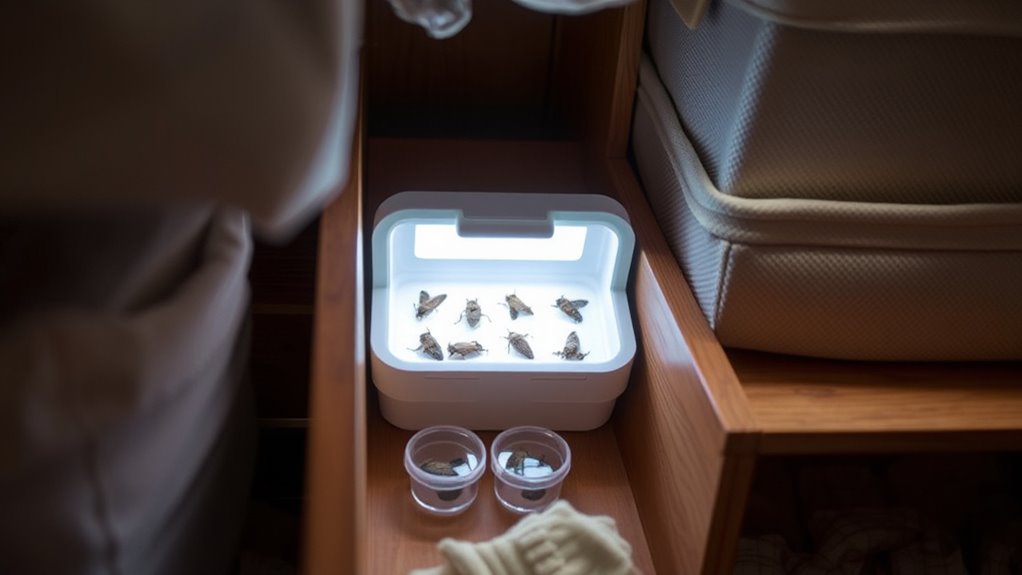

To prevent moth damage, use modern storage solutions like airtight containers or vacuum-sealed bags for your textiles, keeping them cool and dry. Combine this with natural repellents such as cedar blocks, lavender sachets, or rosemary sprigs, which emit scents moths dislike. Regularly clean storage areas and maintain consistent climate control. These eco-friendly methods create an environment less attractive to moths, helping keep your fabrics safe. Keep exploring for more tips to safeguard your belongings effectively.

Get your wardrobe favorites delivered free — and shop member deals
- Fast, free delivery on millions of items
- Access to Prime Big Deal Days deals on October 6–7
- Prime Video, Amazon Music and more included
Key Takeaways
- Use airtight storage containers and vacuum-sealed bags to keep textiles protected from moths.
- Implement UV sterilization devices or moth-specific traps for effective pest monitoring and elimination.
- Apply natural repellents like cedar, lavender, or rosemary to create moth-unfriendly environments.
- Maintain a clean, dry, and well-ventilated storage area to deter moth activity.
- Incorporate integrated pest management combining natural repellents, proper storage, and modern pest control tools.

Have you ever noticed tiny holes or shed skins in your clothing or stored fabrics? If so, you’re likely dealing with moths or their larvae, which can silently damage your wardrobe. Preventing this damage requires more than just a quick inspection; it involves using modern solutions that are both effective and safe. One of the first steps you should consider is proper linen storage. Storing your clothes and textiles properly creates an environment that discourages moth activity. Use airtight containers or vacuum-sealed bags for items that you don’t wear regularly. Guarantee that your storage space remains cool, dry, and well-ventilated. Moths thrive in warm, humid environments, so controlling humidity and temperature is essential. Additionally, regularly cleaning your storage area helps eliminate any eggs or larvae before they hatch, cutting off the moths’ lifecycle at the start.
Natural repellents are also a smart, eco-friendly way to keep moths at bay. Many people opt for natural options rather than chemical pesticides, which can be harsh and sometimes leave unwanted residues on fabrics. Items like cedar blocks, lavender sachets, or rosemary sprigs can serve as effective natural repellents. Moths dislike the strong scents of these herbs and woods, so placing them strategically around your linen storage areas or inside drawers can create a protective barrier. Plus, these natural repellents often smell better than chemical sprays and won’t stain your clothes. Replacing or revitalizing them periodically ensures they remain potent and continue to repel moths effectively. Incorporating proper storage techniques is also crucial, as it helps create an environment less inviting to moths and supports other preventative measures. Moreover, understanding the different cookie categories involved in modern solutions can help you choose the most suitable options for your needs. To enhance your prevention strategy, you can also consider integrated pest management, which combines multiple methods for more effective moth control. Embracing a creative practice approach to pest prevention can make the process more engaging and effective, encouraging consistent efforts.
airtight textile storage containers
As an affiliate, we earn on qualifying purchases.
As an affiliate, we earn on qualifying purchases.
Frequently Asked Questions
Are Natural Repellents as Effective as Chemical Solutions?
Natural repellents can be effective, but they often aren’t as powerful or long-lasting as chemical solutions. You might find that natural options like lavender or cedarwood deter moths initially, but they may require frequent reapplication. Chemical solutions tend to provide more immediate, reliable results, especially for serious infestations. Ultimately, your choice depends on your preference for safety and environmental impact versus maximum effectiveness and convenience.
How Often Should I Inspect for Moth Signs?
Oh, the thrill of inspection! You should check your closet at least once a month for moth signs—because who doesn’t love playing detective? Regular inspection frequency helps catch signs of moth damage early. Look for webbing, larvae, or shed skins, and don’t wait until your sweaters become moth buffet. Staying vigilant guarantees you catch sign detection early, keeping your wardrobe moth-free and your sanity intact.
Can Moth Damage Be Reversed Once It Occurs?
Once moth damage occurs, it’s often difficult to fully reverse it. You can try fabric treatment methods to stop further damage, but reversing existing moth damage usually isn’t possible. Instead, focus on damage reversal techniques like cleaning and repairing affected items. Preventative measures, such as proper storage and regular inspections, are key to avoiding extensive moth damage altogether. Remember, early detection makes managing moth problems much easier.
Do Moths Only Infest Certain Types of Fabrics?
It’s ironic, isn’t it? Moths don’t just pick certain fabrics; they’re actually quite opportunistic. You might think only wool or silk are at risk, but infestation triggers can include almost any fabric with natural fibers. Fabric treatments like cedar or lavender can deter them, yet many overlook these simple solutions. So, no, they don’t only infest specific fabrics—they go where the scent and conditions invite them.
Are There Eco-Friendly Ways to Prevent Moths?
Yes, there are eco-friendly ways to prevent moths. You can use sustainable pest management methods like cedarwood or lavender sachets, which naturally repel moths without chemicals. Organic fabric treatments, such as neem oil or plant-based sprays, are also effective and safe for the environment. These options help protect your clothes while supporting eco-conscious living, making them excellent choices for moth prevention.
Conclusion
By adopting modern methods, you can effectively eliminate moths and protect your possessions. With careful cleanliness, clever containers, and consistent checks, you’ll keep moths at bay and preserve your prized pieces. Remember, proactive prevention is powerful, so stay vigilant, vacuum regularly, and utilize natural repellents. Don’t let pests prevail—practice these preventive principles often. Protect, prevent, and preserve with confidence, turning pest problems into peace of mind and pristine possessions.
Fall Picks
fall essentials
As an affiliate, we earn on qualifying purchases.