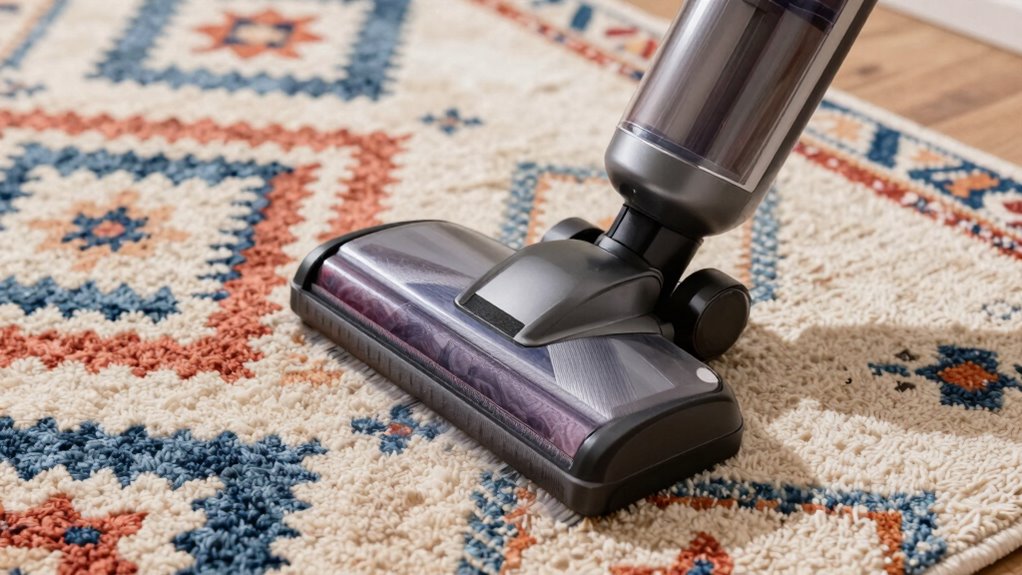
To keep your rug looking its best, vacuum in multiple directions—horizontal, vertical, and diagonal—to lift dirt from all angles and prevent fiber damage. Be sure to change your vacuuming pattern regularly to avoid uneven wear. Also, rotate your rug every six months to promote even fading and distribution of foot traffic. These simple steps help your rug stay clean and vibrant longer. Keep going to discover more tips for proper care and maintenance.

Get your wardrobe favorites delivered free — and shop member deals
- Fast, free delivery on millions of items
- Access to Prime Big Deal Days deals on October 6–7
- Prime Video, Amazon Music and more included
Key Takeaways
- Vacuum in multiple directions (horizontal, vertical, diagonal) for thorough dirt removal and fiber preservation.
- Rotate rugs every six months to promote even wear and prevent uneven fading.
- Adjust vacuum settings based on rug fiber type to avoid damage during cleaning.
- Regularly change vacuuming direction to lift dirt from all angles and maintain rug appearance.
- Maintain a consistent schedule—weekly in high-traffic areas and biweekly elsewhere—to prolong rug lifespan.
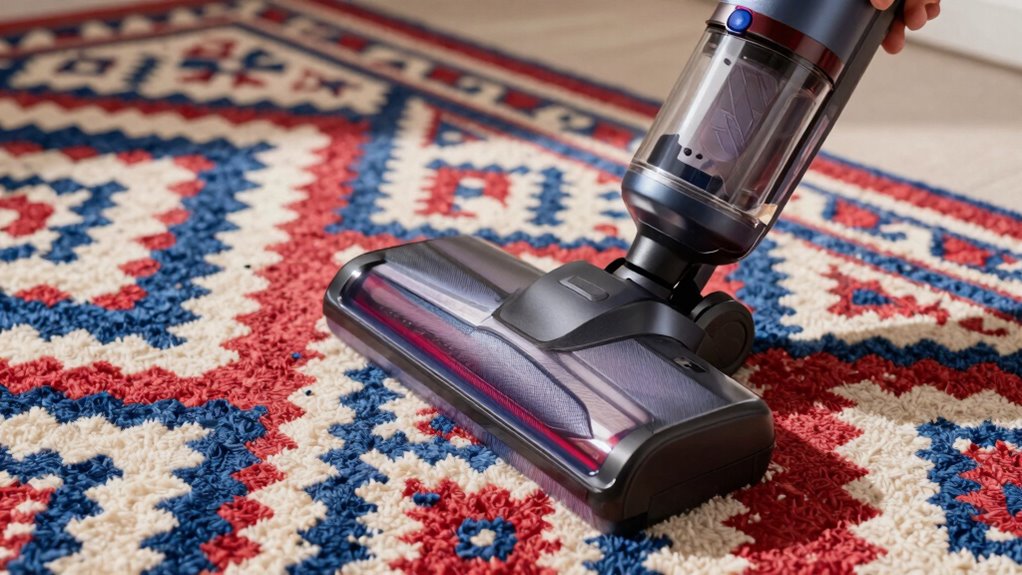
Keeping your rugs clean and well-maintained is essential for both their appearance and longevity. One of the most effective ways to care for your rugs is by paying close attention to vacuuming routine, specifically the direction you vacuum and how often you do it. The cleaning frequency depends on factors like foot traffic, household activity, and whether you have pets or children. Generally, high-traffic areas need weekly vacuuming, while less-used spaces can be done every two weeks. Regular vacuuming prevents dirt and debris from settling deep into the fibers, which can cause premature wear and dullness. When vacuuming, it’s best to change your direction with each pass. Vacuum in different directions—horizontal, vertical, and diagonal—to lift dirt from all angles and ensure thorough cleaning. This not only keeps the rug looking fresh but also helps maintain the fiber integrity over time. Using the correct vacuuming techniques also helps prevent damage to the rug fibers and prolongs its lifespan. Additionally, employing proper vacuuming techniques can help improve the efficiency of cleaning sessions and protect delicate fibers from unnecessary wear. Proper technique includes adjusting the vacuum setting to suit your rug’s fiber type and avoiding excessive pressure during cleaning. Regularly inspecting your rug for signs of wear or dirt buildup can also help you address issues before they become more serious.
In addition to regular vacuuming, knowing stain removal techniques is crucial for keeping your rug pristine. Accidents happen, and prompt action is key. When a spill occurs, blot the area immediately with a clean, dry cloth or paper towel—avoid rubbing, which can spread the stain or embed it further. For most common stains like coffee, wine, or pet accidents, a mixture of mild dish soap and cold water works well. Apply the solution with a clean cloth, gently blot, then rinse with plain cold water, and blot dry. For tougher stains such as ink or red wine, you might need specific stain removers, but always test a small hidden area first to prevent damage. For organic stains like food or mud, let the substance dry first, then vacuum up the debris before treating the stain. Remember, patience is key: never scrub vigorously, as that can fray fibers or set the stain deeper. Knowing about rug fiber types and their specific cleaning needs can help you choose the right stain removal approach and avoid unintended damage. Using the appropriate stain removal techniques tailored to the rug’s fiber type ensures effective cleaning without harm. To further protect your rug from future stains, applying a dust-proofing solution can be a valuable preventative measure.
Rotating your rug periodically also plays a significant role in maintaining its appearance. Rotate your rug every six months to ensure even wear, especially in high-traffic areas. This simple step helps prevent uneven fading, fiber flattening, and wear patterns that make your rug look aged prematurely. It’s also beneficial to inspect your rug regularly for signs of damage or accumulated dirt that may require spot cleaning or more intensive care. Combining this rotation schedule with a consistent vacuuming routine and effective stain removal techniques keeps your rug looking beautiful and extends its lifespan. Maintaining good rug care habits doesn’t require complex tools or frequent professional cleanings, but consistency in cleaning is essential for preserving their beauty and function over time. By paying attention to how often you clean, the directions you vacuum, and how you handle stains, you’ll enjoy your rugs for years to come. Additionally, using dust-proofing solutions can help protect your rugs from dirt buildup, especially in environments prone to dust accumulation.
Frequently Asked Questions
How Often Should I Replace My Vacuum Cleaner’s Filter?
You should replace your vacuum cleaner’s filter every 3 to 6 months, depending on usage and your model. Just like an air purifier, a filter has a lifespan that’s essential for maintaining suction and air quality. Regularly changing it guarantees your vacuum works efficiently and reduces dust recirculation. Check your vacuum’s manual for specific guidance, but don’t neglect replacing the filter to keep your home clean and your device running smoothly.
Can Vacuuming Damage Delicate Rug Fibers?
Like a gentle breeze through fragile leaves, vacuuming can damage delicate rug fibers if you’re not careful. Excessive or aggressive vacuuming may cause fiber fragility and worsen dust accumulation over time. To protect your rug, use a soft brush attachment, vacuum in gentle, consistent strokes, and avoid high suction. Regular, careful cleaning preserves your rug’s beauty and longevity without risking fiber damage.
What Is the Best Time of Day to Vacuum?
The best time of day to vacuum is during the morning, as it’s the ideal timing for cleaning. In the morning, your home is usually less dusty, and the airflow can help clear away allergens more effectively. Plus, vacuuming early means you won’t disturb others or spread dust throughout the day. So, make it part of your morning routine for cleaner, fresher rugs and a healthier home environment.
Should I Vacuum in One Direction Only?
Think of vacuuming like painting a canvas—you want even strokes for the best result. You should vacuum in one direction to follow the rug’s fiber pattern, ensuring thorough cleaning and rug fiber safety. This technique lifts dirt along the fibers, preventing damage and pile distortion. Moving consistently in one direction maximizes cleaning efficiency, avoids unnecessary wear, and keeps your rug looking fresh and vibrant longer.
How Can I Tell if My Rug Needs Professional Cleaning?
You can tell your rug needs professional cleaning if you notice persistent stains, or if odor removal techniques no longer work. Look for rug stain detection signs like discoloration or uneven patches, and pay attention to lingering smells that regular vacuuming can’t eliminate. If these issues persist despite your efforts, it’s time to call in experts who can deep clean and restore your rug’s appearance and freshness effectively.
Conclusion
By following these simple vacuuming directions and sticking to a rotation schedule, you’ll keep your rugs looking fresh and vibrant. Regular care prevents dirt buildup and extends their lifespan. Isn’t it worth the effort to enjoy a cleaner, more inviting space? Remember, a little maintenance goes a long way in preserving your rugs’ beauty and comfort. So, why not start today and give your rugs the care they deserve?
Fall Picks
fall essentials
As an affiliate, we earn on qualifying purchases.