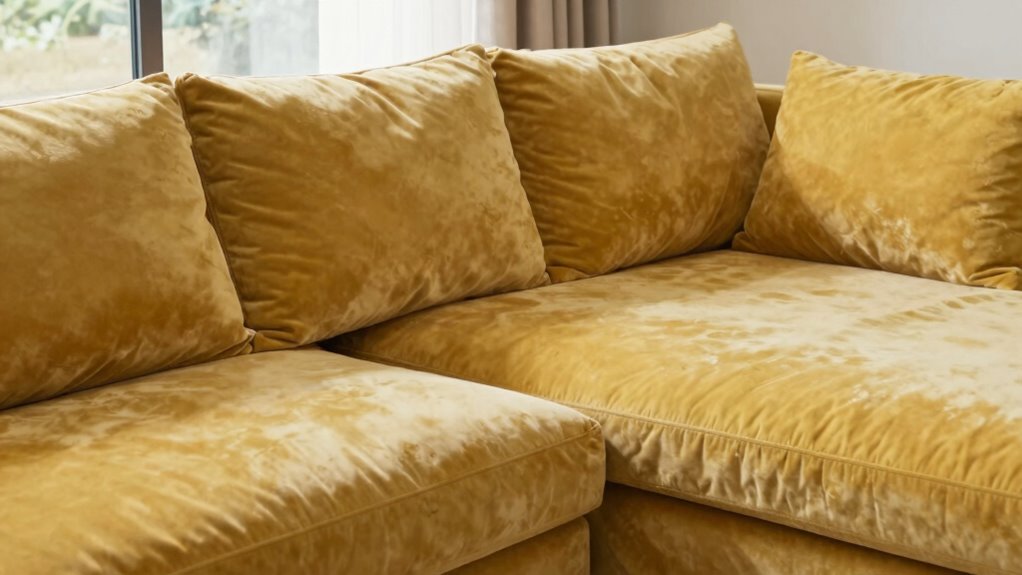
To make your sectional look new again, start by evaluating what your cushions need, like stains or worn fabric, and maintain them regularly with flipping and light cleaning. Spot-treat stains promptly and fluff the cushions daily to restore their plushness. Protect your cushions with fabric protectors and avoid direct sunlight. If covers are torn, repair or replace them. Follow these tips consistently and you’ll discover more ways to refresh your cushions effectively.
Key Takeaways
- Regularly rotate, fluff, and vacuum cushions to maintain shape and remove dirt.
- Spot-clean stains immediately with suitable solutions to prevent lasting damage.
- Use high-quality fabric protectors and avoid sun exposure to prevent fading and stains.
- Replace flattened foam with high-density support to restore cushion firmness and appearance.
- Repair or replace damaged covers promptly for a fresh, like-new look.
How to Identify What Your Cushions Need
Wondering how to tell if your sectional cushions need attention? First, check the fabric durability. If your cushions show signs of fraying, thinning, or tears, it’s time to address them. Regularly inspecting for wear helps prevent further damage. Next, consider scent elimination. Lingering odors from pets, spills, or everyday use indicate your cushions may need cleaning or freshening. If the fabric absorbs smells despite basic cleaning, it’s a sign they need deeper treatment or replacement. Also, pay attention to visible stains or discoloration. These issues not only affect appearance but can also impact the fabric’s integrity. Additionally, understanding fabric care can help you extend the life of your cushions and keep them looking their best. Monitoring fabric durability and other signs allows you to take timely action, ensuring your sectional remains comfortable and attractive. For instance, addressing minor issues early can prevent damage escalation and prolong the lifespan of your cushions. By monitoring these signs, you’ll know when your cushions need maintenance to keep your sectional looking and smelling fresh.
The Best Ways to Clean and Spot-Treat Your Cushions

To effectively clean and spot-treat your sectional cushions, start by removing the cushions from the sofa and vacuuming them thoroughly to eliminate dust, crumbs, and loose debris. Pay attention to the fabric texture, as different materials require specific cleaning methods. For fabric cushions, check the care label—most can be spot cleaned with a gentle mixture of mild detergent and water. For upholstery with delicate or textured fabrics, use a soft-bristled brush to loosen dirt before spot-treating. If you encounter stains, gently blot the area with a clean cloth dipped in a mild cleaning solution—avoid rubbing, which can damage fabric or push stains deeper. Always test cleaning products on a hidden area first to prevent discoloration or damage to your cushion materials. Understanding the color accuracy of your projector can also help you select the best cleaning methods for preserving the vibrancy of your cushions’ colors. Additionally, considering the fabric type can help determine the most effective cleaning approach and prolong the life of your cushions. Regular upholstery maintenance can significantly extend the lifespan of your cushions and keep them looking fresh over time. Incorporating proper cleaning techniques tailored to your cushion’s specific fabric can make a significant difference in maintaining their appearance over time. Moreover, being aware of the fabric care instructions ensures that you use appropriate cleaning methods that won’t compromise the fabric’s integrity.
How to Fluff and Restore Your Cushions’ Plushness
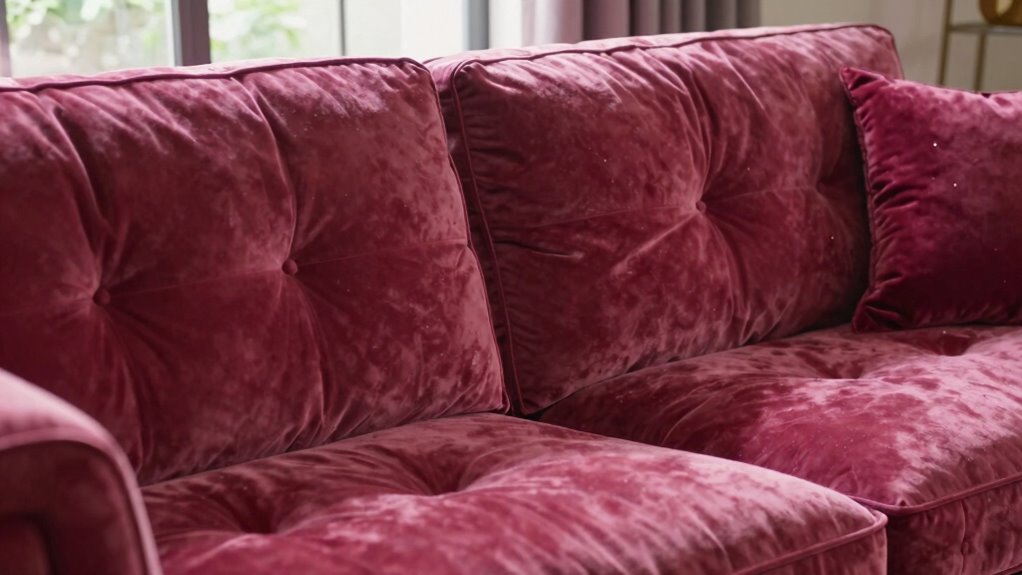
Over time, cushions can lose their loft and become flat, but you can easily restore their plushness with a few simple techniques. DIY techniques like flipping and rotating your cushions regularly help maintain their shape. To fluff them, give each cushion a good shake, then manually knead and pat the filling to redistribute it evenly. You can also use a clean hairdryer on low heat to gently puff up compressed areas. Expert advice suggests inserting dry towels or tennis balls into the cushions and running a gentle tumble in the dryer for a quick refresh. Using essential oils for relaxation such as lavender or chamomile on washable cushion covers can also create a calming environment in your space. Additionally, understanding cushion filling types helps you choose the best method for restoring plushness without damaging the fabric or filling. Recognizing different cushion maintenance tips can further extend the life and comfort of your cushions. Knowing how cushion covers and fillings respond to various care methods is essential for proper upkeep. Avoid overstuffing or using harsh chemicals, as these can damage the fabric or filling. With these easy steps, your cushions will regain their plush, inviting look and feel.
Protect Your Cushions to Keep Them Looking Great
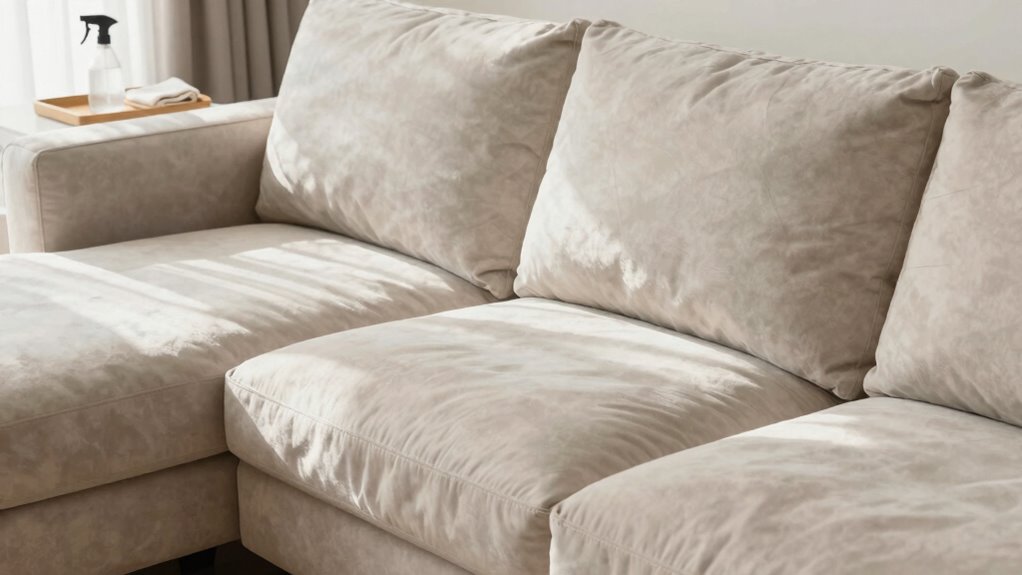
Protecting your cushions is essential to maintain their appearance and extend their lifespan. Proper fabric protection creates a barrier against spills, stains, and dirt, helping preserve your cushions’ fresh look. To achieve effective cushion preservation, consider applying a quality fabric protector regularly. Additionally, avoid direct sunlight, which can fade colors and weaken fibers over time. Using slipcovers can also shield your cushions from daily wear and tear, especially in high-traffic areas. Regular vacuuming removes dust and debris that can degrade fabric. For added protection, air quality considerations can help prevent dust and allergens from settling into your cushions, prolonging their freshness. Maintaining good filtration in your home’s HVAC system is also beneficial in reducing airborne particles that can settle on your furniture. Proper ventilation can further help in controlling humidity levels, which protects cushions from mold and mildew. Ensuring optimal humidity control can prevent moisture buildup that leads to mold growth on your cushions. Incorporating environmental controls into your home can significantly enhance the longevity of your furniture. By taking these simple steps, you ensure your sectional’s cushions stay vibrant and inviting longer. Remember, consistent protection is key to keeping your furniture looking its best for years to come.
Repair or Replace Worn-Out Cushion Covers
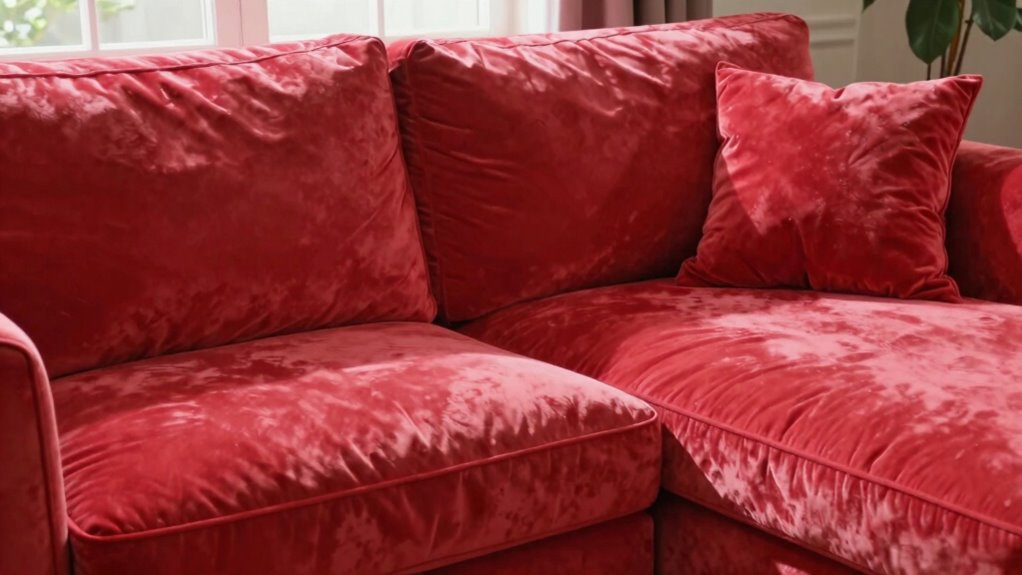
When your cushion covers show signs of wear, you have a choice: repair them or replace them. If the fabric is faded or torn, fabric replacement can breathe new life into your cushions without the expense of a full replacement. For minor damage, sewing in new fabric or patching can be effective. If the covers are stretched or sagging, consider cushion reinforcement—adding foam inserts or extra padding inside to restore shape and comfort. Replacing covers entirely might be the best option if they’re heavily stained or severely damaged beyond repair. Weigh the cost and effort of repairs against replacement, but remember that proper fabric replacement and reinforcement can often extend the life of your existing cushions, saving you money and effort in the long run. Using proper techniques can ensure a durable and professional-looking repair that enhances the longevity of your cushions. Additionally, selecting high-quality materials for repairs can significantly improve durability and appearance over time. Incorporating industry-standard methods into your repair process can further improve results and ensure your cushions look and feel like new. To achieve the best results, it’s also important to consider professional repair options that can provide expert craftsmanship and long-lasting repairs. Exploring fabric care and maintenance can help prevent future wear and keep your cushions looking their best longer.
Tips for Keeping Your Cushions Fresh and Comfortable
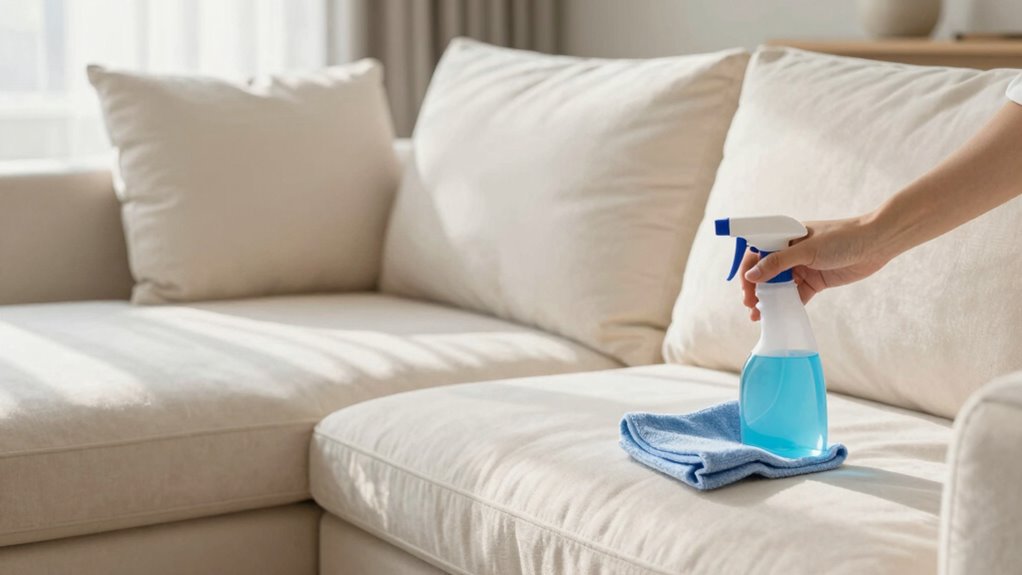
Keeping your cushions fresh and comfortable requires regular maintenance and mindful habits. To maintain that inviting look and feel, rotate your cushions weekly to ensure even wear. Fluff and plump decorative pillows and cushion accessories daily to keep them looking full and inviting. Use a gentle vacuum or brush to remove dust and debris, preventing dirt buildup. Consider spot-cleaning spills immediately to avoid stains that can dull your cushions’ appearance. Additionally, invest in removable covers for easy washing, and keep a stash of decorative pillows to swap in for variety and freshness. Regularly checking your space-heating options can also help maintain a comfortable environment, especially during colder months. These simple steps help preserve the vibrant look and plush comfort of your sectional, making it feel new again every day.
Troubleshooting Common Cushion Refreshing Issues

If your cushions aren’t looking their best, you might face stubborn stains or sagging. Sometimes, fabric colors fade or lose vibrancy, making your sectional look dull. Let’s explore how to fix these common issues and keep your cushions fresh and inviting. Incorporating smart cleaning techniques can also help preserve your cushions and extend their lifespan. Additionally, choosing appropriate cushion fillings ensures improved support and resilience over time.
Identifying Stubborn Stains
Have you noticed some stains on your sectional cushions that just won’t budge despite regular cleaning? Identifying stubborn stains is key to restoring your cushions’ look. Look closely at the fabric patterns—some materials, like velvet or linen, are more prone to deep-set stains. Check the cushion materials; synthetic fabrics may resist stains better but can still trap grime. Common signs include dark spots, discoloration, or areas that feel rougher to the touch. Visualize a coffee spill that soaked deep into the fibers or a pet accident that left an odor and stain. These are often tough to remove with regular cleaning. Recognizing these persistent marks early helps you choose the right stain removal method and prevents damage to your cushions.
Fixing Cushion Sagging
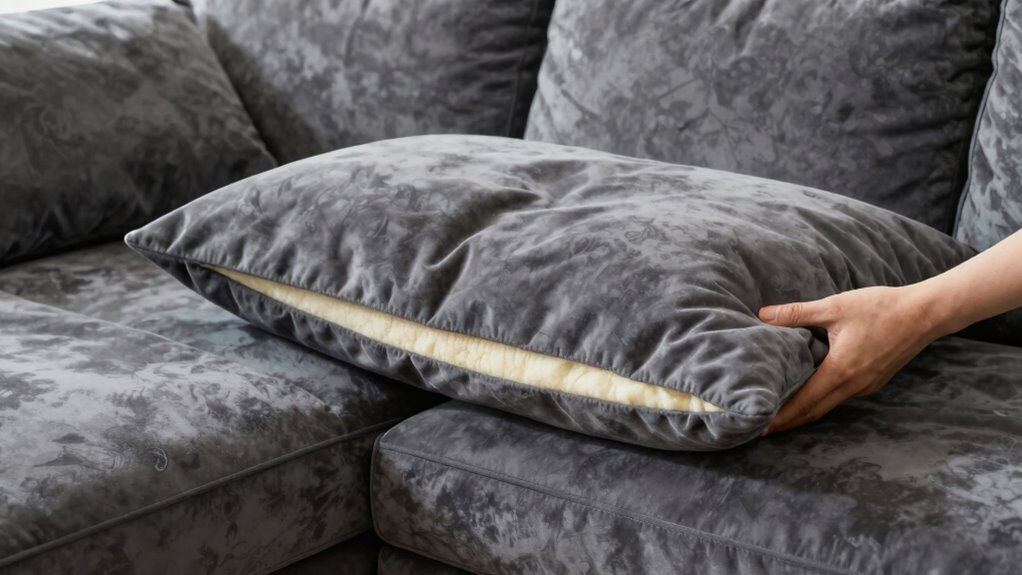
Cushion sagging is a common issue that can make your sectional look tired and uncomfortable. To fix this, start by inspecting the cushion layers; often, adding extra foam replacement inside the cushion can restore its firmness. Remove the cushion cover and carefully peel back the layers to access the foam. If the foam has flattened or lost its support, replace it with a higher-density foam for better durability. Re-layer your cushions by adding an extra foam layer underneath or on top of the existing foam, which helps lift the sagging areas. Once you’ve upgraded the foam and adjusted the layers, reassemble the cushions and slip the covers back on. This simple approach refreshes your cushions, making your sectional look and feel like new again.
Restoring Fabric Vibrancy
Over time, fabric on your sectional cushions can fade or become dull, diminishing the overall appearance of your furniture. To restore its vibrancy, start by choosing fabric dyes designed for upholstery, ensuring they match your original color. Before applying, test the dye on a small, hidden area to prevent surprises. For a more uniform look, use a sponge or soft brush to gently work the dye into the fabric, paying special attention to areas with color fading. Keep in mind that fading often occurs unevenly, so patience is key. Regular cleaning and protecting your cushions from direct sunlight can also slow down future color loss. By taking these steps, you can revive your cushions and bring back their fresh, lively appearance.
Frequently Asked Questions
How Often Should I Rotate or Flip My Cushions?
You should rotate or flip your cushions every 1 to 3 months to promote even wear and foam renewal. This simple step helps prevent sagging and keeps your cushions looking fresh. If cushions are heavily worn or stained, consider cushion replacement for a quick refresh. Regular rotation guarantees your sectional stays comfortable and maintains its shape longer, saving you money and effort in the long run.
Can I Use DIY Methods to Repair Cushion Springs?
Yes, you can try DIY cushion fixes for spring repair, but proceed carefully. Remove the cushion cover and assess the spring damage. For minor issues, you might reinforce springs with zip ties or replace broken ones using inexpensive replacements. However, for more extensive spring repair, consider consulting a professional. DIY cushion fixes can extend your cushion’s life, but don’t hesitate to seek expert help if needed to guarantee safety and durability.
Are There Eco-Friendly Cleaning Options for Cushions?
Ever wondered if you can clean cushions with eco-friendly options? Absolutely! You can use natural stain removal methods like baking soda, vinegar, or lemon juice. These eco-friendly cleaning solutions are safe for the environment and effective at removing dirt and stains. Not only do they help keep your cushions fresh, but they also reduce chemical exposure. Why not give your cushions a natural, sustainable refresh that’s good for your home and the planet?
How Do I Prevent Cushions From Fading in Sunlight?
To prevent cushions from fading in sunlight, you should use sunlight protection techniques like placing your sectional away from direct sunlight or using sheer curtains. Applying UV-protective spray can also help block harmful rays. Regularly rotating cushions ensures even exposure, reducing fade. These fade prevention techniques keep your cushions vibrant longer, maintaining their fresh appearance. Remember, consistent care and protective measures are key to safeguarding your cushions from sun damage.
What Are the Signs My Cushions Need Professional Repair?
Spot signs such as sagging, severe stains, or fabric fraying that signal your cushions need professional repair. These symptoms suggest that cushion fabric durability has diminished, impacting comfort and appearance. Check your upholstery warranty considerations to see if repairs are covered. When in doubt, don’t delay—prompt professional intervention preserves the plushness, prolongs lifespan, and prevents further damage, ensuring your sectional stays stylish and supportive.
Conclusion
With a little care, your cushions can look and feel like they’re brand new—like a fresh coat of paint brightening a dull room. Regular cleaning, fluffing, and protective measures keep them plush and inviting. When needed, don’t hesitate to repair or replace covers. Think of it as giving your sofa a mini-makeover. With these simple tips, your cushions will stay cozy and beautiful, making your space feel welcoming and refreshed every time you sit down.