
To effectively remove stains by fabric, act quickly and treat the spill immediately. For delicate fabrics like silk and wool, use cold water and gentle cleaning methods, avoiding harsh scrubbing. Sturdier fabrics like cotton or polyester can handle warmer water and stronger stain removers. Know your stain type—protein, oil, or tannin—to choose the right treatment. Proper pre-treatment and gentle drying help prevent permanent damage. Keep these tips in mind to maintain your clothing’s appearance and longevity. Continue to learn more tips and tricks for each fabric type.
Key Takeaways
- Identify fabric type (delicate or sturdy) and follow specific care instructions accordingly.
- Use cold water and enzymatic cleaners for protein stains; solvents for oil-based stains.
- Pre-treat stains with appropriate removers or baking soda paste, allowing at least 10 minutes before washing.
- Avoid heat during drying; opt for air drying to prevent stain setting, especially for delicate fabrics.
- Test stain removers on small areas first to prevent discoloration and ensure compatibility with fabric.
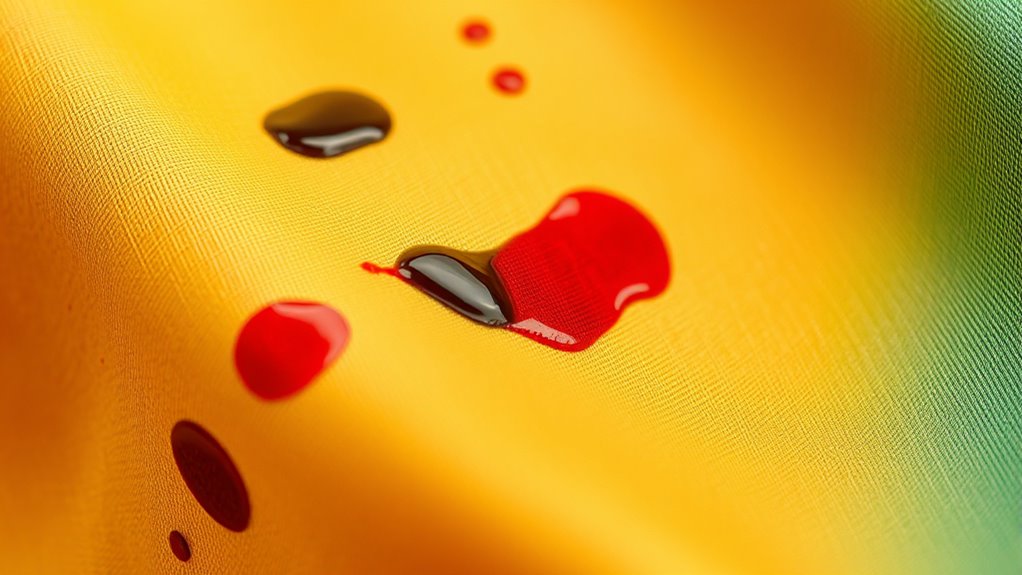
Removing stains from fabric can be straightforward when you understand the best methods for each type of stain. The key is knowing how to treat different fabrics and stains properly, which helps you avoid damage and keeps your clothes looking fresh. With a few simple fabric care tips, you can prevent many stains before they set in. For example, treating spills immediately is one of the most effective stain prevention strategies. Blotting, rather than rubbing, lifts the stain without pushing it deeper into the fibers. Keep a clean cloth or paper towel handy to absorb excess liquid as soon as spills happen. This quick action prevents stains from setting, making removal easier later on.
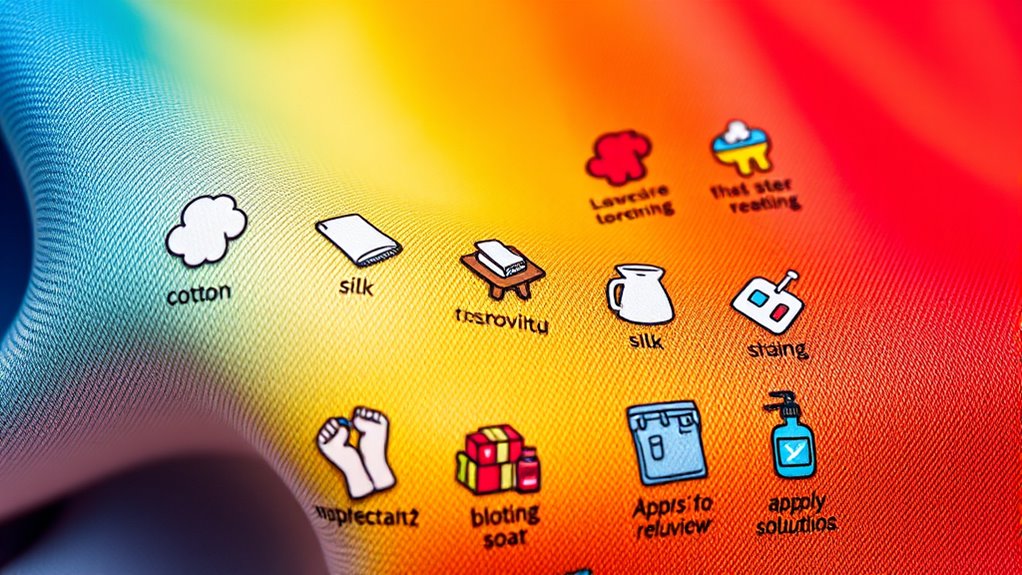
Different fabrics require different care. For delicate fabrics like silk or wool, you want to be extra gentle. Use cold water and mild detergents, and avoid harsh scrubbing, which can damage the fibers. For sturdier fabrics like cotton and polyester, you can afford to use warmer water and stronger stain removers. Always check the care label before applying any treatment, as some fabrics can’t withstand certain chemicals or heat. When treating stains, test your chosen stain remover on a small, inconspicuous area first to prevent discoloration or damage.
Delicate fabrics like silk and wool need gentle treatment with cold water and mild detergents.
Understanding stain types also helps you tailor your approach. Protein stains, like blood or sweat, respond well to cold water and enzymatic cleaners that break down organic material. Oil-based stains, such as grease or makeup, require a solvent like dish soap or a commercial degreaser. Tannin stains from coffee, wine, or fruit juice are best treated with cold water initially, then with a mixture of mild detergent and vinegar if needed. For each stain type, applying the right treatment promptly maximizes your chances of complete removal.
Pre-treating stains before washing is another essential fabric care tip. Use a stain remover spray or a paste of baking soda and water, and let it sit for at least 10 minutes. This allows the active ingredients to penetrate the stain. When washing, follow the recommended cycle and temperature for the fabric, and avoid overloading the machine, which can prevent proper cleaning and rinsing. Drying is the final step; air-drying is safer for stained fabrics since heat from dryers can set stubborn stains permanently.
Frequently Asked Questions
Can Stain Removal Tips Vary for Vintage Fabrics?
Yes, stain removal tips can definitely vary for vintage fabrics. When caring for vintage textiles, you need to adapt stain removal techniques to avoid damage. Use gentle methods like cold water and mild detergents, and test on a small area first. Vintage fabric care requires patience and careful handling because older fabrics are more delicate. Always prioritize preserving the fabric’s integrity over aggressive stain removal, ensuring your vintage pieces stay beautiful.
Are There Eco-Friendly Stain Removal Options for Delicate Fabrics?
Yes, you can use eco-friendly stain removal options for delicate fabrics. Opt for plant-based solutions like baking soda or vinegar, which are gentle yet effective. Enzymatic cleaners are also great because they break down stains without harsh chemicals. Always test on a small, hidden area first, and avoid harsh scrubbing to protect delicate fibers. These natural options keep your fabrics safe and environmentally friendly.
How Do I Prevent Color Bleeding During Stain Treatment?
To prevent color bleeding during stain treatment, always perform a colorfast test on a hidden area first. Use gentle stain pre-treatment products suitable for delicate fabrics, avoiding harsh chemicals. Apply the stain remover carefully, and don’t rub too hard. Rinse thoroughly after treatment. This way, you protect your fabric’s color integrity while effectively removing stains, ensuring your delicate pieces stay vibrant and undamaged.
Is It Safe to Use Bleach on All Fabric Types?
Bleach isn’t suitable for all fabrics, so don’t plunge in blindly. Always check fabric compatibility before using bleach, as some materials like wool, silk, and spandex can be seriously damaged. Bleach safety varies with fabric type; it can cause discoloration or deterioration. When in doubt, test a small, hidden area first, and opt for alternative stain solutions. Protect your clothes by practicing prudent, precise, and prepared cleaning precautions.
What Are Quick Stain Removal Methods for On-The-Go Situations?
In on-the-go situations, use portable sprays or stain removal pens for quick results. Spray the stain with a portable stain remover immediately, then gently blot with a cloth or paper towel. For small spots, stain removal pens are handy; just apply, wait a few minutes, and blot. Keep these tools in your bag to tackle spills quickly, preventing stains from setting and making cleanup easier.
Conclusion
Now that you know how to tackle stains on every fabric, you’re armed with the ultimate secret weapon—confidence. Remember, each stain is a challenge waiting to be conquered, not a defeat. With the right techniques, you can turn a mess into a masterpiece of cleanliness. So go ahead, face those stubborn spots head-on, and let your fabric’s true beauty shine through. After all, every stain is just a story waiting to be erased.