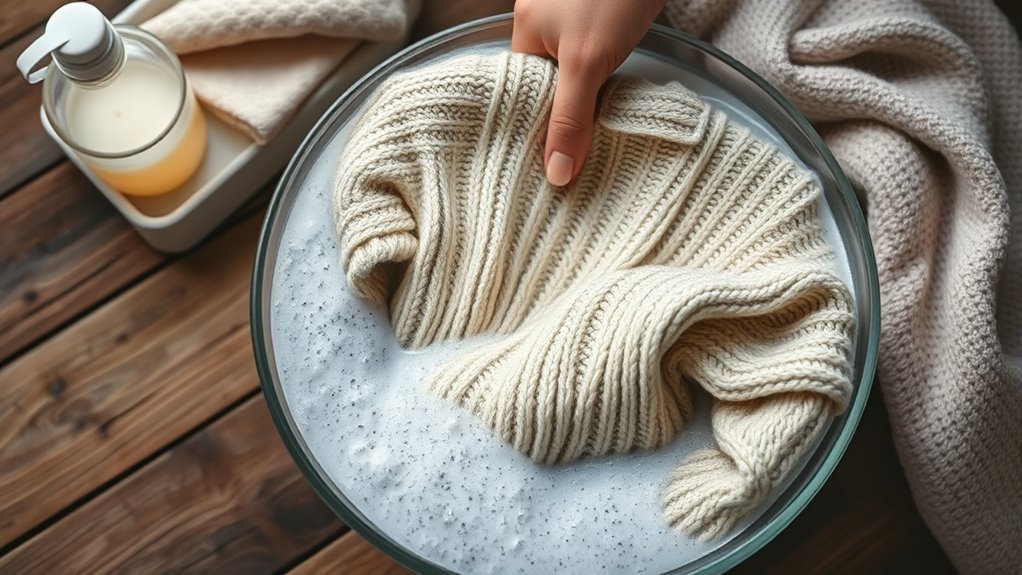

To wash wool without shrinking, use gentle, wool-specific detergents formulated for delicate fibers, and opt for cool or lukewarm water. Avoid hot water, thick detergents, and harsh agitation—hand wash or select a delicate machine cycle if needed. Gently press out excess water, reshape, and lay flat to dry away from heat and sunlight. With proper techniques, your wool will stay soft and snug—discover more tips to keep your wool perfect.
Key Takeaways
- Use gentle, wool-specific detergents formulated for delicate fibers to preserve natural oils and prevent felting.
- Wash wool in cool or lukewarm water on a delicate cycle or hand wash to avoid shrinkage.
- Avoid wringing; gently press out water and lay flat to reshape and dry away from heat and sunlight.
- Never use hot water or harsh detergents, and always follow care instructions for your specific wool garment.
- Store wool folded in a cool, dry place and reshape during drying to maintain size and prevent distortion.
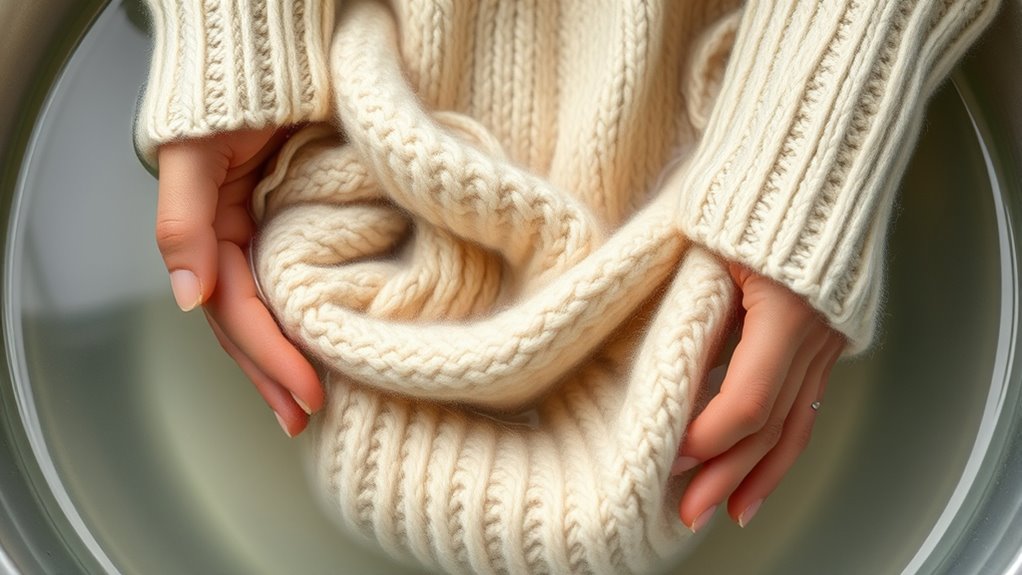
Washing wool without shrinking can be challenging, but with the right techniques, you can keep your garments looking their best. The key starts with choosing the right detergent. You want a gentle, wool-specific detergent that’s formulated to clean without damaging the fibers. Harsh detergents or those designed for heavy-duty cleaning can strip the natural oils from the wool, making it more prone to shrinking or felting. Look for mild, pH-balanced options that specify they’re safe for wool or delicate fabrics. When washing, avoid using hot water, as heat is one of the main culprits behind wool shrinkage. Instead, opt for cool or lukewarm water, which cleans effectively without stressing the fibers.
Drying techniques are equally important in preventing shrinkage. Never wring or twist wool garments, as this can distort their shape and cause stretching or shrinking. Instead, gently press out excess water by pressing the garment between towels or using a clean, absorbent cloth. Lay your wool flat on a clean towel to dry, reshaping it to its original size and form. This method prevents the garment from stretching out unevenly and helps it retain its shape. Avoid hanging wool to dry, as the weight of the water can cause stretching or distortion. Also, steer clear of direct sunlight or heat sources like radiators, which can dry the wool too quickly and lead to shrinking or damage. Proper fibers care is essential for maintaining wool’s integrity and preventing shrinkage over time. Additionally, using a specialized wool detergent can help preserve the fibers’ natural oils and prevent felting during washing. Incorporating gentle washing techniques can further protect delicate fibers from damage and shrinkage.
When it comes to washing, if your wool item is heavily soiled, you might consider hand washing rather than machine washing. If you do use a washing machine, select a delicate cycle specifically designed for wool or delicate fabrics. Use cold water and the gentle spin option to minimize agitation. Incorporating proper agitation techniques can further prevent the felting process and protect delicate fibers. After washing, follow the same drying techniques—lay flat and reshape—to ensure your wool garment stays in its original form. Proper storage also helps maintain its size and shape; fold wool garments carefully and store them in a cool, dry place, avoiding hanging them for long periods, which can stretch the fibers over time.
Frequently Asked Questions
Can I Use a Regular Washing Machine for Wool?
You can use a regular washing machine for wool, but you need to be careful. Choose gentle machine cycles, like wool or delicate, to prevent shrinkage. Avoid using fabric softeners, as they can harm wool fibers. It’s best to turn your wool item inside out and use cold water. By taking these precautions, you’ll keep your wool looking great without risking damage or shrinkage.
How Do I Remove Odors From Wool Garments?
To remove odors from wool garments, start by airing them out in fresh air. Avoid fabric softeners, as they can damage wool fibers. Instead, gently hand wash with a mild wool detergent or a mixture of water and white vinegar. For stubborn smells, use stain removal techniques like spot cleaning with a gentle solution. Always rinse thoroughly and let your wool air dry to keep it fresh and odor-free.
Is Hand Washing Always Necessary for Wool?
Imagine you’re tending a fragile garden; gentle care is key. When it comes to wool, you don’t always need hand washing. If your wool garment is labeled machine washable, use a delicate cycle and cold water. This approach minimizes shrinkage and keeps your wool looking fresh. Hand washing is ideal for delicate or vintage pieces, but for everyday wool, a careful machine wash often does the trick.
What Types of Detergents Are Best for Wool?
When choosing a detergent for wool, you want to look for gentle options with natural or eco friendly ingredients. Avoid harsh chemicals and opt for detergents specifically designed for delicate fabrics. These are often free from enzymes, bleach, and strong surfactants that can damage fibers. Eco friendly options are better for the environment and gentle on wool, helping you keep your garments soft, clean, and free from shrinkage.
How Do I Dry Wool Without Causing Damage?
Think of drying wool as nurturing a delicate garden. You gently squeeze out excess water, avoiding wringing, then lay your wool flat on a clean towel. Use gentle drying techniques like air drying away from direct heat or sunlight. This careful wool fabric care prevents damage, keeps its shape, and preserves softness. Patience is key—allow your wool to dry naturally, and it’ll reward you with lasting beauty and comfort.
Conclusion
Remember, when it comes to washing wool, patience and gentle care make all the difference. Follow the right methods, avoid harsh heat, and handle your wool items with love. As the saying goes, “A stitch in time saves nine,” meaning taking care now prevents bigger problems later. By treating your wool carefully, you’ll keep it looking fresh and cozy for years to come. Happy washing!