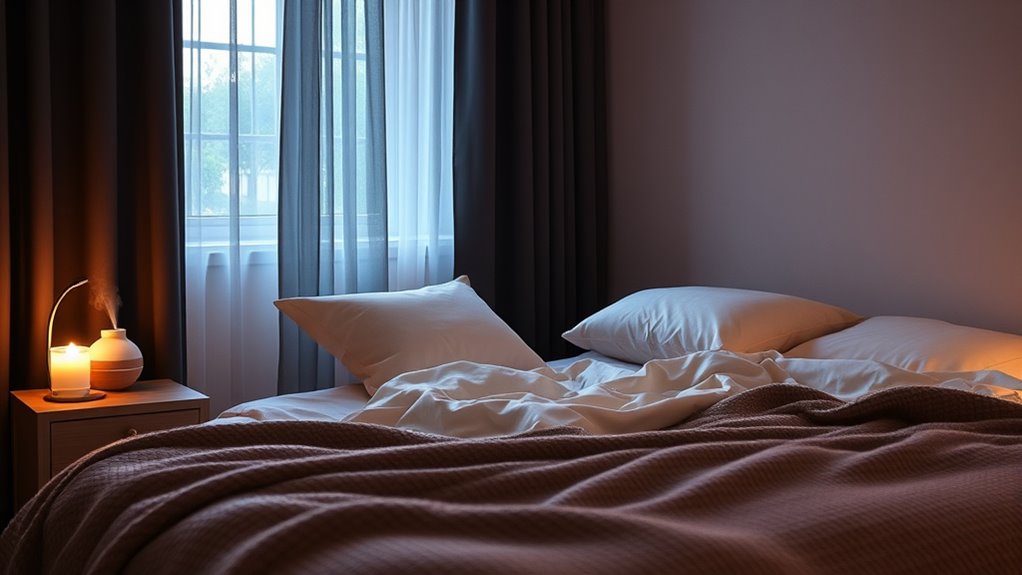

To set up scenes for better sleep, create a calming environment by dimming lights, using warm and soft lighting, and replacing harsh overhead fixtures with indirect or adjustable lamps. Block external light with blackout curtains or use a sleep mask, and avoid screens before bed to prevent blue light interference. Establish consistent scene cues like gentle lighting or soothing scents to reinforce relaxation. Keep exploring to learn how aligning your sleep environment can improve your overall rest.
Key Takeaways
- Use dim, warm lighting and eliminate blue light exposure before bedtime to promote melatonin production.
- Create calming sleep scenes with low lighting, soothing scents, and minimal noise for a relaxing environment.
- Incorporate blackout curtains or sleep masks to ensure a dark room, enhancing sleep quality.
- Establish consistent scene setups to reinforce sleep routines and signal your body to relax.
- Use scene cues like gentle lighting or specific scents to help transition smoothly from wakefulness to sleep.

Creating the right environment can substantially improve your sleep quality, and one effective way to do that is by setting up specific scenes in your bedroom. By carefully designing each scene, you can signal to your brain that it’s time to wind down, making it easier to progress from wakefulness to restful sleep. A key element in establishing these scenes is maintaining good sleep hygiene, which includes managing your bedroom lighting to promote melatonin production and circadian rhythm alignment.
When setting up a scene for relaxation, start with bedroom lighting. Bright, harsh lights can interfere with your ability to fall asleep, so opt for soft, warm lighting in the evening. Use bedside lamps with dimmable bulbs or replace bright overhead fixtures with indirect lighting options. This softer illumination not only creates a calming atmosphere but also cues your body that it’s time to relax. Avoid screens and their blue light at least an hour before bedtime, as blue light suppresses melatonin, the hormone that helps regulate sleep. Instead, consider using blackout curtains or sleep masks to block out external light sources, ensuring your room remains dark enough to support quality sleep. Incorporating sleep-friendly environments can also enhance your ability to unwind and prepare for rest.
Different scenes can be designed for various sleep stages or moods. For instance, a “wind-down” scene might involve low lighting, calming scents like lavender, and minimal noise, signaling to your body that it’s time to relax. Conversely, a “morning” scene could feature gentle lighting that gradually brightens, mimicking sunrise to help you wake up naturally. By establishing these distinct environments, you reinforce healthy sleep habits and help your body associate specific cues with sleep or wakefulness.
Consistency is vital. Once you’ve set up a scene that promotes relaxation, stick with it. Your brain thrives on routines, and predictable environments strengthen your sleep hygiene. When you create a sleep-friendly scene, you’re not just changing the lighting—you’re shaping the entire atmosphere to support your sleep cycle. Over time, your mind will associate the scene’s elements with sleep, making it easier to drift off and stay asleep through the night.
Top picks for "sett scen better"
Open Amazon search results for this keyword.
As an affiliate, we earn on qualifying purchases.
Frequently Asked Questions
How Do I Customize Scenes for Different Seasons?
To customize scenes for different seasons, start by adjusting your seasonal lighting to match the time of year, like warmer tones for winter and cooler for summer. You should also make temperature adjustments, such as lowering the thermostat for winter scenes and raising it for summer. These changes help create a cozy or invigorating environment, ensuring your sleep setting stays comfortable and aligned with seasonal needs.
Can I Sync Scenes With My Smart Home Devices?
Yes, you can sync scenes with your smart home devices for seamless control. Use voice control to activate scenes effortlessly, linking compatible devices like lights, thermostats, and blinds. Check your device compatibility beforehand, ensuring they work with your smart home platform. Once set up, you’ll enjoy synchronized scenes that create perfect sleep environments, all manageable through voice commands or app controls, making your sleep setup both smart and convenient.
What Is the Ideal Lighting Color for Sleep Scenes?
Like a wise old sage from the digital age, you should opt for a warm ambient hue in your sleep scenes. The ideal lighting color is a soft, warm white with a low color temperature around 2700K to 3000K. This creates a cozy, relaxing atmosphere, helping your body wind down. Avoid harsh, bluish light, as it can interfere with melatonin production, making it harder to fall asleep.
How Do I Troubleshoot if a Scene Doesn’T Activate?
If a scene doesn’t activate, start troubleshooting by checking your scene activation settings. Make sure your device is connected properly and that the trigger, like a button or voice command, is working. Restart your smart home app or device to refresh the connection. Double-check the scene’s schedule or conditions, and manually activate it to see if it works. These troubleshooting steps help identify and fix activation issues quickly.
Are There Safety Concerns With Automated Sleep Scenes?
Think of automated sleep scenes as a double-edged sword—while they can enhance your sleep, they also come with safety concerns. You should prioritize sleep safety by ensuring lighting and temperature controls are fail-safe, and double-check that automation risks are minimized. Always set up scenes carefully to avoid accidental activation of bright lights or loud sounds that could disturb your rest. Regularly review your setup for any potential hazards to keep your sleep environment safe.
Conclusion
By crafting your sleep scene like a gentle lullaby, you create a sanctuary where dreams can dance freely. Think of your bedroom as a cozy cocoon, wrapping you in calm and serenity. When you set the stage just right, sleep becomes a peaceful river, flowing smoothly through the night. So, transform your space with care—turn it into a haven where restful nights bloom like morning flowers, guiding you into sweet, restorative dreams.