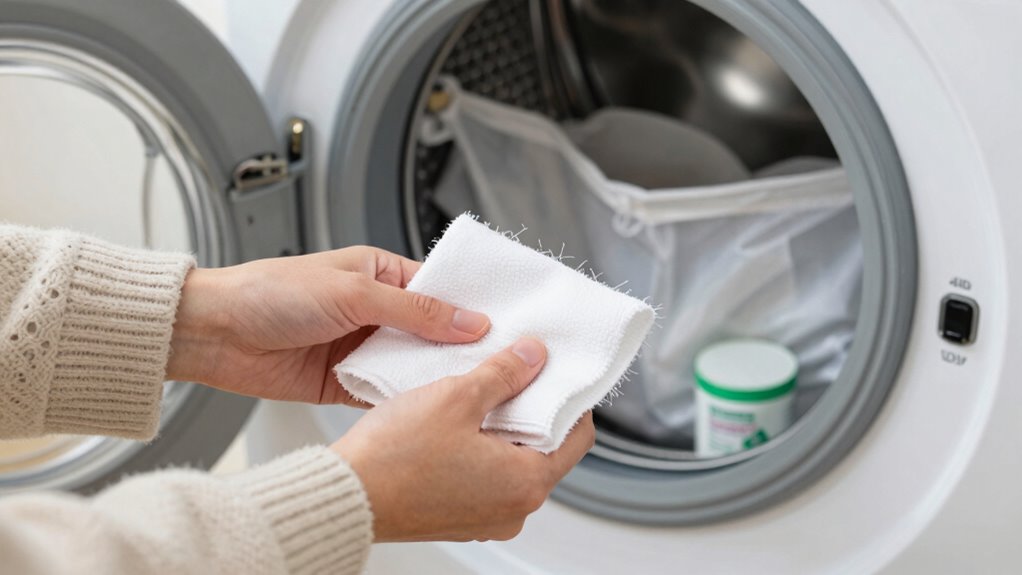

To avoid microplastics from your clothing, choose natural fibers like cotton, wool, or linen, which shed fewer microplastics. Wash synthetic fabrics less often and always turn clothes inside out to reduce fiber loss. Use cold water, gentle cycles, and avoid overloading the machine. Air dry clothes instead of tumble drying, which causes more shedding. Consider using microfiber filters or special laundry bags like Guppyfriend. For more practical tips, explore how you can further make a difference.

Get your wardrobe favorites delivered free — and shop member deals
- Fast, free delivery on millions of items
- Access to Prime Big Deal Days deals on October 6–7
- Prime Video, Amazon Music and more included
Key Takeaways
- Choose natural fiber clothing like cotton, wool, or linen to minimize microplastic shedding.
- Use microfiber filters, laundry bags, or lint traps to capture microfibers during washing.
- Opt for front-loading washing machines and wash synthetic garments less frequently.
- Air dry clothes to prevent additional fiber shedding from tumble drying.
- Select garments labeled as “low-shed” or “microplastic-reducing” for environmentally friendly options.
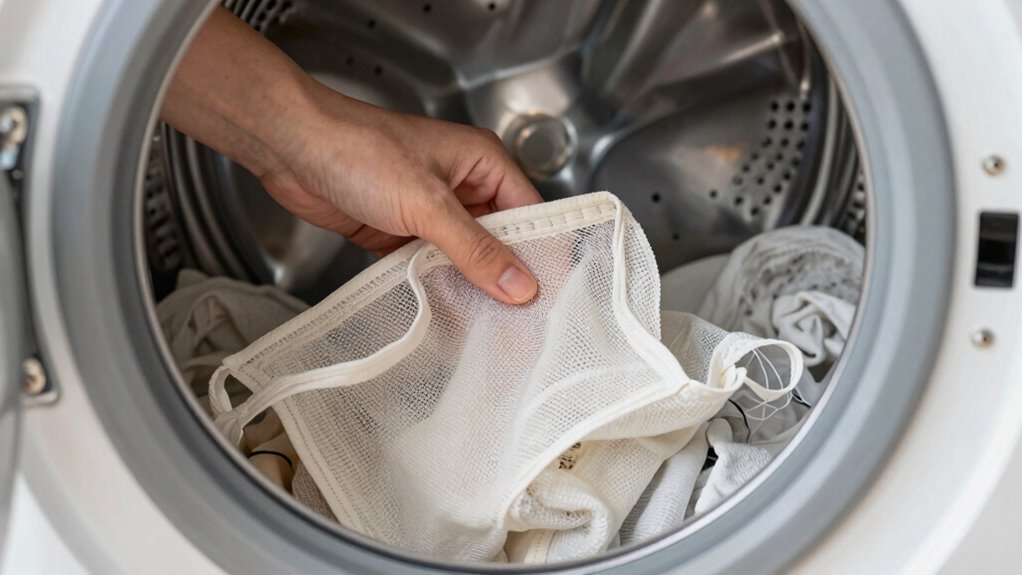
Microplastics shed from clothing pose a significant environmental threat, but you can take steps to reduce your impact. When you wash your clothes, tiny particles called microplastics are released into the water, especially from garments made with synthetic fibers like polyester, nylon, and acrylic. These microplastics eventually make their way into oceans and waterways, harming marine life and ecosystems. Fortunately, there are practical measures you can adopt to minimize this pollution.
Microplastics from clothing washing threaten our waterways; choose natural fibers and use filters to reduce pollution.
The first step is to be mindful of the fabrics you buy. Opt for natural fibers like cotton, wool, or linen whenever possible. These materials don’t shed microplastics during washing, unlike synthetic fibers. If you do purchase synthetic clothing, look for items labeled as “low-shed” or “microplastic-reducing.” Some manufacturers are now designing garments with enhanced fabric stability, reducing the amount of microplastics released over time. Understanding fabric durability can help you select clothing that is less likely to shed fibers.
When it comes to washing your clothes, your washing machine plays a crucial role. Standard washing machines tend to release a significant amount of microplastics into wastewater. To combat this, consider installing a microfiber filter or a lint trap designed specifically for catching microfibers. These filters attach to your washing machine’s outlet hose and can trap tiny fibers before they enter the sewage system. Using a front-loading washing machine can also help, as they typically have gentler cycles that produce fewer microplastic particles compared to top-loading models.
Another practical step is to wash synthetic garments less frequently, reducing the overall shedding of fibers. When you do wash, turn garments inside out to minimize friction and fiber loss. Use cold or gentle wash cycles, as aggressive washing can cause more fibers to break off. Additionally, choose shorter wash cycles and avoid overloading your machine, which can increase friction and fiber shedding. Fabrics with enhanced durability are also less likely to shed microplastics over time.
Air drying your clothes instead of using a dryer can further reduce microfiber release. Dryers tend to agitate clothing more intensely, which can cause additional shedding. By hanging your clothes to dry, you limit this mechanical stress and help keep microplastic shedding to a minimum. This simple change not only preserves the fabric but also reduces energy consumption.
Finally, consider the use of specialized laundry bags like Guppyfriend or Cora Ball. These are designed to catch microfibers during washing and can be easily emptied and reused. Incorporating microfiber filtration into your laundry routine can significantly decrease the amount of microplastics released into the environment. Combining these practical steps with mindful clothing choices allows you to actively reduce microplastic pollution from your wardrobe, making a tangible difference for the environment.
As an affiliate, we earn on qualifying purchases.
Frequently Asked Questions
Do Natural Fibers Also Shed Microplastics?
Natural fibers do shed microfibers, but less than synthetic ones. Fiber degradation happens over time, releasing tiny particles into water. To minimize this, you can choose eco-friendly alternatives like hemp, linen, or organic cotton, which tend to shed fewer microplastics. Washing gently and using microfiber filters also help. So, while natural fibers aren’t completely microplastic-free, they’re a better choice for reducing environmental impact.
Can Laundry Detergents Reduce Microplastic Release?
Laundry detergents can help reduce microplastic release, especially when they contain specific detergent additives designed for this purpose. You might find eco-friendly formulations particularly effective, as they often include ingredients that minimize fiber shedding. Remarkably, some studies show that using certain detergents can cut microplastic fibers released during washing by up to 50%. Always check labels for these additives to ensure you’re actively reducing environmental impact.
Are Certain Washing Machines Better at Reducing Microplastics?
Yes, certain washing machine types are better at reducing microplastics. Front-loading machines generally produce fewer microplastic fibers than top-loading ones. Look for models with advanced filtration systems designed to catch microplastics during wash cycles. Some machines include built-in filters or lint catchers that trap tiny fibers, preventing their release into water systems. Investing in a washing machine with superior filtration can markedly cut down your microplastic pollution.
How Often Should I Replace Synthetic Clothing to Minimize Shedding?
Like a knight guarding his armor, you should replace synthetic clothing when fiber degradation begins to compromise the garment’s integrity. Aim for a lifespan of about 2-3 years, depending on wear and tear. Regularly inspect for thinning or pilling, and don’t wait until the fabric is frayed. Extending your garment’s lifespan reduces shedding, helping minimize microplastic pollution and keeping your wardrobe eco-friendly.
Do Microplastics From Clothing Impact Indoor Air Quality?
Microplastics from clothing can impact indoor air quality by contributing to indoor air pollution, which may lead to microplastic inhalation. When synthetic fabrics shed fibers, these tiny particles become airborne and can be inhaled, potentially causing health issues. To reduce this risk, make sure good ventilation and consider using air purifiers. Being mindful of indoor air pollution from microplastic particles helps protect your respiratory health.
Conclusion
By taking simple steps like washing clothes less frequently, using microfiber filters, and choosing natural fabrics, you can considerably reduce your microplastic footprint. Did you know that a single synthetic shirt can release over 7,000 microfibers in just one wash? Every small action counts in protecting our environment. So, start making these changes today—your efforts can make a real difference in reducing microplastics and safeguarding our planet’s future.
Evergreen bestsellers Picks
bestsellers
As an affiliate, we earn on qualifying purchases.