When cutting your dog's nails, you should aim to cut at least 2 millimeters away from the quick, which is sensitive and can bleed if accidentally cut. For light-colored nails, the quick is visible as a pink area, while dark nails require estimating its location. Always make several small cuts, and cut at a 45-degree angle for a clean finish. There's more to learn about nail trimming techniques and tools to guarantee a safe experience for your furry friend.
Key Takeaways
- For light-colored nails, cut at least 2 millimeters away from the pink quick to avoid pain and bleeding.
- For dark nails, estimate the quick's location and start with small cuts to prevent accidental injuries.
- Regular trimming every 4 to 6 weeks helps prevent the quick from growing longer and more difficult to manage.
- Use a 45-degree angle for clean cuts and make several small cuts instead of one large cut.
- If uncertain about the quick's location or trimming, seek professional help from a veterinarian or groomer.

Sally Hansen Xtreme Wear Nail Polish | Streak-Free, Shiny Finish, Long-Lasting, Chip-Resistant, Opaque | Eternal Sunshine | Soft Buttery Yellow Nail Color
- Trendy Nail Polish Shades: Fun, fashionable colors to match your mood
- Long-Lasting Color: Up to 2 weeks of vibrant wear
- Chip-Resistant & Waterproof: Fights chips, fading, and water damage
As an affiliate, we earn on qualifying purchases.
Understanding the Anatomy of Dog Nails

When you look at a dog's nails, it's essential to understand that they consist of two main parts: the hard outer shell, known as the claw, and the soft inner section called the quick.
The quick houses blood vessels and nerves, making it sensitive. In light-colored nails, the quick appears as a pink area, while it's hidden in dark nails, so you need to tread carefully.
When you cut the nail, aim to avoid cutting within 2 millimeters of the quick to prevent pain and bleeding. Stop trimming when you see a gray to pink oval at the top of the nail; that indicates the beginning of the quick.
Regular trimming helps keep the quick from growing longer and more difficult to manage. Additionally, ensuring your dog's diet includes vitamins A, C, and K can support overall nail and bone health.
Identifying the Quick in Clear Nails
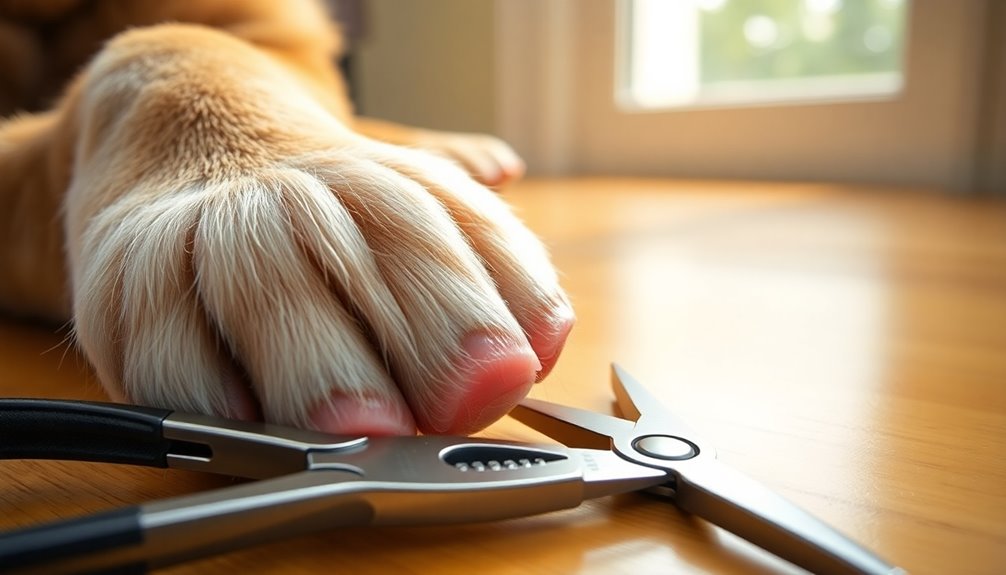
When you're trimming clear nails, recognizing the quick is essential for safe cutting.
Look for the pink area within the nail, which indicates where to stop to avoid bleeding.
To be safe, aim to cut at least 2 millimeters away from the quick as you trim. Regular grooming, including nail trimming, is vital for maintaining overall pet health.
Recognizing Nail Color Differences
How can you easily identify the quick in your dog's clear nails? Look for the pink section at the base of the nail. This pink area indicates where you should avoid cutting, as it's the quick.
When using nail trimmers, stay at least 2 millimeters away from this change to prevent pain or bleeding. If you're unsure, make small cuts and observe your dog's reaction.
Regular trimming can help maintain a shorter quick over time, making future cuts safer. If you accidentally cut too short, keep styptic powder on hand to stop any bleeding. Understanding these color differences in your dog's nails will help guarantee a painless grooming experience for both of you. Additionally, consider emergency fund availability for unexpected vet visits in case of accidental cuts.
Safe Cutting Techniques
Recognizing the quick in clear nails is just the first step; using safe cutting techniques is what guarantees a stress-free grooming session.
When trimming, make certain to cut no closer than 2 millimeters from the quick, which appears as a pink area. Stop cutting when you see a gray to pink oval at the top of the nail. Instead of making one large cut, opt for several small cuts to minimize the risk of hitting the quick, especially on long nails.
Firmly grip your dog's toe with your thumb and forefinger to stabilize the nail and guarantee a clean cut at a 45-degree angle. Always monitor your dog's reaction for comfort, which can signal when you're too close to the quick. Additionally, using best dog training guides can help familiarize your dog with the grooming process, making it more manageable for both of you.
Tips for Trimming Pigmented Nails

Trimming pigmented nails can be challenging since you can't see the quick, but starting with small cuts at the tip can help prevent accidental injuries.
Use a conservative approach by estimating where the quick might be, referencing any clear nails as a guide. Make small cuts and frequently check for signs of bleeding after each cut to verify you're cutting safely.
Maintain a firm grip on your dog's toe while trimming to prevent movement, which can lead to accidental cuts.
Plus, using positive reinforcement, like treats, can ease your dog's anxiety during the process, making it much smoother. Additionally, ensuring your dog is healthy and safe by avoiding harmful foods like grapes can contribute to a stress-free grooming experience.
With patience and care, you can successfully manage pigmented nails without causing harm.
Recommended Tools for Nail Clipping
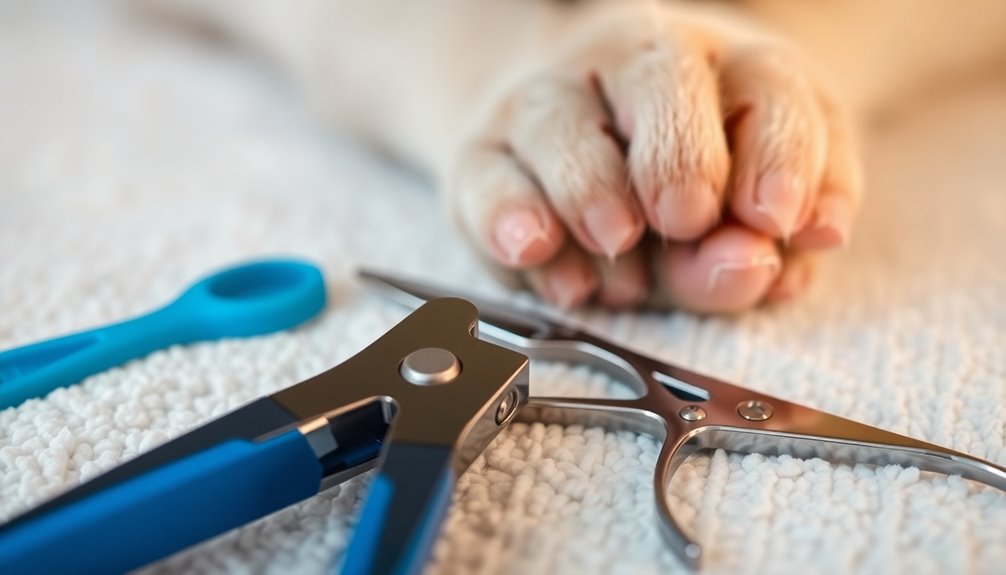
When it comes to choosing the best tools for nail clipping, you'll want to reflect on your dog's specific needs and nail type. Here are some recommended tools to take into account:
| Tool Type | Description |
|---|---|
| Side-Cutters | Provides better visibility of the nail and quick |
| Guillotine Trimmers | Fits nail into a slot but offers less visibility |
| Styptic Powder | Essential for managing potential bleeding |
Additionally, use scissors-type trimmers for dew claws, as they allow better access. Remember to maintain a firm grip on your dog's toe before trimming to prevent movement and guarantee a clean cut. Each tool has its benefits, so choose what suits you and your dog best! Understanding the importance of safety measures during nail trimming can help prevent accidents and ensure a positive experience for both you and your dog.
Step-by-Step Guide to Clipping Dog Nails

When you're ready to clip your dog's nails, it's essential to identify the quick to avoid any pain. For light-colored nails, look for the pink area, while with dark nails, take small cuts to stay safe. This step-by-step guide will help you trim your dog's nails confidently and effectively. Additionally, maintaining regular dental health can contribute to your dog's overall well-being, making nail care part of a holistic approach to pet health.
Identifying the Quick
Identifying the quick is essential for a safe nail clipping experience. The quick is the sensitive part of the nail filled with blood vessels and nerves, and cutting into it can cause pain and bleeding.
For light-colored claws, look for the pink area at the base to easily spot the quick. With dark claws, you'll need a more cautious approach. Make small cuts, stopping when a gray to pink oval appears at the top.
For clear nails, start trimming farther from the quick and gauge your dog's reaction before moving closer. Always pay attention to your dog's body language during the process to guarantee they're comfortable and to avoid cutting too short. Regular vet check-ups can help ensure that your dog's nail health remains optimal throughout their life.
Techniques for Safe Trimming
Trimming your dog's nails safely requires a few key techniques to guarantee both you and your pet stay comfortable throughout the process. Follow these steps:
| Step | Description |
|---|---|
| Assess the Nail | For dark nails, avoid cutting within 2 mm of the quick; for light nails, look for a gray to pink oval. |
| Position the Trimmer | Hold the nail in the stationary ring of the trimmer at a 45-degree angle. |
| Start Small | Make small cuts on pigmented nails to gauge your dog's reaction. |
| Grip Firmly | Use a firm grip on the toe to stabilize the nail. |
| Gradually Cut | Gradually work towards the tip of the nail, ensuring comfort. |
Additionally, maintaining your dog's nail health is crucial for overall pet well-being, as it can prevent issues related to mobility and discomfort.
Handling Anxious or Non-Compliant Dogs

Handling anxious or non-compliant dogs during nail trimming can be a challenge, but with the right approach, you can make the experience less stressful for both of you.
Start by introducing the nail clippers in a calm environment, allowing your dog to sniff and explore them. Use treats as positive reinforcement to motivate your dog and create a positive association with trimming.
Pay close attention to their body language; if you notice signs of stress, like panting or pulling away, take a break. For particularly fearful dogs, a properly fitted muzzle can provide safety for both of you.
Keep trimming sessions short, starting with just one or two nails, and gradually increase as your dog becomes more comfortable. Regular puppy socialization can also help reduce anxiety and improve your dog's overall behavior during grooming sessions.
Managing Accidental Nail Bleeding
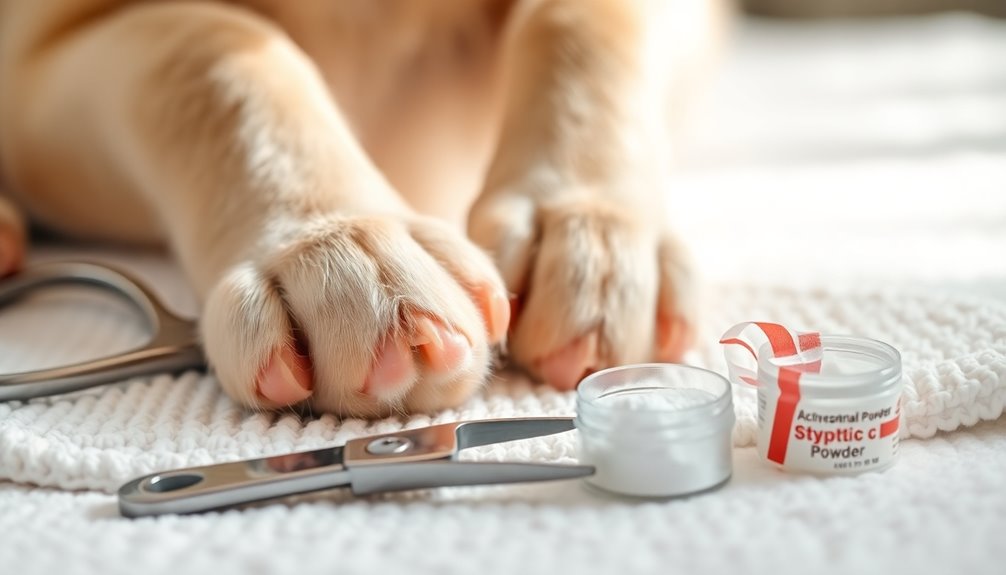
Even with careful trimming, accidents can happen, and you might cut your dog's nail too short, causing it to bleed.
Here's how to manage the situation effectively:
- Apply styptic powder: Directly press the powder onto the bleeding nail to quickly stop the blood flow.
- Use alternatives: If you don't have styptic powder, cornstarch or unscented plain soap can work as effective home remedies.
- Monitor your dog: Keep an eye on your pet for any signs of distress, as they may feel uncomfortable or anxious.
- Seek veterinary help: If the bleeding doesn't stop within five minutes, consult a veterinarian for further assistance.
Staying calm and handling the situation promptly will help both you and your dog.
Importance of Regular Nail Trimming

While it might seem like a simple task, regular nail trimming is essential for your dog's overall well-being. Overgrown nails can lead to discomfort, causing their toes to splay and impacting their ability to walk properly.
By maintaining nail length, you can prevent injuries like splitting or breaking, which can result in bleeding and infections. Aim to trim your dog's nails every 4 to 6 weeks, adjusting based on their activity level and walking surfaces.
Keeping nails at an appropriate length helps prevent the quick from growing longer, making future trims less painful. Regular nail maintenance not only promotes paw health but also enhances posture and gait, ultimately improving your dog's mobility and quality of life.
When to Seek Professional Help for Nail Clipping
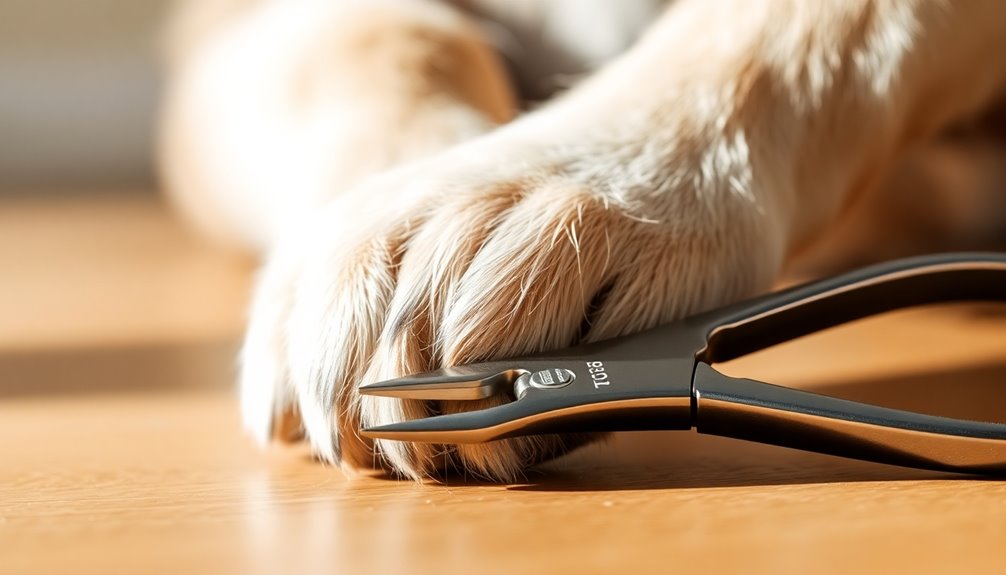
If you're unsure about trimming your dog's nails, it's wise to seek professional help. Professionals can guarantee the process is safe and effective, especially in certain situations.
Consider getting assistance in the following cases:
- Your dog has dark or pigmented nails, making it hard to see the quick.
- Your dog shows extreme anxiety or aggression during nail trimming.
- You're uncomfortable identifying the quick or performing the trim yourself.
- Your dog has a history of bleeding during nail trims or has health issues that require special care.
In these situations, a veterinarian or professional groomer can provide the expertise and environment necessary for a stress-free nail trimming experience.
Don't hesitate to reach out for help!
Frequently Asked Questions
How Far Should You Cut a Dog's Nails?
When you're trimming your dog's nails, you want to be careful not to cut too far. For light-colored nails, stop when you see a gray to pink oval at the tip – that's the quick.
With dark nails, take small cuts and check for any signs of discomfort. Always cut at a 45-degree angle from underneath to guarantee a clean cut.
Regular trimming every 3-4 weeks keeps your pup comfortable and healthy.
How Do I Know How Far to Cut My Dog's Black Nails?
When you're trimming your dog's black nails, you need to be extra careful since the quick isn't visible.
Start by just cutting the tip of the nail. Make several small cuts, watching for a gray or pink oval at the top, which indicates you're nearing the quick.
If you're unsure or your dog seems uncomfortable, don't hesitate to consult a veterinarian or professional groomer for advice on safe trimming techniques.
What Is the Best Angle to Cut a Dog's Nails?
When you're cutting your dog's nails, aim for a 45-degree angle. This angle helps you create a smooth edge while reducing the risk of splitting the nail.
It also offers better visibility of the quick, especially with clear nails, making it easier to avoid accidental cuts.
Remember to position the nail perpendicularly in the cutter and guarantee the blade faces you for safety.
This technique keeps your pup comfortable during the process.
What Is the Proper Nail Length for a Dog?
The proper nail length for your dog is just above the ground when they're standing. You want to guarantee their nails don't touch the floor to prevent discomfort and injury.
Aim for about 2 millimeters from the quick for light-colored nails, and make small cuts for dark ones. Regular trims every 4-6 weeks keep their paws healthy.
Conclusion
In the dance of dog grooming, keeping those nails neat is key to your pup's comfort and happiness. Trim with care, and you'll be a master of this art, guiding your furry friend through the process. Remember, it's not just about looks; it's about health too. So, embrace the rhythm of regular trims, and your dog will prance with joy, like a ballerina on soft, well-groomed paws. Keep that bond strong and those nails short!