When installing DIY hanging lights, prioritize electrical safety by ensuring everything is properly grounded and insulated. Double-check your wiring for damage or wear and always use quality materials and connectors that adhere to local codes. Watch for warning signs like sparks or burning smells, and turn off power immediately if they appear. It’s best to follow safety practices and consider hiring a professional if you’re unsure—continue to learn more to keep your project safe and effective.
Key Takeaways
- Always turn off power at the circuit breaker before beginning installation.
- Verify proper grounding of all metal components and use grounding testers if needed.
- Inspect wire insulation for damage and ensure tight, secure connections with wire nuts or electrical tape.
- Follow local electrical codes for wire gauge, grounding, and installation procedures.
- If unsure about any step, consult a licensed electrician to ensure safety and compliance.
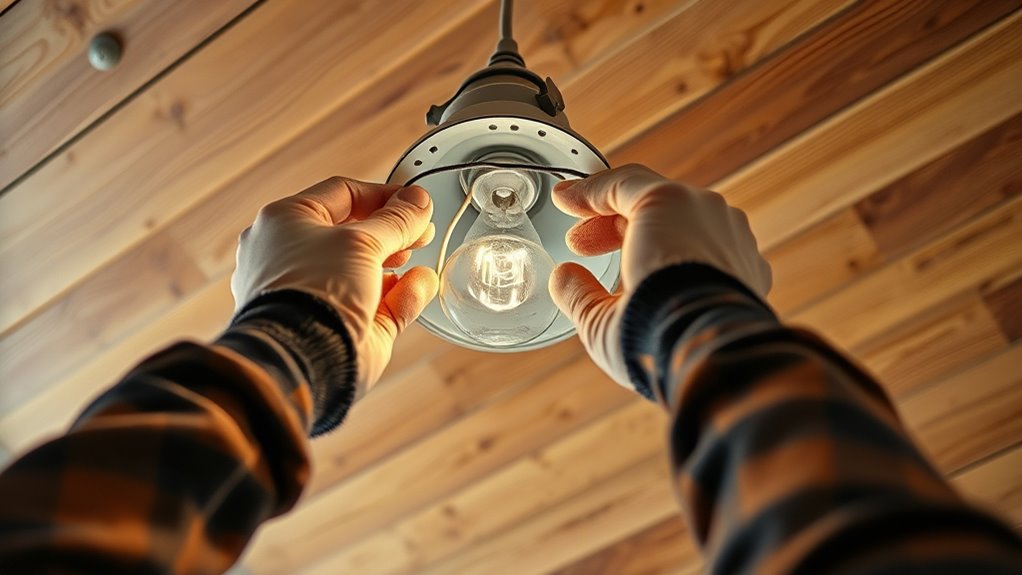
Installing DIY hanging lights can brighten up your space, but maintaining electrical safety is vital to prevent accidents. One of the most important aspects to consider is making sure your wiring is correctly grounded. Grounding issues are common pitfalls in DIY projects and can lead to electric shocks or even fires if not properly addressed. Before you start, double-check that all metal components are properly grounded. If you encounter grounding problems, it’s best to consult a professional or use grounding testers to verify your connections. Proper grounding provides a safe path for electrical faults, preventing dangerous voltage buildup that could harm you or damage your fixtures.
Another critical factor is wire insulation. When working with electrical wiring, always inspect the wire insulation thoroughly before installation. Damaged or worn insulation can expose live wires, increasing the risk of shorts, shocks, and fires. If you notice any nicks, cuts, or deterioration in the wire insulation, do not use those wires. Replace them immediately to maintain a safe barrier that prevents accidental contact with live conductors. Keep in mind that proper insulation also helps prevent moisture or dust from reaching the wires, which can cause corrosion and electrical faults over time. When connecting wires, ensure all connections are tight and insulated with wire nuts or electrical tape, avoiding exposed conductors that could pose a hazard.
While installing your hanging lights, pay attention to the quality of your wiring and the materials you use. Using inferior wiring or connectors can compromise your entire setup, leading to potential grounding issues or insulation failures. Always follow manufacturer instructions and adhere to local electrical codes, which specify the correct wire gauges and grounding procedures. If your project involves new or unfamiliar wiring, consider testing continuity and insulation resistance with a multimeter before powering the circuit. This simple step can reveal hidden issues that might cause problems later. Additionally, staying informed about electrical codes can help ensure your project meets safety standards and reduces risks. Proper wiring practices are essential to prevent hazards and ensure a durable, safe installation.
Finally, don’t ignore warning signs during installation—like sparks, burning smells, or flickering lights. These are signals that grounding issues or faulty insulation might be present. If you experience any of these, shut off the power immediately and reassess your wiring. Remember, taking the time to verify proper grounding and good wire insulation isn’t just about following rules; it’s about protecting yourself, your home, and your investment. Proper electrical safety practices are essential when working with electricity, especially in DIY projects. Staying aware of grounding issues and addressing them promptly can prevent serious hazards. When in doubt, hire a licensed electrician to review your work. Safety should always come first, especially when dealing with electricity and DIY projects.
Frequently Asked Questions
Can I Install Hanging Lights Without Turning off the Main Power?
You shouldn’t install hanging lights without turning off the main power, even if you’re familiar with grounding techniques. Working live risks electric shock or fire hazards. Always follow electrical code compliance by turning off the circuit breaker. This guarantees your safety and protects the wiring. Double-check that the power’s off before starting, and use insulated tools to prevent accidental contact with live wires. Safety first, always.
What Tools Are Safest for DIY Hanging Light Installation?
Imagine holding a glowing bulb, ready to brighten your space. To do this safely, use insulated tools to protect against shocks, especially when working near live wiring. A cordless drill can make installation easier and safer, offering mobility without cords that could cause accidents. Always double-check your tools are in good condition, and remember, safety first. Proper tools help guarantee your DIY project is both successful and safe.
How Do I Identify Live Wires in My Ceiling?
To identify live wires in your ceiling, start by turning off the power at the breaker. Use a non-contact voltage tester, which detects live wires without direct contact. Pay attention to wire color codes—typically, black or red indicates live wires, while white is neutral. Different ceiling fixture types may have varied wiring setups, so consult the fixture’s instructions or a wiring diagram to guarantee you’re correctly identifying the live wire before proceeding.
What Should I Do if I Accidentally Get Shocked During Installation?
If you accidentally get shocked during installation, immediately turn off the power at the circuit breaker. Don’t touch the person if they’re still in contact with the wire—call emergency contacts right away. Perform first aid if needed, such as applying CPR or using a first aid kit. Stay calm, keep the area safe, and wait for professional medical help to arrive. Your quick response can prevent further injury.
Are There Specific Bulbs Recommended for Safety in Hanging Lights?
Think of choosing bulbs like selecting a trusted friend—you want compatibility and safety. For your hanging lights, always pick bulbs that match the fixture’s compatibility and have safety certifications like UL or ETL. I once saw a friend’s DIY project spark because he ignored this, risking a fire. Stick to certified bulbs, and you’ll enjoy safe, beautiful lighting without surprises or hazards.
Conclusion
So, if you ignore electrical safety when hanging your lights, you risk turning your home into a lightning storm waiting to happen — and that’s just the beginning. One mistake could cause a fire, electrocution, or even turn your DIY project into a disaster movie. Play it safe, follow proper procedures, and double-check everything. Your home and loved ones are worth more than a quick fix. Protect them by prioritizing safety every single time.