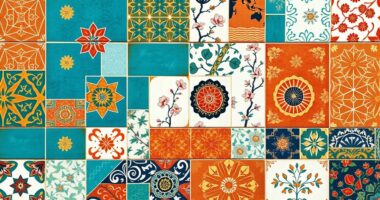
Layered bedding with global textiles mixes different fabrics, patterns, and textures for a stunning, cozy look. You can combine Egyptian cotton sheets with colorful African wax prints, or add textured throws from South America for character. Layering with culturally inspired textiles not only enhances style but also improves comfort through natural fibers like linen, silk, or wool. Keep exploring to discover tips on creating a unique, globally inspired bedroom that reflects your personality.
Key Takeaways
- Incorporate diverse textiles like Egyptian cotton, African wax prints, and Indian fabrics for cultural richness.
- Layer different textures and patterns to create a visually dynamic, globally inspired bedding aesthetic.
- Use natural fibers such as linen, silk, and wool for comfort, temperature regulation, and durability.
- Mix and match colors and motifs from various cultures to personalize and enhance the layered look.
- Integrate embroidered, textured, or patterned textiles to add depth, character, and worldwide influence to your bedding.
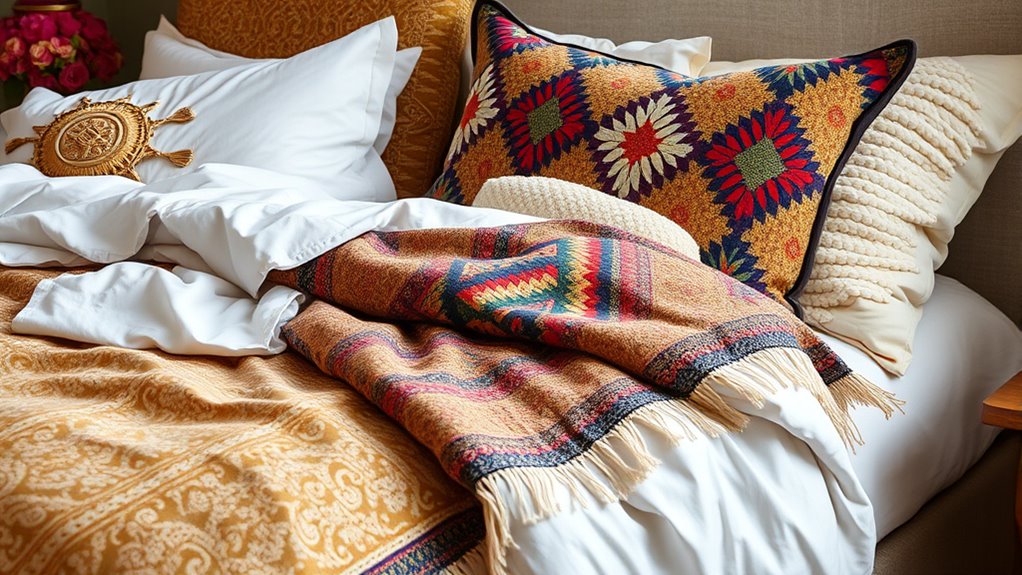
Have you ever wondered how to make your bed both stylish and cozy? It all starts with layered bedding, a technique that combines different textures, colors, and fabrics to create a space that feels inviting and elegant. The key is choosing the right bed linen—sheets, pillowcases, and duvet covers—that not only look good but also enhance your sleep comfort. When you layer thoughtfully, you set the stage for a restful night and a visually appealing bed that reflects your personality and style. Incorporating networking with textile suppliers can also help you discover unique fabrics and designs to elevate your bedding.
Layered bedding with carefully chosen linens creates a cozy, stylish bed that reflects your personality.
Global textiles bring an exciting diversity to layered bedding. From soft Egyptian cotton to vibrant African wax prints, there’s a world of options to explore. Incorporating these textiles allows you to add cultural richness and unique textures to your bed. For example, a crisp white sheet set paired with a colorful, patterned duvet cover from India instantly elevates your bedding. You can also mix and match different textiles—layering a lightweight linen sheet with a plush wool blanket or a silky throw—to create depth and tactile interest. This approach not only looks good but also serves a practical purpose: different fabrics provide varying levels of warmth and breathability, contributing to ideal sleep comfort.
When layering, start with a fitted sheet made from breathable bed linen, ensuring a smooth, snug fit on your mattress. Next, add a flat sheet or a lightweight blanket, depending on the season. Then, toss on a duvet or comforter that complements your color scheme. Decorative pillows and throws can be layered on top, adding visual interest and inviting you to sink in comfortably. Remember, the goal is to balance aesthetics with function—selecting textiles that feel good against your skin and promote restful sleep. Natural fibers like cotton, linen, or bamboo are excellent choices because they regulate temperature and wick away moisture, improving your sleep comfort.
You can also play with patterns and textures from different cultures to create an eclectic, globally inspired look. Incorporate embroidered pillowcases from Central Asia or textured throws from South America to add character and personality to your bed. The beauty of layered bedding with global textiles is that it’s flexible—you can switch out pieces seasonally or as your taste evolves. This versatility ensures that your bed remains both stylish and cozy year-round. Ultimately, by thoughtfully combining bed linen and textiles from around the world, you craft a sleep sanctuary that’s visually stunning and supremely comfortable, making every night a luxurious escape.
Frequently Asked Questions
How Do Different Global Textiles Affect Bedding Durability?
Different global textiles affect bedding durability based on fabric weaving and dyeing techniques. For example, tightly woven fabrics like Egyptian cotton or silk tend to last longer, resisting wear. Dyeing methods, such as reactive dyeing, help colors stay vibrant over time. You’ll find that quality weaving and advanced dyeing techniques make your bedding more durable, ensuring it withstands frequent use and washing while maintaining comfort and appearance.
What Sustainable Options Are Available for Layered Bedding?
You can choose sustainable layered bedding made from organic fibers and recycled textiles, which are like superheroes for the environment. These options drastically reduce waste and chemical use, making your bed eco-friendly and super durable. Switching to organic cotton, hemp, or bamboo, along with recycled polyester or plastic bottles, means you’re fighting pollution while enjoying cozy, stylish bedding that’s built to last—like a green warrior in your bedroom!
How Do Climate Conditions Influence Textile Choices in Bedding?
Climate conditions greatly influence your textile choices for bedding. In colder climates, you’ll prioritize fabric insulation to keep warm, selecting thicker, plush materials. Conversely, in hot, humid areas, breathable fabrics like cotton or linen help with climate adaptation, preventing overheating. Understanding these needs allows you to choose layered bedding that maintains comfort year-round, ensuring you stay cozy in winter and cool in summer.
Are There Cultural Differences in Layering Techniques Worldwide?
Did you know that in Japan, traditional futons are layered differently than European duvets? You’ll find that cultural sleeping customs shape bedding styles worldwide. Regional textile traditions influence how layers are added, removed, or combined, reflecting climate and culture. For example, Middle Eastern bedding often includes intricate embroidery, while Scandinavian layers prioritize warmth. These differences highlight how diverse cultural sleeping customs adapt to local environments and textile heritage.
What Are the Latest Innovations in Global Textile Bedding Materials?
You’ll find the latest innovations in global textile bedding materials focus on eco-friendly fabric dyeing techniques and advanced thread weaving methods. Innovations include natural dyeing processes that reduce chemical use and high-tech weaving that enhances durability and softness. These advancements allow you to enjoy luxurious, sustainable bedding. By embracing these innovations, you can experience improved comfort, vibrant colors, and environmentally responsible choices in your layered bedding, making your sleep space both stylish and eco-conscious.
Conclusion
As you layer your bedding, think of each piece as a chapter in a story, shaping your nightly escape. The top sheet is the dawn, bright and inviting, while the blanket below is the dusk, cozy and calm. Together, they symbolize your sanctuary—worlds woven from global textiles, wrapping you in comfort and culture. Embrace this layered haven, where every night becomes a journey through textures and tales, guiding you into restful dreams.