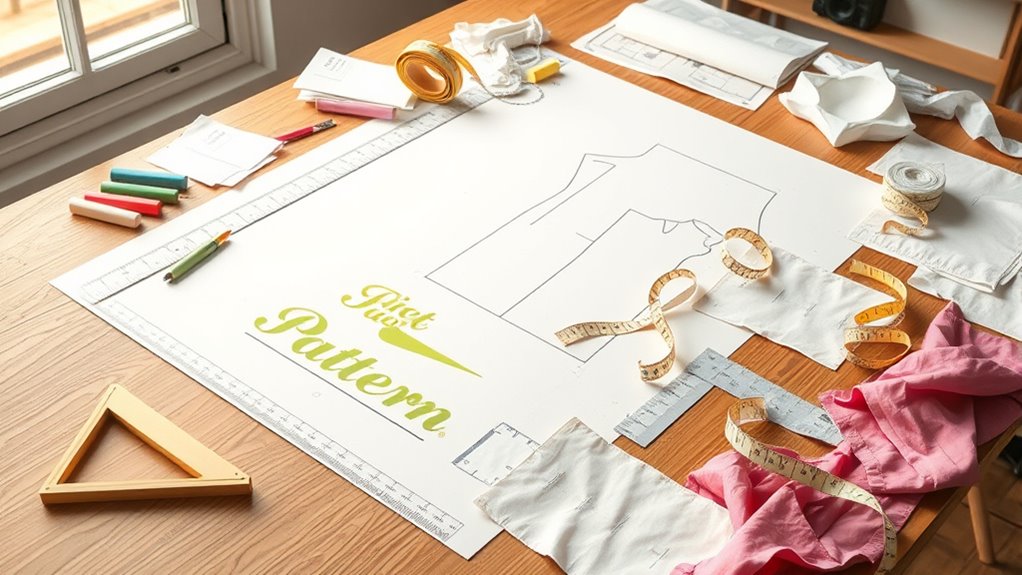

To excel in patternmaking, you need both technical skills and the right tools. Skills like sketching, draping, adjusting seams, darts, and understanding fabric behavior are essential. Tools such as rulers, French curves, pattern paper, pins, and dress forms help you create precise templates. By mastering these skills and tools, you’ll be able to transform your creative ideas into accurate, workable patterns. Keep exploring further to discover how these elements come together seamlessly.
Key Takeaways
- Mastery of pattern drafting, grading, and alteration techniques is essential for accurate garment creation.
- Familiarity with tools such as rulers, French curves, pattern paper, scissors, and pins is crucial.
- Skill in draping fabric on dress forms helps visualize and refine three-dimensional designs.
- Understanding fabric properties guides pattern adjustments and fabric selection for desired outcomes.
- Proficiency in pattern development involves sketching, muslin fitting, and precise seam and dart manipulation.
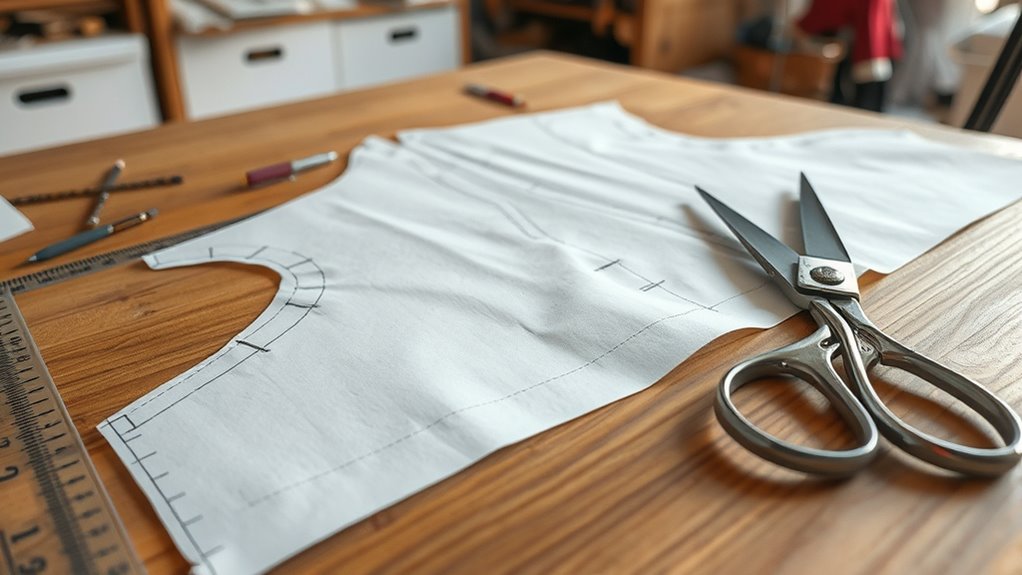
Have you ever wondered how designers turn ideas into tangible garments? It all begins with patternmaking, a pivotal step that transforms creative concepts into workable designs. To do this effectively, mastering draping techniques is essential. Draping involves working directly with fabric on a dress form, allowing you to see how the material behaves and how it can shape the final garment. When you drape, you manipulate fabric to develop the three-dimensional form of a design, giving you a clear understanding of fit, volume, and structure. This hands-on approach helps you visualize how different fabrics will interact with your pattern and how they’ll look on a real person.
Choosing the right fabric is equally important. Fabric selection influences not only the draping process but also the overall look and feel of the finished garment. For example, a stiff fabric like taffeta will hold its shape and create structured silhouettes, while a soft, flowing fabric such as chiffon offers fluidity and movement. When you select fabric, consider its weight, texture, stretch, and drape qualities, as these factors directly impact your design’s execution. Picking the appropriate fabric allows you to craft garments that drape beautifully, enhance your design intentions, and fit comfortably. As you experiment with different textiles, you develop an intuition for how each material responds to cutting and sewing, which is essential for successful patternmaking.
In patternmaking, your understanding of draping techniques and fabric selection work hand in hand. You start by sketching your ideas, then move to creating a basic pattern or muslin, which acts as a rough draft. From there, draping on a dress form helps you refine the fit and design details. You can pin fabric directly onto the form, adjusting seams and darts until the desired silhouette emerges. This process allows you to see how the fabric’s qualities influence the final shape, guiding your pattern adjustments. As you become more skilled, you’ll learn to anticipate how different fabrics will behave based on their drape and weight, making your patterning more precise.

BaBylissPRO The Digital Flat Iron, Nano Titanium, Memory Setting, 1"
- Technology: Nano Titanium for shiny results
- Plates: All-directional floating plates for full contact
- Heat Distribution: Even heat with no hot spots
As an affiliate, we earn on qualifying purchases.
Frequently Asked Questions
What Are the Common Mistakes Beginners Make in Patternmaking?
You often make mistakes in pattern fitting, like not adjusting for body shape or movement, which can lead to ill-fitting garments. Seam accuracy is another common issue, where uneven seams or inaccurate markings cause fitting problems. To improve, double-check measurements, practice precise cutting, and fit your patterns regularly. These steps help you create well-fitting designs and avoid common beginner errors in patternmaking.
How Do I Choose the Right Patternmaking Tools for My Project?
A stitch in time saves nine, so choosing the right patternmaking tools is vital. Start by considering your fabric selection; different fabrics need specific tools. Prioritize tool ergonomics—comfortable, well-designed tools reduce fatigue and improve precision. Invest in quality rulers, scissors, and marking tools that suit your project’s fabric and complexity. This approach guarantees efficiency and accuracy, helping your patternmaking process run smoothly and confidently.
Can Patternmaking Be Learned Without Formal Training?
Yes, you can learn patternmaking without formal training. By exploring self-taught techniques and practicing regularly, you develop essential skills. Online tutorials offer step-by-step guidance, helping you understand measurements, drafting, and fitting. You’ll need patience and persistence, but with consistent effort, you can master patternmaking on your own. Focus on hands-on practice and experimenting with different methods to improve your skills over time.
How Do I Modify Patterns for Different Body Sizes?
Imagine you’re adjusting a pattern for a friend’s changing size. To modify patterns for different body sizes, you use size adjustments based on measurements. Apply fitting techniques like adding or subtracting ease at key points—waist, bust, hips—and make proportional changes for better fit. Practice these adjustments regularly, and you’ll develop an intuitive sense for pattern modifications, ensuring your designs suit various body types effectively.
What Are the Latest Trends in Patternmaking Technology?
You should explore the latest trends in patternmaking technology like digital drafting and 3D fitting. Digital drafting allows you to create precise patterns quickly and easily, while 3D fitting lets you visualize and adjust garments virtually, saving time and material. Embracing these tools enhances your efficiency, accuracy, and creativity, keeping you ahead in the fashion industry. Stay updated with software advancements to maximize your patternmaking capabilities.
Conclusion
Mastering patternmaking means mastering patience, precision, and practice. It demands attention to detail, dedication to skill, and a passion for creativity. By honing your techniques, embracing new tools, and learning from each project, you build confidence, improve craftsmanship, and open endless possibilities. Patternmaking isn’t just about creating shapes; it’s about shaping your expertise, shaping your vision, and shaping your future in fashion. Keep learning, keep experimenting, and keep pushing your boundaries.