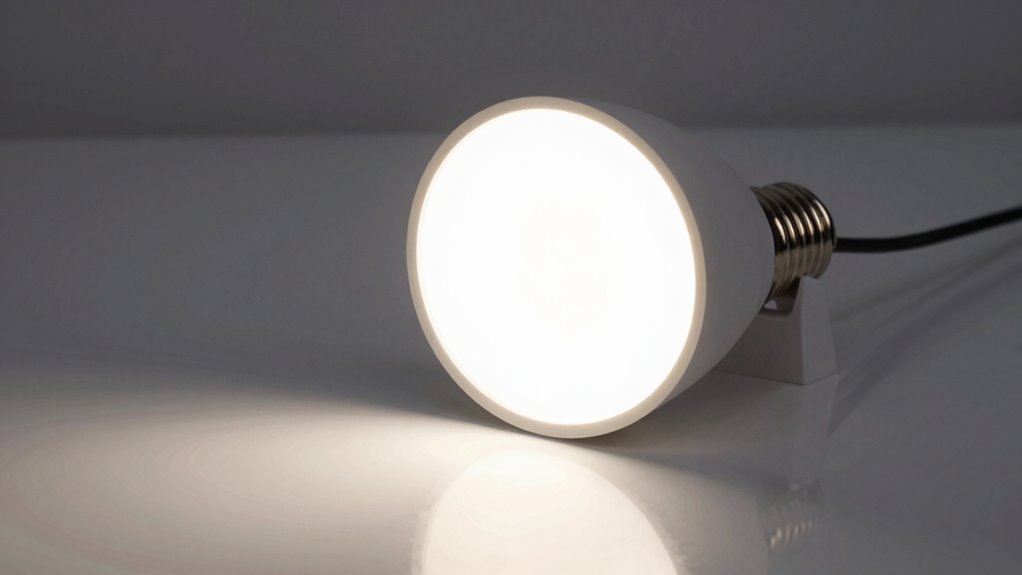

Understanding lumens, Kelvins, and CRI helps you pick the right lighting for any space. Lumens measure brightness—more lumens mean a brighter environment. Kelvins describe light color; lower Kelvins give warm, cozy light, while higher Kelvins offer cool, crisp illumination. CRI shows how accurately colors appear under the light, which is important for detail work. By mastering these terms, you’ll make better lighting choices that set the perfect mood and clarity—keep going to learn even more.

Get your wardrobe favorites delivered free with Prime
- Fast, free delivery on millions of items
- Prime Video, Amazon Music and more included
- Member-only deals all year
Key Takeaways
- Lumens measure brightness; higher lumens mean a brighter light output.
- Kelvins indicate light color; lower values are warm, higher values are cool.
- CRI shows color accuracy; higher CRI means more natural, vibrant colors.
- Understanding these terms helps select appropriate lighting for different environments.
- Combining lumens, Kelvins, and CRI ensures optimal ambiance, functionality, and visual comfort.
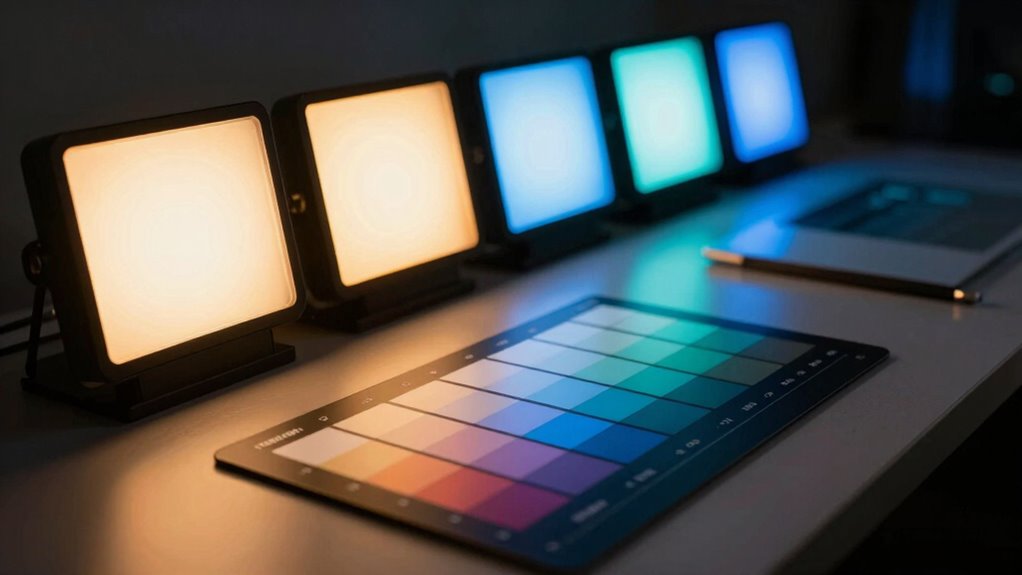
Have you ever felt overwhelmed by the confusing language used in lighting descriptions? You’re not alone. Terms like lumens, Kelvins, and CRI can seem complicated at first, but once you understand their basics, lighting specs become much clearer. Let’s start with the concept of color temperature and light intensity—two fundamental ideas that influence how your space looks and feels.
Color temperature is measured in Kelvins (K), and it describes the hue of the light emitted by a bulb. Think of it as the warmth or coolness of the light. A lower Kelvin number, like 2700K, produces a warm, yellowish light similar to traditional incandescent bulbs, making spaces feel cozy and inviting. On the other hand, higher Kelvin values—around 5000K or more—generate a cooler, bluish light, often used in workplaces or areas where you want clear visibility. Understanding this helps you select lighting that matches your desired atmosphere. Light intensity, meanwhile, is about how much light is emitted, which is measured in lumens. If you want a bright, vibrant environment—say, a kitchen or a workspace—you’ll look for bulbs with higher lumen ratings. For a softer, relaxing room, lower lumens suffice. It’s all about balancing the brightness you need with the mood you want to create. Additionally, understanding lighting quality and how it relates to CRI can help you choose bulbs that make colors appear more natural and appealing. High CRI values are especially important in environments where accurate color representation is essential, which is why CRI ratings are a useful factor to consider in your lighting choices. Knowing about lighting specifications can help you make more informed decisions for your space. Recognizing the role of lighting standards can further assist you in selecting the most suitable options for your needs.
As an affiliate, we earn on qualifying purchases.
Frequently Asked Questions
How Do I Choose the Right Lumens for My Space?
To choose the right lumens for your space, consider its size and purpose. For example, brighter lighting with higher lumens suits kitchens and workspaces, while softer lighting works for bedrooms and relaxing areas. Proper lighting enhances your lighting installation and promotes energy efficiency by avoiding over-illumination. Measure your space carefully and select bulbs with appropriate lumens to create a well-lit environment that’s both functional and energy-conscious.
What Color Temperature Is Best for a Cozy Room?
For a cozy room, opt for a warm color temperature around 2700K to 3000K. This range creates ambient lighting that promotes relaxation and comfort, aligning with color psychology’s focus on warm hues fostering a soothing atmosphere. Using this soft, warm light helps you unwind and makes your space feel inviting and intimate, perfect for reading or unwinding after a long day.
How Does CRI Affect the Appearance of Colors?
Think of CRI as a painter’s palette, shaping how colors appear under light. A high CRI enhances color accuracy, making reds vibrant and blues true to life, while a low CRI can dull or distort what you see. This directly influences your visual perception, ensuring the colors you perceive are as close to reality as possible. So, a higher CRI helps your space feel more natural and vibrant, just like real-world colors.
Are LED Lights Better Than Incandescent for Brightness?
LED lights are brighter than incandescent bulbs for the same wattage, making them more energy-efficient and cost-effective over time. They produce more lumens per energy unit, so you get better brightness without higher electricity bills. Although initial costs are higher, the long-term savings and lower energy consumption make LEDs a smarter choice for brightness and efficiency. Plus, they last longer, reducing replacement costs.
Can Different Light Temperatures Impact Mood?
Did you know that lighting temperature can considerably influence your mood? Cooler lights (around 6500K) boost alertness, while warmer tones (around 2700K) promote relaxation. Lighting psychology shows that adjusting light temperature impacts mood and productivity, making your environment more inviting or energizing. So, yes, different light temperatures do affect your mood, helping you create spaces that enhance well-being and focus based on your needs.
Conclusion
Now that you understand lumens, kelvins, and CRI, lighting becomes less like a mystery and more like an artist’s palette. Imagine stepping into a room where every bulb casts a warm, inviting glow or a crisp, energizing light—your choices shape the atmosphere. With this knowledge, you can craft spaces that feel just right, transforming ordinary rooms into vibrant, welcoming havens. Light up your world with confidence, and watch how it changes everything.
Halloween Picks
halloween
As an affiliate, we earn on qualifying purchases.