If you’re choosing patio furniture, consider durability, maintenance, and style. Teak offers exceptional weather resistance and lasts for decades with minimal care, making it ideal if you want long-term investment. Wicker, especially synthetic, is low-maintenance but less durable outdoors. Aluminum is lightweight, rust-resistant, and easy to care for, perfect for a sleek look. Resin furniture mimics wood or wicker styles, is affordable, and withstands weather changes. Keep exploring to find the best fit for your outdoor space.

Get your wardrobe favorites delivered free with Prime
- Fast, free delivery on millions of items
- Prime Video, Amazon Music and more included
- Member-only deals all year
Key Takeaways
- Teak offers exceptional outdoor durability and longevity with minimal maintenance, ideal for long-term investment.
- Wicker, especially synthetic, is low-maintenance but less resilient to harsh weather conditions.
- Aluminum is lightweight, rust-resistant, and highly durable, requiring minimal upkeep.
- Resin furniture provides affordability, weather resistance, and easy cleaning, suitable for various climates.
- Environmental impact varies; recycled aluminum and synthetic wicker are more sustainable options.
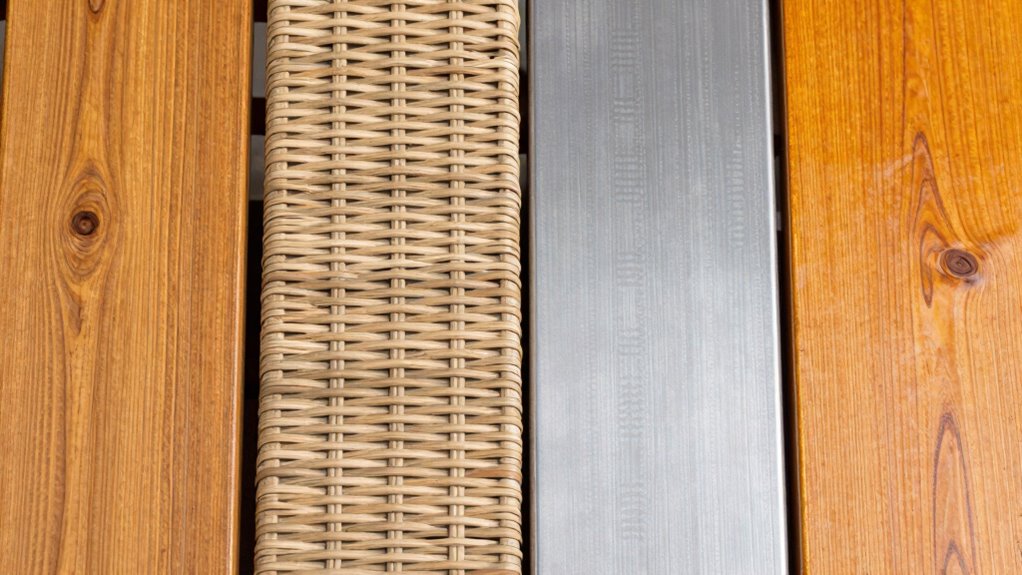
When choosing patio furniture, understanding the different materials available can help you find pieces that suit your style, budget, and climate. Each material offers unique benefits and challenges, especially when it comes to outdoor durability and maintenance considerations. Teak, for example, is renowned for its exceptional outdoor durability. If you want furniture that can withstand harsh weather conditions without quick deterioration, teak is a solid choice. Its natural oils help resist water, insects, and rot, meaning it can last for decades with minimal care. However, teak does require occasional cleaning and oiling to keep its rich color, especially if you prefer the original honey tone over the weathered gray look that develops naturally. Maintenance considerations for teak involve periodic cleaning and applying oil if you want to maintain its vibrant appearance, but its durability makes it a long-term investment. Additionally, teak’s ability to resist rot and insect damage makes it particularly suitable for outdoor use over many years. Proper sealing can also enhance its resistance to moisture and staining, extending its lifespan even further. Regular inspections can help catch any early signs of wear, ensuring your investment remains in top condition.
Wicker, whether natural or synthetic, offers a different set of advantages and drawbacks. Natural wicker, made from rattan, has a charming, traditional appeal but tends to be less resilient when exposed to outdoor elements. It can deteriorate quickly if not properly maintained, making it less ideal for unpredictable climates. Synthetic wicker, often crafted from resin or vinyl, enhances outdoor durability by resisting moisture, UV rays, and temperature fluctuations. It’s generally low maintenance—simply requiring occasional cleaning with soap and water. Still, synthetic wicker may not age as gracefully as natural materials and can sometimes look less authentic. Its low-maintenance nature makes it a popular choice if you’re after convenience, but you should consider how well it will hold up over years of exposure based on your climate. The environmental impact of synthetic materials is also worth considering for those seeking sustainable options.
Aluminum furniture is lightweight, rust-resistant, and extremely durable when it comes to outdoor use. Its outdoor durability is excellent, especially if it’s powder-coated, which adds an extra layer of protection against corrosion. Aluminum requires very little maintenance—just a quick wash now and then to remove dirt and prevent buildup. Its lightweight nature means you can easily rearrange your patio without much effort. However, aluminum can get hot in direct sunlight, so you might need cushions for comfort. Its sleek, modern look suits contemporary styles, and its resilience makes it a practical choice for those who want low-maintenance furniture that can withstand the elements. The material’s recyclability also makes it an environmentally friendly option for sustainable outdoor decorating. Choosing recycled aluminum can further reduce environmental impact, aligning with sustainable living practices.
Resin furniture combines affordability with durability. It’s resistant to moisture, fading, and cracking, making it suitable for most climates. Its outdoor durability is impressive, and it generally requires minimal upkeep—occasional cleaning with soap and water suffices. Resin furniture often mimics the look of wicker or wood, giving you style options without sacrificing practicality. The main maintenance consideration is to avoid prolonged exposure to direct sunlight, which can cause some resin finishes to fade over time. Overall, resin is a cost-effective, durable choice that fits well into most outdoor settings, especially if you want fuss-free furniture that can handle weather changes. Proper storage during harsh weather or winter months can further prolong its appearance and functionality. Investing in cover protection or storing resin furniture indoors during extreme weather can significantly extend its lifespan and maintain its appearance.
As an affiliate, we earn on qualifying purchases.
Frequently Asked Questions
Which Material Is Most Eco-Friendly for Patio Furniture?
You’ll find that wicker, especially when made from sustainably sourced or recycled materials, is typically the most eco-friendly option for patio furniture. It often involves eco-friendly sourcing and sustainable manufacturing processes, reducing environmental impact. Teak can be eco-friendly if harvested responsibly, but it’s often associated with deforestation. Aluminum is recyclable and durable, but its production consumes significant energy. Resin, depending on its origin, may involve non-renewable resources, making it less eco-friendly overall.
How Do Weather Conditions Affect Each Material’s Durability?
Rain, sun, or snow—each weather condition tests your furniture’s material longevity and corrosion resistance. Teak ages gracefully, resisting moisture and UV rays, while wicker may weaken and fray under heavy rain or humidity. Aluminum shines with corrosion resistance but can heat up in the sun, affecting comfort. Resin endures harsh weather but may fade over time. Knowing how weather affects each helps you choose durable, lasting patio furniture.
Are Maintenance Requirements Different for Each Material?
Your maintenance needs vary by material. For teak, you’ll need regular cleaning techniques like washing with mild soap to preserve its color and prevent weathering. Wicker requires gentle dusting and occasional cleaning to avoid mold, while aluminum needs simple washing to prevent corrosion. Resin furniture is low-maintenance but benefits from cleaning to keep its appearance. Each material’s unique care helps maintain durability and color, ensuring your patio furniture stays beautiful longer.
Which Material Is Safest for Children and Pets?
Teak and aluminum are the safest choices for children and pets because they’re durable, non-toxic, and have smooth surfaces that reduce injury risk. Wicker and resin furniture can sometimes contain chemicals or splinters, so they might be less pet and child friendly. To guarantee safety, choose furniture with child safety in mind, avoiding sharp edges and toxic finishes. Opt for pet-friendly features like non-slip surfaces and rounded corners to keep everyone safe.
Can These Materials Be Recycled or Repurposed Easily?
You can recycle or repurpose these materials, but recycling challenges vary. Teak is durable and often repurposed into furniture or art, while wicker can be woven into new items, though its recycling is tricky. Aluminum is highly recyclable, making it easier to repurpose into new products, and resin poses recycling challenges due to its chemical composition. Overall, aluminum offers the best repurposing potential, but each material has unique options depending on local recycling facilities.
Conclusion
Choosing the right patio furniture material is like selecting the perfect dance partner—each has its own rhythm and charm. Whether you prefer the timeless elegance of teak, the cozy charm of wicker, the lightweight strength of aluminum, or the versatile practicality of resin, your choice shapes your outdoor oasis. So, take the leap and pick what speaks to your style—after all, your patio deserves furniture that will stand the test of time, weather, and your memories.
Halloween Picks
halloween
As an affiliate, we earn on qualifying purchases.