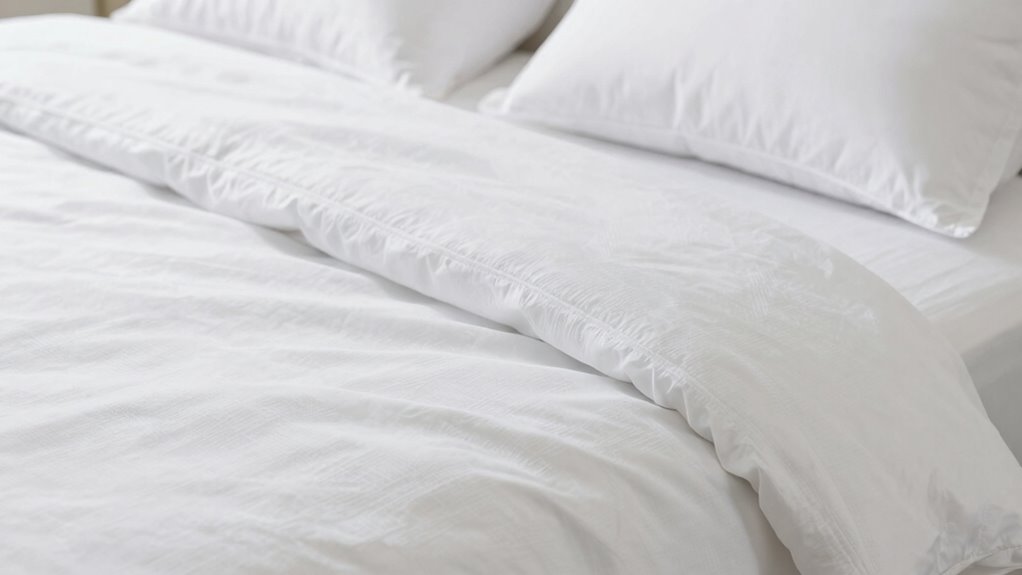
Many people believe that higher thread counts mean better sheets, but that’s a common marketing myth. Thread count alone doesn’t determine quality; factors like fabric softness, fiber quality, and weave matter more. Very high counts can even be a gimmick if made from lower-quality fibers. For truly comfortable and durable sheets, focus on the fabric’s feel and construction. Keep going to discover the real secrets behind choosing great bedding.

Get your wardrobe favorites delivered free with Prime
- Fast, free delivery on millions of items
- Prime Video, Amazon Music and more included
- Member-only deals all year
Key Takeaways
- Higher thread count doesn’t necessarily mean softer or more durable sheets; quality fibers and weave are more important.
- Very high thread counts can be a marketing ploy; focus instead on fabric feel and construction.
- Softness depends on fiber quality and weaving, not just thread count; premium cotton feels plush at lower counts.
- Durability is linked to fiber quality and finishing processes, not just thread density.
- Choosing sheets with balanced fiber quality, weave, and construction ensures better longevity and comfort than solely chasing high thread counts.
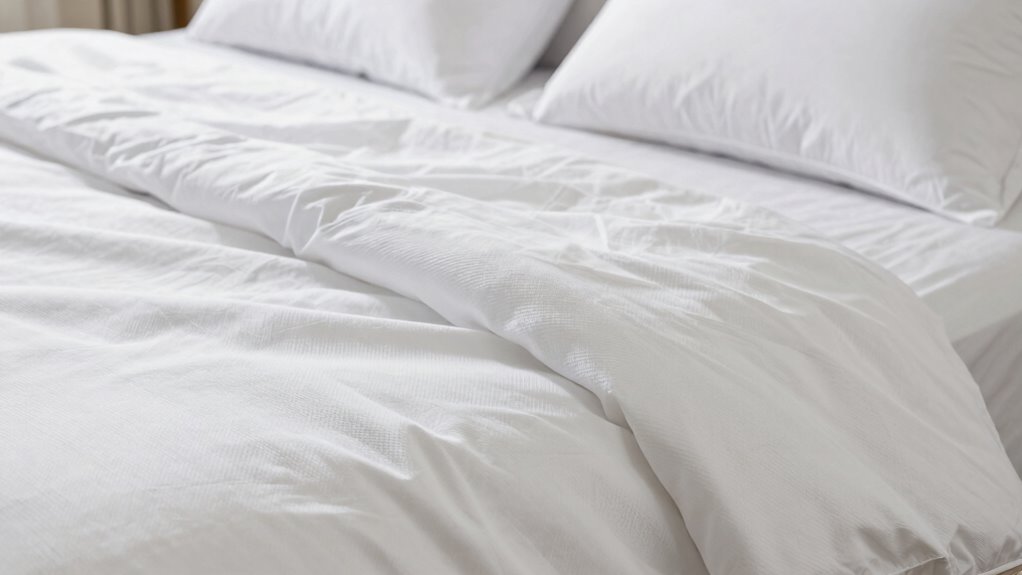
Have you ever been told that a higher thread count automatically means a better sheet? It’s a common myth, but the truth is a lot more complicated. While thread count can influence how soft and durable your bedding feels, it’s not the only factor at play. When shopping for sheets, you should focus on fabric softness and durability factors instead of just chasing a high number. A higher thread count doesn’t necessarily mean a better sheet; sometimes, it’s just a marketing gimmick designed to lure you in with bigger numbers.
Fabric softness isn’t solely determined by thread count. It depends heavily on the quality of the fibers used and how tightly they’re woven. For example, a sheet made from high-quality cotton, like Egyptian or Pima, can feel plush and luxurious even with a lower thread count because the fibers themselves are softer. Conversely, sheets with a very high thread count might feel heavy or stiff if they’re woven from lower-quality fibers or filled with synthetic threads. So, instead of fixating on the number, test the fabric’s feel in your hand or look for reviews that describe the softness. Additionally, understanding the fiber quality can help you select more comfortable sheets. Ensuring that the thread count is appropriate for the fabric type can also improve your overall experience. To further enhance your bedding choice, consider the weave type as well, since it influences both feel and durability.
High-quality fibers like Egyptian or Pima cotton feel soft regardless of thread count, unlike lower-quality threads that can feel stiff even at high numbers.
Durability factors are equally important and are often misunderstood. A higher thread count can sometimes mean a denser weave, which might last longer, but only if the fibers used are strong and well-made. Thin or weak fibers, regardless of the thread count, are prone to pilling, tearing, and wearing out quickly. Consequently, pay attention to the fabric’s fiber content and weave type. Combed cotton or long-staple fibers tend to be stronger and more durable, regardless of their thread count. Also, the finishing process matters—sheets that are mercerized or treated for strength can hold up better over time. Proper care and maintenance also play a crucial role in extending the lifespan of your bedding. Knowing how to properly launder and store your sheets can significantly impact their longevity.
Ultimately, the best sheets balance fabric softness and durability factors. You want a fabric that feels comfortable against your skin but also stands up to frequent washing. Don’t be fooled by high thread count labels alone—look beyond the number. Check the fiber quality, weave, and construction details. Remember, a well-made sheet with a moderate thread count can outperform a high-thread-count sheet that’s cheaply made. Focus on what truly matters: the quality of the fabric and how it feels and holds up in everyday use. That’s where the real bedding truth lies.
As an affiliate, we earn on qualifying purchases.
Frequently Asked Questions
Does Higher Thread Count Always Mean Better Quality?
Higher thread count doesn’t always mean better bedding quality. Many thread count misconceptions suggest that a higher number guarantees softness and durability, but other factors matter more. Look for bedding quality factors like fabric type, weave, and finishing. A lower thread count with quality cotton and a tight weave can feel far better than a high thread count sheet that’s rough or poorly made. Focus on overall fabric quality, not just thread count.
Can Thread Count Affect Sleep Comfort Significantly?
Yes, thread count can considerably affect your sleep comfort. Higher thread counts often mean softer fiber softness, making your bedding more plush and cozy. However, it also influences sleep temperature—denser fabrics can trap heat, so if you tend to sleep hot, a lower thread count might be more comfortable. Ultimately, it’s about finding the right balance between softness and breathability that suits your personal sleep needs.
Are Low Thread Count Sheets More Breathable?
Yes, low thread count sheets tend to be more breathable because they often feature a looser fiber weave, allowing better airflow. This makes them feel lighter and cooler against your skin, enhancing your sensory feel during sleep. You’ll notice less trapping of heat and moisture, which helps regulate temperature. So, if breathability is your priority, opting for sheets with a lower thread count and a breathable fiber weave benefits your comfort.
How Do Different Fabrics Influence the Importance of Thread Count?
Different fabrics influence how much thread count matters. For example, a high thread count in a cotton sheet with a tight fabric weave offers softness and durability, while in linen, lower thread counts still feel breathable and crisp. Fabric weave impacts breathability and texture, and dye longevity affects how vibrant the sheets stay over time. So, choose based on the fabric’s characteristics rather than just thread count alone for the best bedding experience.
Is Thread Count the Best Indicator of Sheet Durability?
Think of thread count as a heartbeat for sheets—it’s not the whole story. While a higher number can suggest durability, the fabric weave and bedding maintenance play bigger roles. A tightly woven fabric endures wear better, regardless of thread count. So, don’t rely solely on numbers; focus on quality weaves and proper care to guarantee your sheets last. Durability depends on the whole fabric, not just the thread count.
Conclusion
Don’t be deceived by the dazzling details of thread count. Instead, focus on fabric quality, fiber type, and feel to find your perfect pillow partner. Remember, fluff and finesse matter more than numbers. By bypassing the bedding buzz and trusting your touch, you’ll turn your bed into a blissful, beautiful sanctuary. Sleep soundly, knowing you’re smarter than the myths, and your bedding choices are truly tailored to your taste. Sweet dreams start with savvy selections!
Halloween Picks
halloween
As an affiliate, we earn on qualifying purchases.