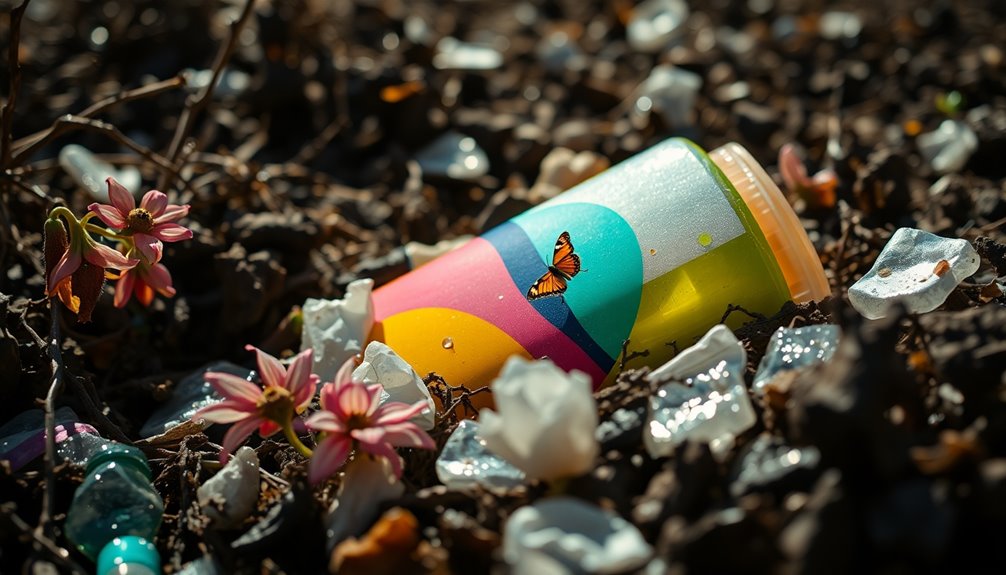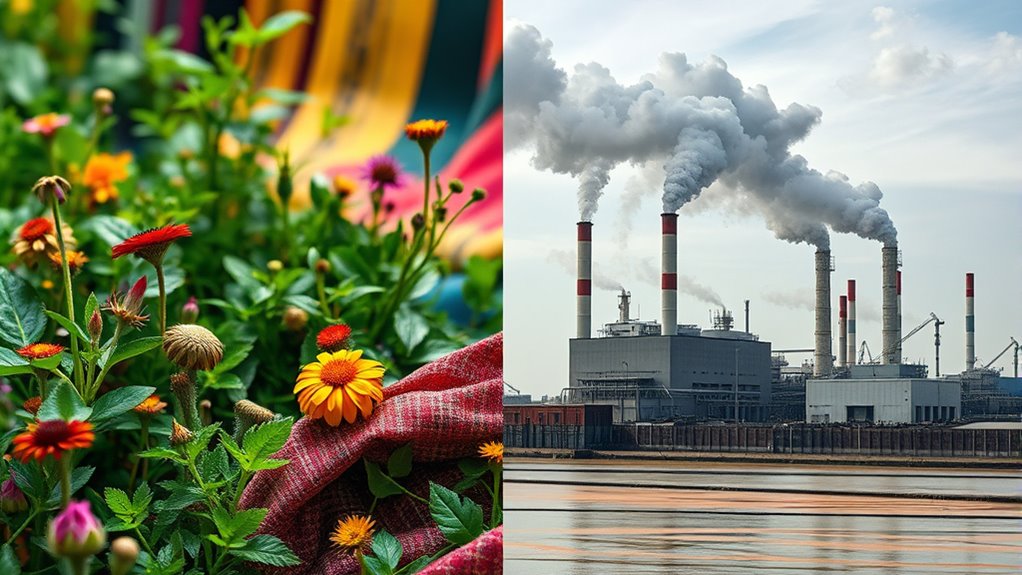

Natural dyes are much better for the environment because they come from renewable resources and use less energy during production. They break down easily, cause less water and air pollution, and avoid toxic chemicals like heavy metals found in chemical dyes. Chemical dyes often require energy-intensive processes and create hazardous waste that harms ecosystems. To understand more about how natural dyes support sustainable practices and reduce pollution, explore the details further.
Key Takeaways
- Natural dyes require less energy and produce fewer toxic waste compared to chemical dyes.
- They are biodegradable and less likely to contaminate water and ecosystems.
- Chemical dyes contain hazardous substances like heavy metals, posing risks to environment and health.
- Natural dyes support sustainable farming and reduce transportation emissions.
- Advances in natural dye technology improve durability, making them an eco-friendly alternative.

When choosing dyes for textiles and other applications, understanding their environmental impact is vital. Natural dyes often stand out as eco friendly alternatives because they’re derived from plants, minerals, and other renewable resources. Unlike their chemical counterparts, natural dyes typically require less energy to produce and emit fewer harmful substances during processing. This reduces the strain on ecosystems and helps promote sustainable practices. Additionally, natural dyes tend to be biodegradable, which means they break down more easily in the environment, lessening pollution and supporting healthy soil and water systems.
In contrast, chemical dyes pose significant challenges when it comes to environmental impact. They’re usually synthetic, created through complex chemical processes that consume large amounts of energy and generate toxic waste. Toxic waste management becomes a vital concern with chemical dyes because improper disposal can lead to water contamination, harming aquatic life and ecosystems. Many chemical dyes contain heavy metals, aromatic amines, and other hazardous substances that linger in water supplies if not managed correctly. This not only endangers wildlife but also jeopardizes human health, especially in communities near dye manufacturing plants or wastewater discharge sites. Using natural dyes can substantially reduce the environmental footprint of textile production. Since they are often produced with fewer chemicals and less energy, they contribute less to pollution and climate change. Furthermore, natural dyes can be cultivated locally, supporting small-scale farmers and reducing the carbon footprint associated with transportation and large-scale manufacturing. Their biodegradable nature ensures that, at the end of their lifecycle, they leave behind minimal environmental residues, unlike chemical dyes that can persist and accumulate in ecosystems for years.
However, natural dyes are not without their challenges. They can be less colorfast and more sensitive to washing and light exposure, which might lead to increased use of mordants or fixing agents. Still, advancements in sustainable dyeing techniques are making natural dyes more viable for commercial use. When you prioritize eco friendly alternatives, you’re not only choosing dyes that are safer for the environment but also encouraging responsible waste management practices. Proper disposal and treatment of dye effluents are vital to prevent toxic waste from contaminating water supplies and harming wildlife. Incorporating sustainable dyeing techniques can also help improve the colorfastness and durability of natural dyes, making them more competitive with synthetic options. Additionally, biodegradable dye materials are being developed to further address durability issues and enhance their environmental benefits. Ongoing research into dye extraction methods is reducing resource consumption and increasing yield efficiencies. Ultimately, opting for natural dyes supports a more sustainable approach to textile production. It minimizes reliance on harmful chemicals, reduces toxic waste, and promotes environmental health. By understanding these differences, you can make informed choices that align with eco-conscious values, championing both environmental stewardship and responsible manufacturing practices.
Frequently Asked Questions
How Do Natural Dyes Affect Biodiversity in Their Sourcing Regions?
You might wonder how natural dyes impact biodiversity in sourcing regions. By choosing sustainable sourcing practices, you can support biodiversity conservation, ensuring that plant resources are harvested responsibly. When you prioritize ethical sourcing, you help protect ecosystems and prevent habitat destruction. This approach promotes the preservation of native species and encourages environmentally friendly farming. Ultimately, your conscious choices in natural dye sourcing can positively influence regional biodiversity and contribute to ecological balance.
Are Natural Dyes More Sustainable for Wastewater Management?
Think of natural dyes as the gentle stream in wastewater management. You’ll find they’re often more sustainable because their biodegradability analysis shows they break down faster, reducing pollution. Plus, their resource renewability means sourcing is more sustainable, unlike chemical dyes that can linger. By choosing natural dyes, you support eco-friendly practices that keep water cleaner, helping ecosystems thrive and making your fashion choices more responsible overall.
What Are the Long-Term Health Effects of Chemical Dyes?
You should be aware that chemical dyes pose significant long-term health risks due to toxin exposure, which can lead to respiratory issues, skin allergies, and even more severe conditions like cancer. Continuous contact or inhalation increases your risk of health problems over time. It is crucial to understand these dangers and consider safer alternatives, as prolonged exposure to chemicals in dyes can have lasting effects on your well-being.
Can Natural Dyes Be Produced at Industrial Scale Efficiently?
You can produce natural dyes at an industrial scale, but scaling challenges exist, such as ensuring consistent color quality and sourcing sufficient raw materials. Production costs tend to be higher than chemical dyes, partly due to the labor-intensive extraction process. However, advancements in technology and sustainable farming practices are helping to improve efficiency. Ultimately, with innovation, natural dyes can become more viable for large-scale production while maintaining their environmental benefits.
How Do Dyeing Processes Impact Water Consumption?
You should consider how dyeing processes impact water consumption, as water usage varies based on dye efficiency. Traditional dyeing often requires large volumes of water to achieve vibrant colors, leading to significant water waste. In contrast, more efficient dyeing methods or alternative dyes can reduce water use, making the process more sustainable. Improving dye efficiency directly cuts down water consumption, helping you lower environmental impact and conserve essential resources.
Conclusion
Now that you see the environmental toll of chemical dyes, you might wonder if choosing natural dyes could make a real difference. By opting for eco-friendly options, you help reduce pollution, conserve resources, and protect ecosystems. Isn’t it worth making small changes for a healthier planet? Every choice counts, and switching to natural dyes is a simple step toward a more sustainable future. Are you ready to make that change today?