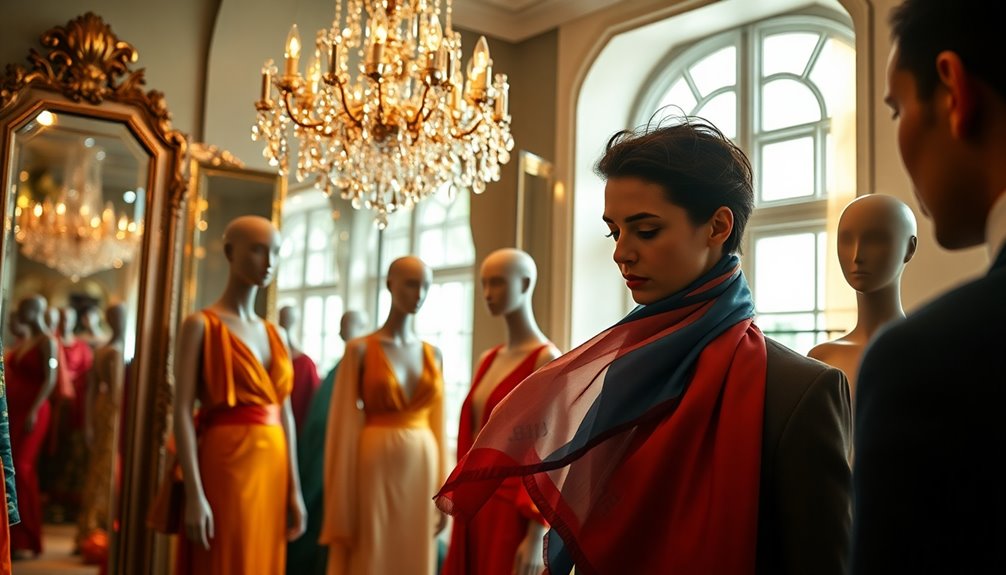
Inside a couture fitting, you start by trying on a muslin version of your gown, allowing the designer to assess fit and movement. Adjustments like pinning, tucking, and repositioning darts are made for a perfect contour. The fabric’s behavior, weight, and stretch influence each change. After refining the fit, the final gown is pressed, lined, and carefully finished. If you keep exploring, you’ll discover how every detail comes together in this meticulous process.

Get your wardrobe favorites delivered free — and shop member deals
- Fast, free delivery on millions of items
- Access to Prime Big Deal Days deals on October 6–7
- Prime Video, Amazon Music and more included
Key Takeaways
- The process begins with fabric selection, where the fabric’s behavior influences the gown’s movement and final appearance.
- Fabric is draped on the client to assess fit, movement, and silhouette, with adjustments made through pinning and tucking.
- Small refinements are performed to perfect the fit, considering fabric properties like stretch and weight.
- Final fitting includes detailed pressing, lining, and feedback incorporation for comfort and aesthetics.
- The gown is transformed into a couture masterpiece through meticulous adjustments, craftsmanship, and finishing touches.
Have you ever wondered what goes into creating a custom couture gown? It’s a meticulous process that combines artistry with technical skill, and it all begins with fabric selection. When you step into the fitting room, your designer or tailor already has a curated fabric palette in mind, considering your personal style, the gown’s purpose, and the way different textiles behave. You’re often asked to try on a muslin or a similar fabric version of the gown first. This initial step helps visualize the design, but it’s the fabric selection that truly brings the gown to life. Once the perfect fabric is chosen, the real work begins.
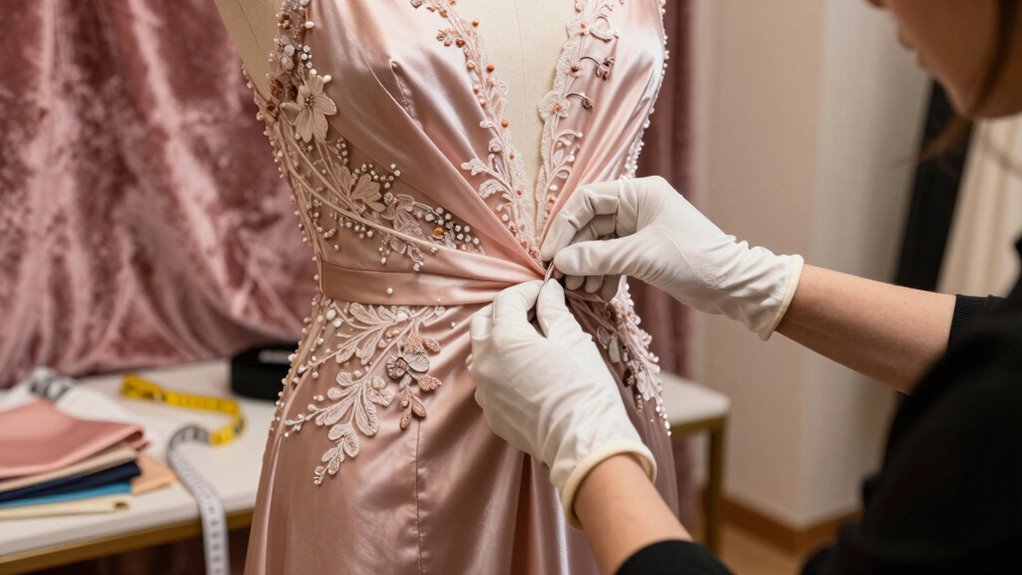
During your fitting, your seamstress or designer carefully drapes the fabric on your body, observing how it moves and sits. They make precise fitting adjustments—pinning, tucking, and pinching fabric—so the gown contours perfectly to your shape. These adjustments are vital because every body is unique, and couture clothing demands a flawless fit. As they work, they keep in mind how the fabric will react after sewing and finishing, guaranteeing the final piece doesn’t just look stunning but feels comfortable too. They might have you walk, sit, or move during the fitting to see how the gown behaves in real life.
Throughout this process, the tailor continually refines the fit, making small but significant adjustments. They might take in seams, let out fabric, or reposition darts, always aiming for a seamless silhouette. Each change is deliberate, designed to enhance your natural curves and guarantee the gown drapes perfectly. The fabric’s weight, texture, and stretch influence these adjustments, so the fitter must understand how each material behaves. Understanding fabric behavior is essential for achieving a perfect fit and finish. Once the fit is satisfactory, they proceed with more detailed steps like pressing, lining, and finishing.
The fitting session is also a moment for consultation. You’re encouraged to give feedback—whether something feels tight or loose or if the gown’s length needs tweaking. The designer considers your input, making additional small adjustments if necessary. It’s a collaborative process that balances technical precision with your personal comfort and aesthetic preferences. When all is said and done, the gown is nearly complete, but the fitting adjustments made during this stage guarantee that your final piece isn’t just beautiful on paper but also perfect when worn. This careful combination of fabric selection and fitting adjustments is what transforms fabric into a one-of-a-kind couture masterpiece, tailored exclusively for you.
dress form mannequin for fitting
As an affiliate, we earn on qualifying purchases.
As an affiliate, we earn on qualifying purchases.
Frequently Asked Questions
How Long Does a Typical Couture Fitting Last?
A typical couture fitting lasts about one to two hours. During this time, you’ll work closely with your designer to refine the fit, making seam adjustments as needed. You’ll also discuss fabric selection, ensuring every detail aligns with your vision. The process allows for multiple fittings, so you can see how the fabric moves and make changes to achieve the perfect fit and design.
Can Clients Request Last-Minute Changes During the Fitting?
You can absolutely request last-minute changes during a couture fitting, but be prepared for a whirlwind of adjustments! Your client preferences and fabric selection are essential, and the couturier might need to work magic to accommodate your wishes. While some tweaks are possible, drastic changes might require additional time, so it’s best to communicate early. Still, your designer will do their best to bring your vision to life—no matter what!
What Happens if the Fit Isn’T Perfect After Adjustments?
If the fit isn’t perfect after fitting adjustments, you’ll typically discuss your concerns with the couturier. They may revisit fabric selection or make further fitting adjustments to guarantee the garment aligns with your vision. Sometimes, minor tweaks can dramatically improve the fit. If needed, they’ll refine the tailoring, possibly selecting different fabrics or altering seams, until the couture piece feels just right and meets your expectations perfectly.
How Many Fittings Are Usually Required for a Couture Piece?
Typically, you’ll need about three to five fittings, like chapters in a story, to perfect your couture piece. Each session allows for fabric selection and design customization, ensuring every detail aligns with your vision. These fittings are essential to refine the fit, fabric drape, and overall style. With each visit, your gown gets closer to perfection, transforming your ideas into a stunning, one-of-a-kind masterpiece.
Do Clients Need to Prepare Anything Before the Fitting?
Before your couture fitting, you should prepare by doing a fabric selection and style consultation. Bring inspiration images and be ready to discuss your preferred fabrics, colors, and design details. Wear well-fitted undergarments and shoes similar to what you’ll wear with the final piece. This helps the designer understand your vision and guarantees the fitting process is smooth, allowing them to customize the garment perfectly to your body and style.
Conclusion
As the fitting wraps up, remember that behind every perfect couture piece lies chaos—pins, fabric scraps, and countless adjustments. It’s a delicate dance between artistry and precision, chaos and control. Just like a storm settling into calm, your gown’s story is one of patience and passion. So, when you finally see the flawless fit, know it’s the beauty born from chaos—an intricate balance worth every second of the journey.
Halloween Picks
halloween
As an affiliate, we earn on qualifying purchases.