Understanding the differences between task, ambient, and accent lighting helps you create a balanced space. Task lighting provides focused illumination for activities like reading or cooking. Ambient lighting offers general light to set the overall mood. Accent lighting highlights specific features or decor, adding depth and interest. Combining these types creates a layered, functional environment. Keep exploring, and you’ll discover how to effectively use each type for a stunning, well-lit room.
Key Takeaways
- Accent lighting highlights specific features or objects to draw attention without overpowering the space.
- Ambient lighting provides overall illumination, creating a comfortable atmosphere throughout the area.
- Task lighting focuses on providing bright, directed light for activities like reading or cooking.
- Combining all three types enhances depth, visual interest, and functionality in a space.
- Proper layering ensures each lighting type complements the others and creates a balanced, cohesive environment.
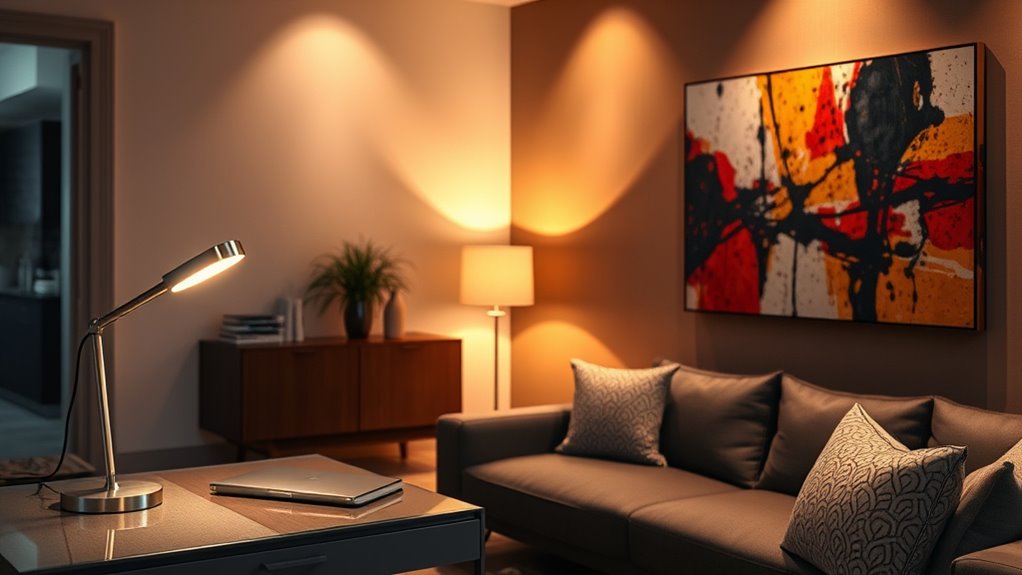
Accent lighting is a powerful way to highlight specific features and create a dramatic atmosphere in any space. To achieve this, you need to understand how to use layering techniques effectively. Layering involves combining different types of lighting—ambient, task, and accent—to create depth and visual interest. When focusing on accent lighting, your goal is to draw attention to artwork, architectural details, or decorative objects without overpowering the room. To do this well, choose fixture styles that complement the space’s design and emphasize the accent areas. For example, track lights with adjustable heads allow you to direct light precisely where needed, making them ideal for highlighting artwork or textured walls. Recessed fixtures can provide subtle illumination that doesn’t distract from the feature itself, while picture lights are perfect for emphasizing paintings or sculptures. By mixing these fixture styles, you can build a layered lighting scheme that adds sophistication and flexibility to your space.
When it comes to accent lighting, the key is precision. You want your lighting to be focused enough to highlight a feature without spilling over and creating unwanted glare. Using layering techniques, you can create a visual hierarchy that guides the eye smoothly through the room. For instance, combining wall-mounted fixtures with adjustable spotlights allows you to change the emphasis as needed, enhancing the overall ambiance. The fixture styles you select should align with the room’s aesthetic—sleek, modern fixtures work well in contemporary settings, while ornate, vintage-inspired pieces suit traditional interiors. The variety of fixture styles available makes it easier for you to craft a cohesive look that enhances the architectural and decorative highlights in your space.
Another aspect to consider is the intensity and color temperature of your accent lights. Dimmable fixtures give you control over brightness, so you can switch from subtle highlighting to more dramatic effects depending on the mood. The layering techniques involve not just placement but also adjusting light levels to prevent any one fixture from dominating. Properly layered accent lighting will make your features stand out without overwhelming the overall decor. Additionally, selecting fixtures made from sustainable materials can enhance the eco-friendliness of your lighting plan. When you combine thoughtful fixture styles with strategic layering techniques, you turn a simple lighting setup into a powerful tool for transforming your space. The right accent lighting can add depth, drama, and personality, making your environment more inviting and visually engaging.
Frequently Asked Questions
How Do I Choose the Right Lighting for Different Rooms?
To choose the right lighting for different rooms, consider each room’s purpose and your lighting placement. Use task lighting with focused fixtures for areas like kitchens and offices to brighten workspaces. Opt for ambient lighting with soft, widespread fixtures in living rooms and bedrooms for comfort. Accent lighting highlights artwork or architectural features. Select fixtures that complement your decor and guarantee the lighting is adjustable for different activities and moods.
Can Accent Lighting Be Used Outdoors Effectively?
Sure, you can use accent lighting outdoors—just don’t forget to pick fixtures with outdoor weather resistance. Otherwise, your fancy lights might turn into a soggy, useless mess. Properly integrated with your landscape, accent lighting highlights trees, pathways, and architectural features, creating magic after sunset. So, go ahead, light up your garden’s secrets, but remember: durability and seamless landscape blending are your best friends in outdoor accent lighting.
What Are the Energy-Efficient Options for Accent Lighting?
You can choose energy-efficient accent lighting options like LED fixtures and solar-powered lights. LED options use minimal energy and last longer, making them ideal for highlighting features without increasing your energy bill. Solar-powered fixtures are great outdoors; they harness sunlight during the day and illuminate at night, reducing electricity consumption. Both options help you achieve beautiful accents while being environmentally friendly and cost-effective.
How Do I Prevent Glare With Accent Lighting?
Glare can turn your beautiful accent lighting into a blinding nightmare! To prevent it, focus on glare reduction by choosing fixtures with diffusers or shields, and be strategic with fixture placement. Position lights so they highlight your features without shining directly into your eyes. Adjust angles and height, and use dimmers to fine-tune brightness. These simple steps will keep your space stunning without any uncomfortable glare!
Are There Smart Controls Available for Task and Accent Lighting?
Yes, you can find smart controls for both task and accent lighting. These systems allow you to automate and adjust your lighting easily, often via apps or voice commands. With lighting automation, you can customize brightness, color, and schedules to suit your needs, ensuring the right ambiance and functionality. Look for smart switches, dimmers, or integrated lighting systems compatible with popular smart home platforms for seamless control.
Conclusion
Now that you understand the differences between task, ambient, and accent lighting, you can craft a space that’s both functional and inviting. While task lighting keeps your workspace clear and focused, ambient lighting sets a cozy mood. Accent lighting, on the other hand, highlights your favorite features, adding character. Balancing these elements creates a room that’s lively yet comfortable—proof that the right lighting isn’t just about visibility, but about transforming your environment.