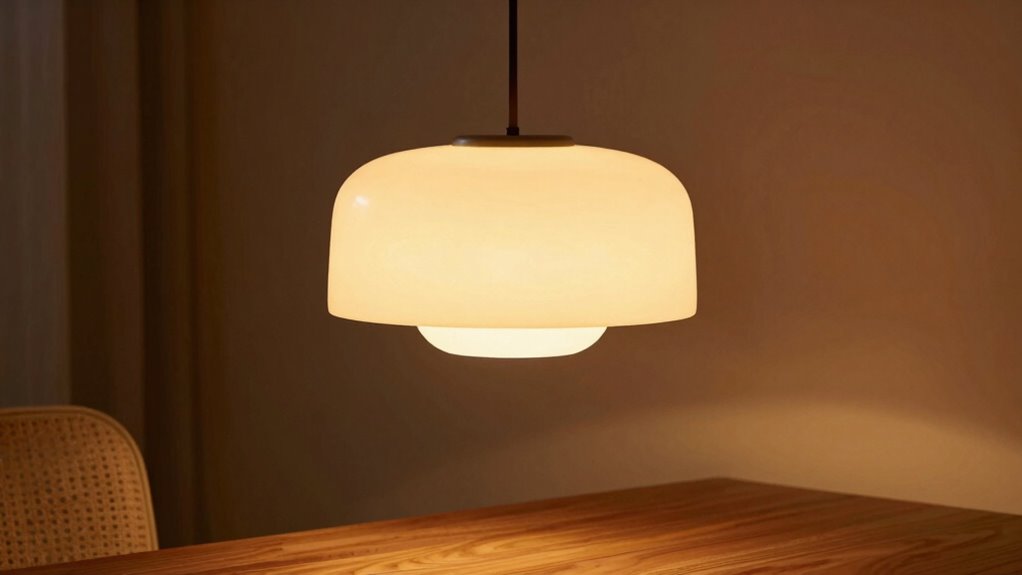

To flatter your skin and enhance your decor, choose lighting with the right lumens, kelvins, and CRI. Brighter lights (around 1,500-2,500 lumens) work well for makeup areas, while softer light creates cozy spaces. Opt for warm white (3,000K) to highlight skin tone, or cooler shades (4,000K) for task areas. A high CRI (above 90) guarantees true color display. Keep exploring to discover how these choices can transform your space beautifully.
Key Takeaways
- Use higher lumens (1,500-2,500) for vanity and makeup areas to ensure bright, detailed illumination.
- Choose warm white light (around 3,000K) to flatter skin tone and enhance decor with a cozy glow.
- Opt for high CRI (above 90) bulbs to accurately render skin tones and vibrant decor colors.
- Adjust color temperature with smart lighting to suit different activities and desired ambiance.
- Balance brightness and warmth for a personalized, flattering, and visually appealing space.

Lighting plays a crucial role in enhancing both your skin’s appearance and your home’s decor, but choosing the right type can be tricky. When it comes to selecting lighting, understanding the basics like lumens, kelvins, and CRI helps you make smarter decisions. Modern lighting options often feature smart technology, which not only offers convenience but also boosts energy efficiency. With smart bulbs, you can adjust brightness and color temperature remotely, saving energy and creating the perfect ambiance for any space or skin tone.
Smart lighting enhances your space and skin’s glow with adjustable brightness and color temperature.
Lumens measure the brightness of a light, so knowing this helps you pick a light that’s neither too harsh nor too dull. For tasks like applying makeup or skincare, you want a light with higher lumens—around 1,500 to 2,500 lumens for a well-lit vanity area. When lighting your living space or accent areas, lower lumens can create a cozy, inviting atmosphere. The key is balancing brightness with the room’s purpose and your personal preference. Additionally, light distribution affects how evenly your space is illuminated, which can impact both functionality and ambiance.
Kelvins determine the color temperature of your light, influencing how warm or cool it appears. If you want lighting that flatters your skin tone and enhances your decor, aim for a range between 3,000 and 4,000 kelvins. Warm white light (around 3,000K) offers a cozy, flattering glow perfect for bedrooms and living rooms, making skin look healthy and vibrant. Cooler white light (around 4,000K) works well in task areas like kitchens and bathrooms, where clarity and brightness matter most. Smart technology enables you to change these settings easily, ensuring your lighting always complements your mood or activity.
CRI, or Color Rendering Index, measures how accurately a light source displays colors. A high CRI—above 90—is ideal because it reveals true skin tones and the true colors of your decor. This is especially important in areas where you want your skin to look natural and your decor to shine, such as in bathrooms or dressing rooms. With smart lighting systems, you can select high-CRI bulbs and adjust settings on the fly, optimizing your environment for both aesthetics and functionality. This way, you avoid the pitfalls of dull or washed-out colors and ensure your space feels vibrant and inviting.
Additionally, color temperature can influence your mood and comfort, making it an essential factor in creating a balanced environment. Choosing the right lighting quality is also vital, as it affects how well your space is illuminated and how your skin appears under different lights. The visual impact of lighting plays a significant role in how your decor is perceived, emphasizing the importance of selecting the appropriate lighting setup. Incorporating smart technology into your lighting choices doesn’t just improve convenience; it also enhances energy efficiency. You can schedule lights to turn on or off automatically, dim them when full brightness isn’t needed, and customize color temperatures to suit different times of day or activities. This combination of understanding lumens, kelvins, and CRI, along with the benefits of smart tech, empowers you to create a space that’s both visually appealing and energy-efficient—highlighting your skin’s best features while elevating your decor effortlessly.

Feit Electric A19 LED Light Bulb, 75W Equivalent, 2700K Soft White, Dimmable, 1100 Lumens, 12W, E26 Base, 90+ CRI, General Purpose LED Light Bulbs, 17,000-Hour Lifetime, A1975/927CA/FIL/4/GB, 4 Pack
ENERGY-EFFICIENT LED TECHNOLOGY – 75W EQUIVALENT USING ONLY 12W – Upgrade your home lighting with Feit Electric’s A19…
As an affiliate, we earn on qualifying purchases.
As an affiliate, we earn on qualifying purchases.
Frequently Asked Questions
How Do I Measure Lumens Accurately in My Space?
To measure lumens accurately in your space, you need the right measurement tools, like a light meter or lux meter. Place the meter at your desired lighting level, ensuring proper lighting placement for precise readings. Turn on your lights and record the measurement from the meter. This method helps you assess brightness effectively, allowing you to adjust lighting to flatter skin tones and complement your decor.
What’s the Best Color Temperature for Office Lighting?
Think of your office as a canvas, and the right color temperature as the brushstrokes that set the mood. For a balanced workspace, aim for a color temperature around 4000K to 5000K—bright enough to energize without harshness. Use light layering to create a harmonious environment, blending cooler tones for focus with warmer accents for comfort. This balance enhances productivity and keeps your space inviting.
How Does CRI Affect the Appearance of Artwork?
CRI directly impacts how your artwork appears by affecting color accuracy. Higher CRI ratings mean colors look more true to life, enhancing the artwork’s detail and vibrancy. When you choose lighting with a high CRI, you guarantee colors are faithfully represented, giving your art a richer, more authentic look. This kind of lighting provides artistic enhancement, making every detail pop and allowing viewers to appreciate the true beauty of your pieces.
Can Lighting Influence Mood and Productivity?
Lighting definitely influences your mood and productivity. Using color psychology, you can choose lighting that energizes or relaxes you, depending on your needs. Ambient lighting creates a comfortable environment, reducing stress and boosting focus. Bright, cool tones help increase alertness, while warmer lights promote calmness. So, by adjusting your lighting, you can enhance your emotional state and efficiency, making your space more conducive to work or relaxation.
Are LED Lights Better Than Incandescent for Skin Tones?
LED lights are generally better than incandescent bulbs for skin tones because they combine high efficiency with customizable warmth. While incandescent bulbs offer a cozy, warm glow, LEDs can be adjusted to match that warmth or produce cooler light, enhancing skin appearance. Their superior LED efficiency means you get better light quality with less energy, making them a smart choice for flattering skin tones and saving on electricity bills.

Linkind Smart Light Bulbs, Warm White to Daylight (2700K-6500K), Alexa Light Bulbs, Work with Alexa, Google Home, AiDot, 60W Equiv, Efficient 8.5W, 2.4G WiFi Bluetooth LED CRI>90, A19 E26 800LM, 4Pack
【2700K-6500K Tunable White: One Bulb for All Scenes】Linkind smart light bulb is capable of tuning from warm white…
As an affiliate, we earn on qualifying purchases.
As an affiliate, we earn on qualifying purchases.
Conclusion
When choosing lighting, remember that the right combination of lumens, kelvins, and CRI can truly enhance your skin and decor. Did you know that a high CRI (Color Rendering Index) of 90+ can make colors look much more vibrant and natural? So, take the time to select lighting that flatters your skin tone and highlights your space’s best features. With the right lighting, you’ll create a warm, welcoming environment that feels just right.

Gvnkvn Lighted Makeup Mirror, 17.3"x13" Hollywood Vanity Mirror with Led Lights, Three Color Lighting Modes, and 10X Magnification Mirror, Smart Touch Control, 360°Rotation (White, Gift Box)
👍【Upgrade brightness】Most of the makeup mirrors with light bars on the market only have 80 light beads, which…
As an affiliate, we earn on qualifying purchases.
As an affiliate, we earn on qualifying purchases.
Linkind Smart Light Bulbs, Warm White to Daylight (2700K-6500K), Alexa Light Bulbs, Work with Alexa, Google Home, AiDot, 60W Equiv, Efficient 8.5W, 2.4G WiFi Bluetooth LED CRI>90, A19 E26 800LM, 4Pack
【2700K-6500K Tunable White: One Bulb for All Scenes】Linkind smart light bulb is capable of tuning from warm white…
As an affiliate, we earn on qualifying purchases.
As an affiliate, we earn on qualifying purchases.