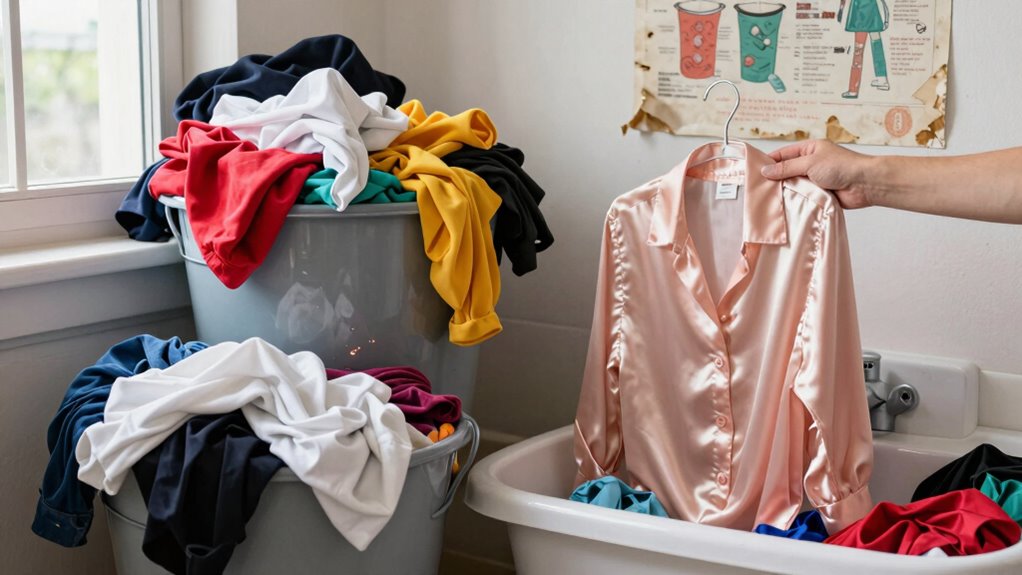
Many laundry sorting myths waste your time, like the need to separate clothes into countless colors and fabric types. Modern fabrics are usually colorfast if washed properly, and extensive sorting isn’t necessary. Using color-catching sheets and washing new clothes separately can manage dye transfer without overcomplicating things. Proper laundry routines can be simpler and faster if you understand fabric care labels and avoid unnecessary sorting. Keep going to discover smarter ways to handle laundry efficiently.

Get your wardrobe favorites delivered free — and shop member deals
- Fast, free delivery on millions of items
- Access to Prime Big Deal Days deals on October 6–7
- Prime Video, Amazon Music and more included
Key Takeaways
- Extensive color sorting is often unnecessary; modern fabrics are typically colorfast if washed properly.
- Separating laundry by fabric type or care labels is more efficient than sorting by multiple categories.
- Using color-catching sheets reduces the need for initial color sorting of new or vibrant clothes.
- Frequent lint trap cleaning and washing similar fabrics together minimizes lint issues without extra sorting.
- Proper knowledge of fabric care labels streamlines routines and eliminates time-consuming, unnecessary sorting steps.
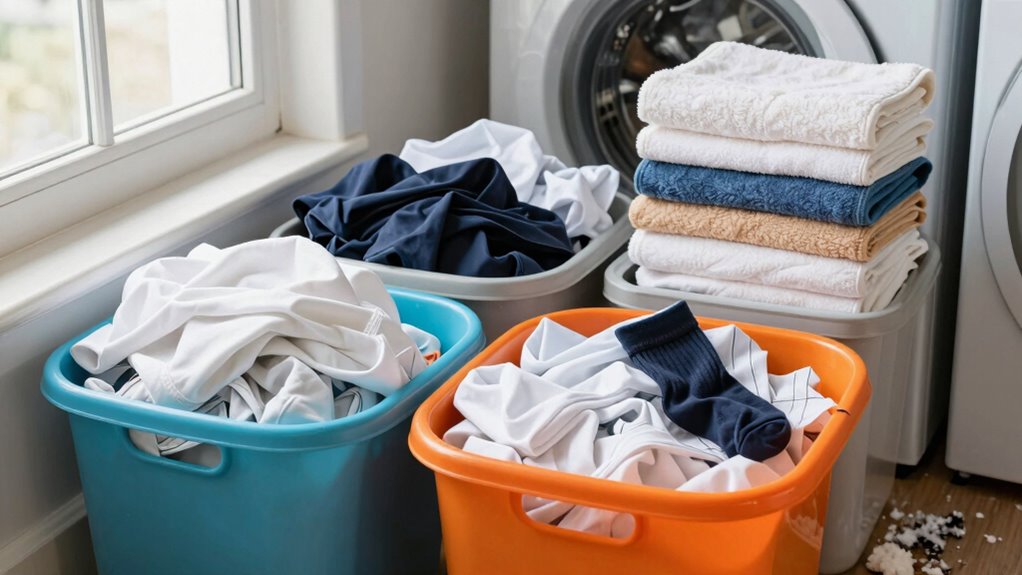
Have you ever wondered if your laundry sorting habits are really necessary? Many people believe they need to separate everything meticulously, but some of these habits are based on myths that end up wasting your time. For example, a common concern is color bleeding. While it’s true that some new, vibrant clothes can bleed dye, most modern fabrics are colorfast, especially if you wash them properly. Instead of sorting every piece by color, you can reduce the fuss by washing new clothes separately for the first few cycles or using color-catching sheets. These sheets trap loose dyes, preventing them from staining other garments, so you don’t need to obsessively separate whites from darks. Additionally, understanding the laundry fabric care can help you optimize your sorting habits and avoid unnecessary steps. Proper care labels can guide you in choosing the appropriate washing cycle and temperature, further simplifying your laundry routine.
Another widespread myth involves fabric softeners. Many folks think they’re essential for soft, static-free laundry. However, fabric softeners aren’t always necessary and can even cause issues for certain fabrics, like athletic wear or towels, where they can reduce absorbency. Plus, some softeners contain chemicals that may irritate sensitive skin or damage delicate fibers over time. Instead of relying heavily on softeners, consider options like dryer balls or natural alternatives such as vinegar, which soften clothes without the downsides. This way, you save time sorting and avoid overusing products that might not be needed. Also, understanding fabric types helps you choose the right washing and drying techniques, saving time and extending the life of your clothes.
People also believe that lint separation is vital, but the truth is, lint can be managed more efficiently. Regularly cleaning your lint trap and washing lint-producing items like towels separately can help, but it’s not necessary to create a whole separate load for lint control. Instead, you can toss lint-heavy items with similar fabrics and clean the filter often to keep your laundry running smoothly. This saves you from an unnecessary extra sorting step that doesn’t considerably improve your laundry results. Additionally, understanding fabric care labels can guide you in choosing the most effective washing and drying practices for different materials. When you familiarize yourself with laundry recommendations, it becomes easier to develop a simple, effective routine that minimizes sorting without compromising cleanliness.
As an affiliate, we earn on qualifying purchases.
Frequently Asked Questions
Can Laundry Sorting Prevent Color Bleeding?
Yes, laundry sorting can help prevent color transfer. When you separate whites from colored clothes, you reduce the risk of dyes bleeding onto lighter fabrics. This also minimizes fabric damage that color bleeding could cause, preserving your clothes’ quality. Proper sorting guarantees each load gets the right wash cycle, protecting your garments from unnecessary wear and tear. So, sorting isn’t just about saving time—it’s about keeping your clothes looking new longer.
Is It Necessary to Separate by Fabric Type?
You don’t always need to separate by fabric type, but it can improve your fabric care and laundry results. Using proper sorting techniques, like dividing delicate fabrics from heavy ones, helps prevent damage and prolongs clothing life. When you sort by fabric type, you also optimize wash cycles and detergent use. While not mandatory, this step can save you time and money in the long run, ensuring your clothes stay in great shape.
Do Laundry Sorting Myths Save Energy?
Sorting laundry is like tending a garden—focusing on the right plants guarantees a bountiful harvest. Proper laundry sorting myths, such as separating by fabric type, actually don’t save energy; instead, they complicate the process. To maximize energy-efficient washing, understand laundry sorting benefits—like reducing wash cycle time and water use. This approach streamlines your laundry routine, saves energy, and keeps your clothes in top shape.
Should I Always Separate Whites and Colors?
You should always separate whites and colors to prevent dye transfer and keep your laundry looking fresh. Mixing colors can cause staining, and using fabric softener on whites might dull their brightness. If you want your laundry to smell great, add a pleasant laundry fragrance, but avoid overusing fabric softener on delicate or bright fabrics. Proper sorting saves you time and keeps your clothes looking vibrant and clean.
How Often Should I Sort Laundry?
Think of laundry sorting like a recipe—timing is everything. You should sort laundry regularly, ideally after each wear, to prevent stains and odors from setting. Use different sorting methods based on detergent types and fabric care instructions. This way, whites stay bright, colors don’t bleed, and delicate fabrics aren’t damaged. Regular sorting keeps your laundry routine efficient and your wardrobe looking fresh, saving you time and effort in the long run.
Conclusion
By busting these laundry sorting myths, you’re saving time like a pro and avoiding unnecessary stress. Remember, sorting isn’t always about perfect separation; sometimes, it’s about practicality. Think of it as a dance—sometimes you need a little improvisation to keep things moving smoothly. So, ditch the old rules, trust your instincts, and make laundry day a breeze instead of a chore. Laundry sorting should serve you, not slow you down.
Fall Picks
fall essentials
As an affiliate, we earn on qualifying purchases.